Italia.

Ten cities · A clickable chart

Sicily · 38.1157° N  13.3615° E

Palermo

Palermo has been Phoenician, Greek, Roman, Byzantine, Arab, Norman, Swabian, Spanish and Bourbon, and the buildings show every layer. The city's signature style, Arab-Norman, is what happened when Norman kings hired Muslim and Byzantine craftsmen and let them work.

Region
Sicily
Airport
Palermo Falcone Borsellino PMO
Getting around
Walkable centre; buses and a light rail line
Give it
2–3 days

Norman, Arab and Byzantine, all in one building

The centre is dense, worn and often half-restored. Bomb damage from 1943 was left unrepaired for decades and you still find ruined palazzi beside immaculate churches. This is part of the character rather than a failing.

Nine buildings across Palermo, Monreale and Cefalù form a single UNESCO listing for the Arab-Norman style. Two of them — the Cappella Palatina and Monreale cathedral — are among the great mosaic interiors anywhere in Europe.

The markets are the other half of the city. Ballarò, Capo and Vucciria are working street markets with cooked food sold from carts, and Palermo has one of the strongest street-food traditions in Italy.

What to see

Palermo attractions

01

Palazzo dei Normanni & Cappella Palatina

Architecture · UNESCO

The royal palace sits on Punic foundations and now houses the Sicilian regional parliament. Inside is the Cappella Palatina, consecrated in 1140: Byzantine gold mosaics on the walls, a Fatimid muqarnas ceiling in painted wood with hunting scenes and inscriptions in Arabic, and an Islamic-style geometric marble floor — three traditions in one small room, under one Norman king.

The chapel closes when parliament sits, so opening days vary.
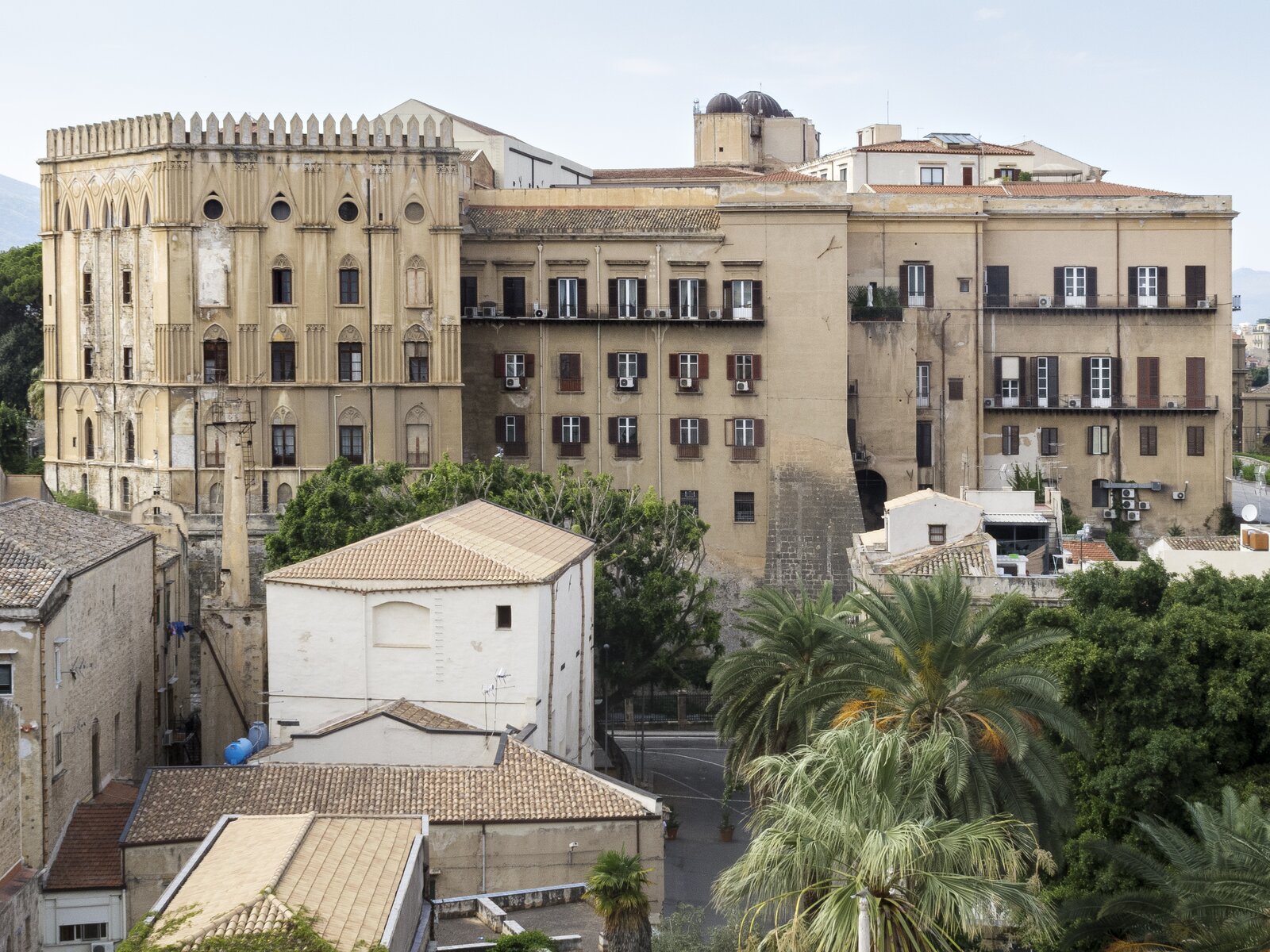
Palazzo dei Normanni & Cappella Palatina, Palermo

02

Cattedrale di Monreale

Architecture · UNESCO

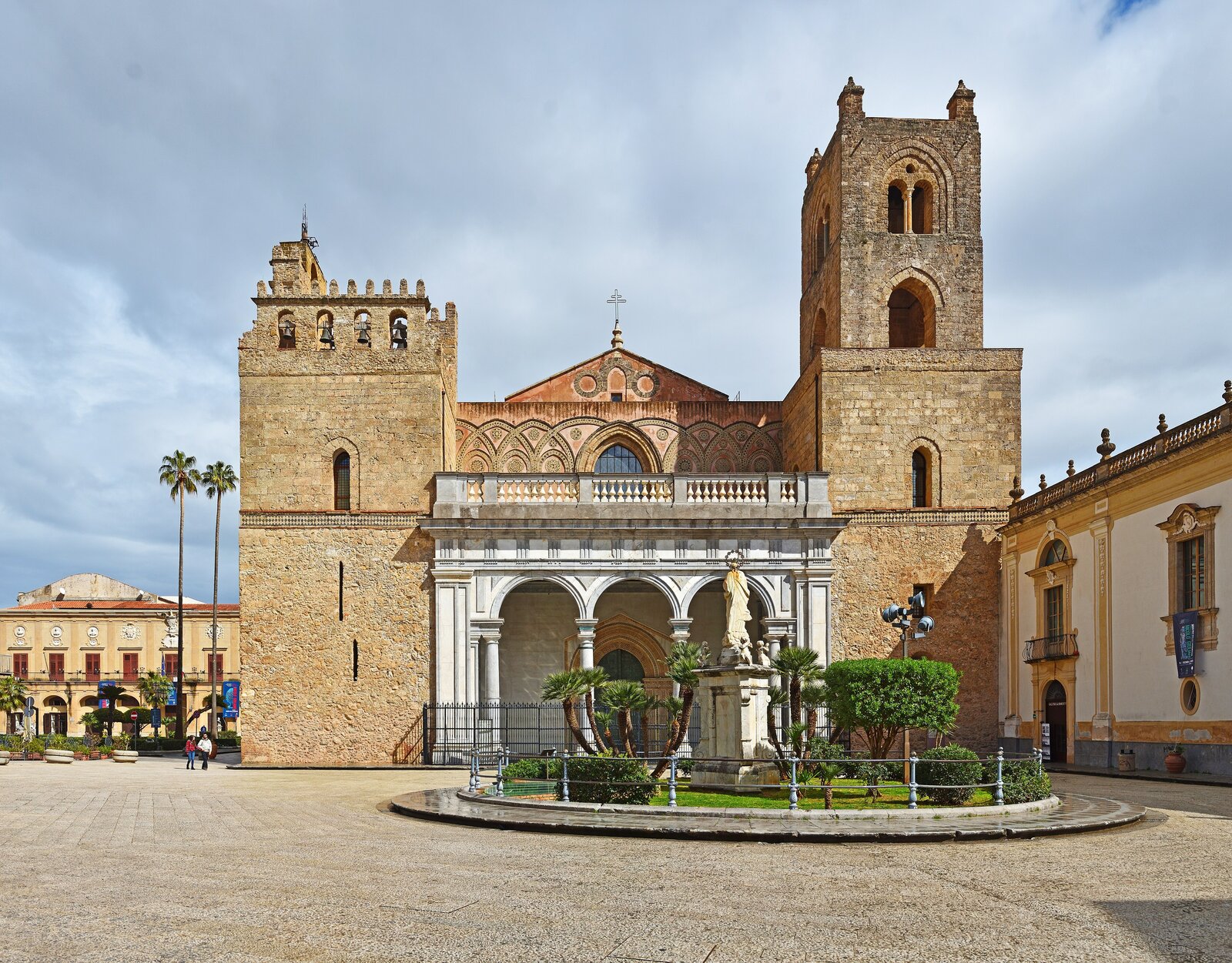
Eight kilometres up the hill from the city, and the single most impressive thing in the area. The nave is covered with roughly 6,000 square metres of gold mosaic telling the Old and New Testaments, dominated by an enormous Christ Pantocrator in the apse. The adjoining cloister has 228 paired columns, each pair carved differently.

Reachable by city bus in about forty-five minutes. The cloister is a separate ticket and worth it. Go in the morning for the light on the apse.

Cattedrale di Monreale, Palermo

03

Palermo Cathedral

Architecture · UNESCO

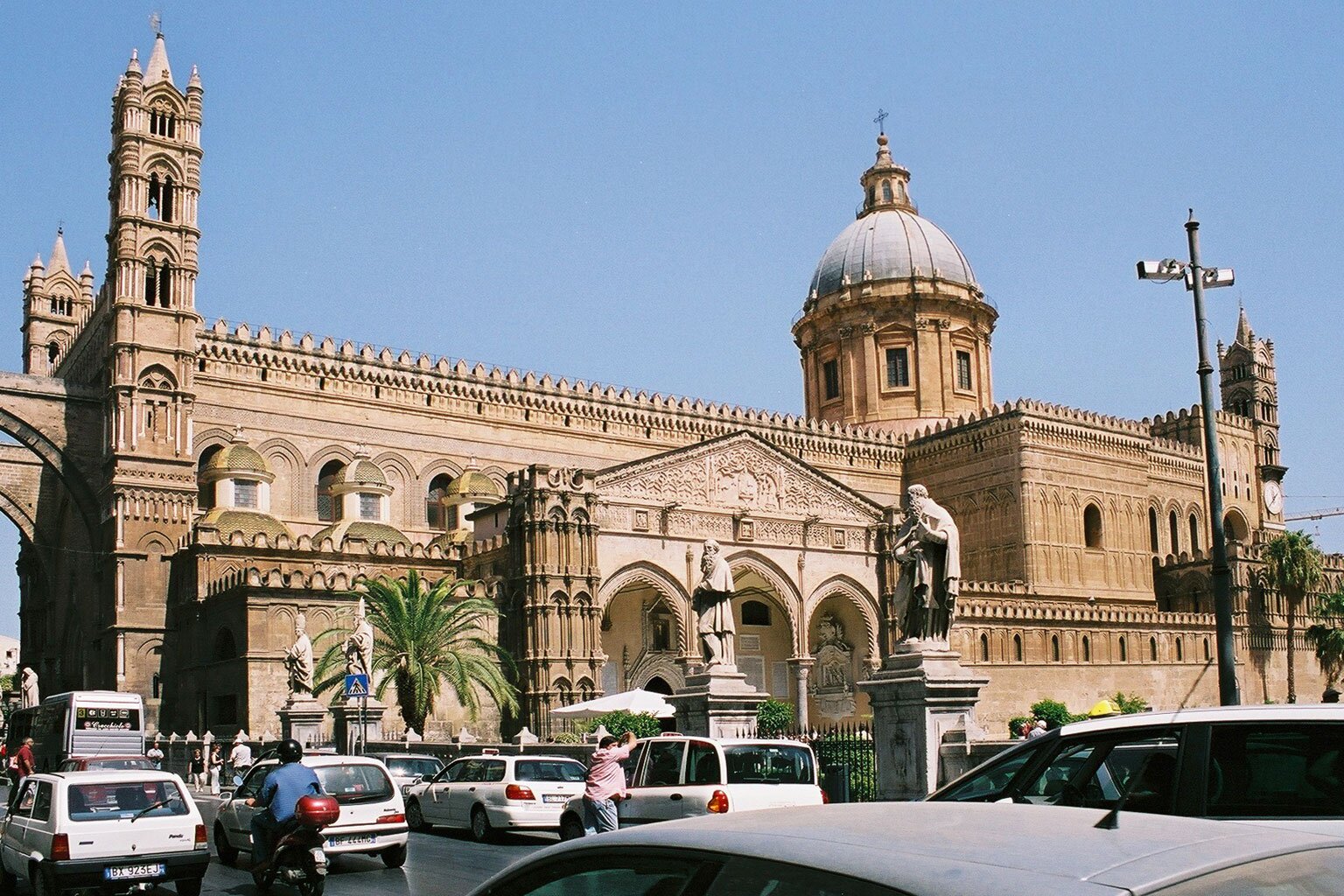
Founded in 1185 on the site of a mosque that had itself been a Byzantine basilica, then modified repeatedly — Norman, Gothic, Catalan and a neoclassical dome, which makes the exterior a legible diagram of Sicilian history. One exterior column still carries a Qur'anic inscription from the mosque. The royal tombs hold Roger II and Frederick II.

The main nave is free; the tombs, treasury, crypt and roof walk are ticketed. The roof gives a good view over the old town.

Palermo Cathedral, Palermo

04

Ballarò, Capo & Vucciria markets

Markets · Food

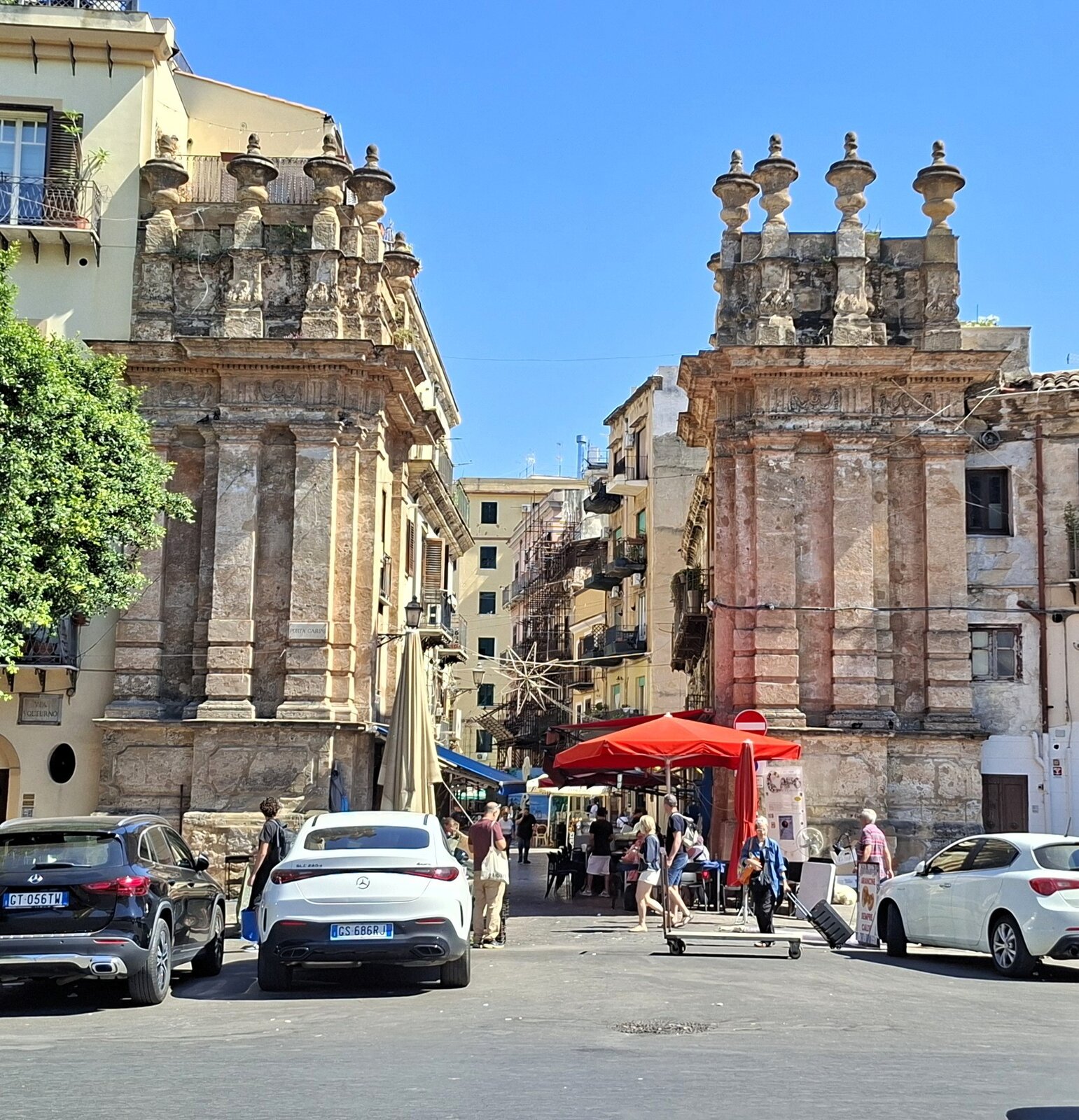
Ballarò is the largest and busiest, running through the Albergheria district with produce, fish and cooked food; Capo is a tight lane of stalls behind the cathedral; Vucciria is a shadow of its former self by day but comes back at night as a drinking quarter. Vendors still call their wares in the abbanniata, a sung sales cry with Arabic roots.

Try panelle (chickpea fritters), arancine (Palermo says arancine, Catania says arancini), sfincione and, if you are brave, pani cà meusa — a spleen sandwich.

Ballarò, Capo & Vucciria markets, Palermo

05

Quattro Canti, Piazza Pretoria & the Martorana

Squares · Churches

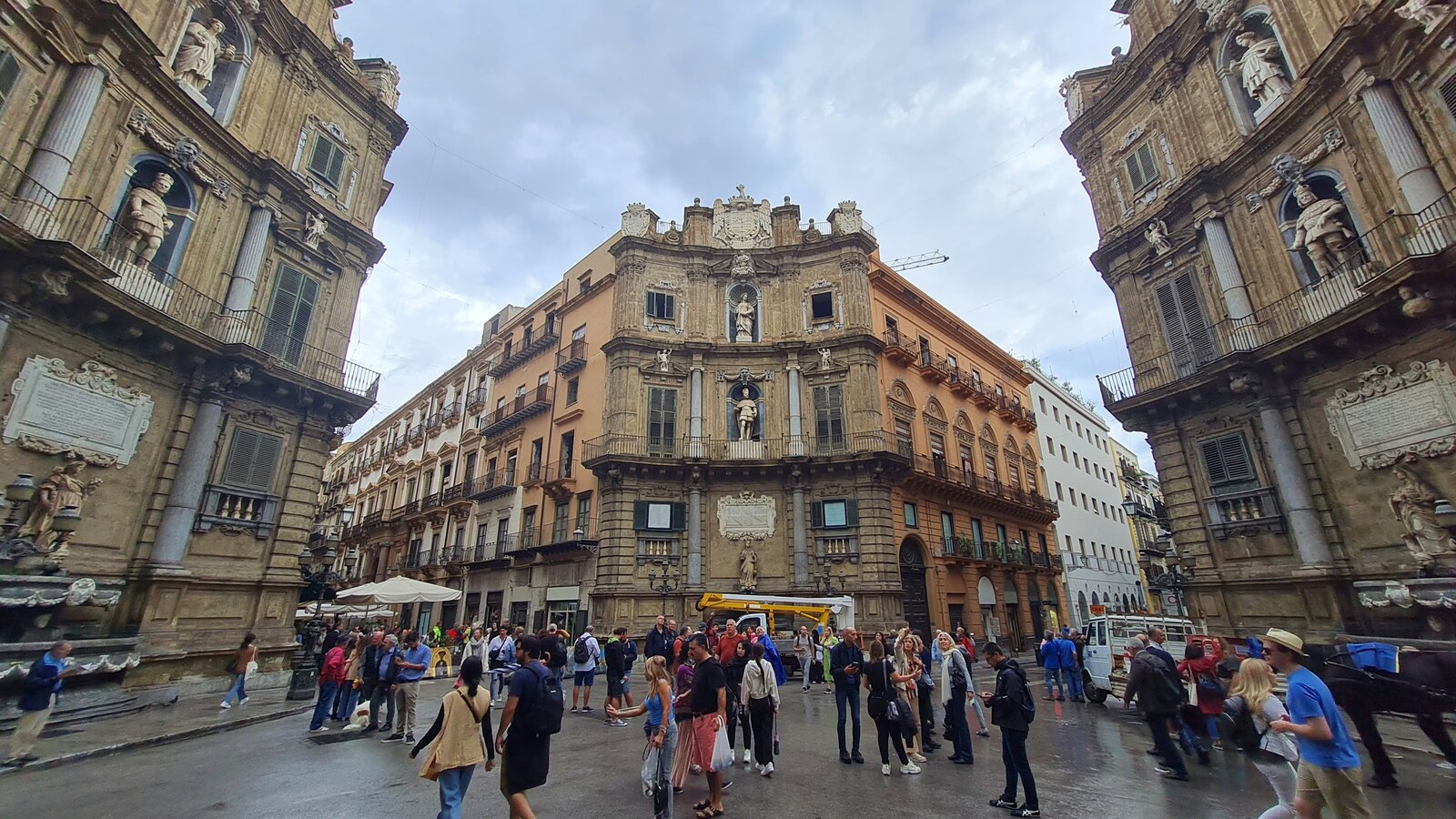
The Quattro Canti is the Baroque crossroads where the two main streets meet, each of its four concave corners carrying tiers of statues. Beside it, the Pretoria fountain crowds a small square with nude mannerist figures that scandalised the convent overlooking it. A few steps away, the Martorana holds twelfth-century Greek mosaics, and San Cataldo next door has three bare red domes and no decoration at all.

These four sit within about two hundred metres of each other. An hour covers all of them.

Quattro Canti, Piazza Pretoria & the Martorana, Palermo

06

Teatro Massimo

Music · Architecture

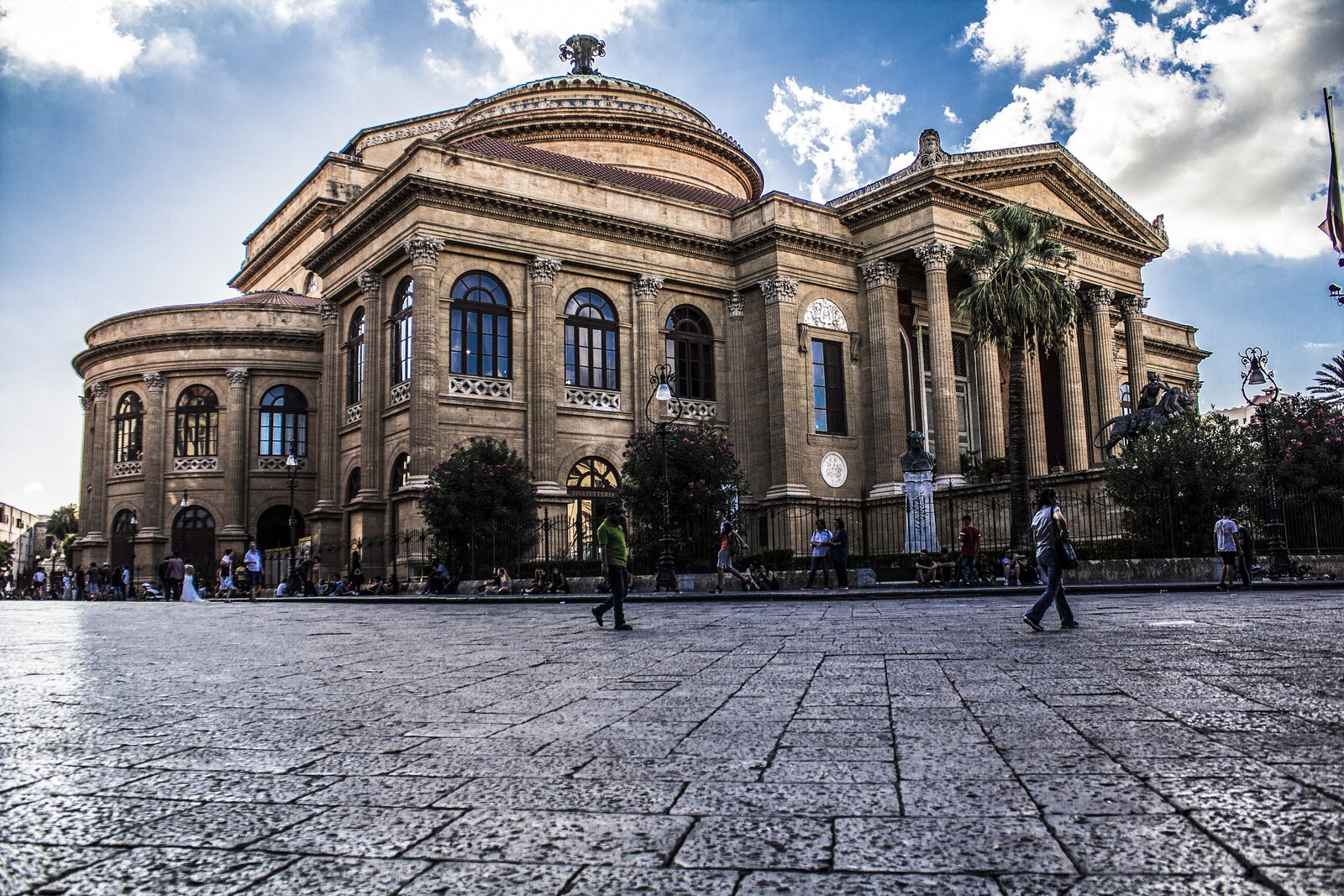
The largest opera house in Italy and one of the largest in Europe, opened in 1897 in a heavy neoclassical style with a domed auditorium. It sat closed for twenty-three years from 1974 during a restoration mired in scandal, reopening in 1997. The exterior steps appear in the closing sequence of The Godfather Part III.

Guided tours run through the day in several languages when there is no rehearsal.

Teatro Massimo, Palermo

07

Catacombe dei Cappuccini

History

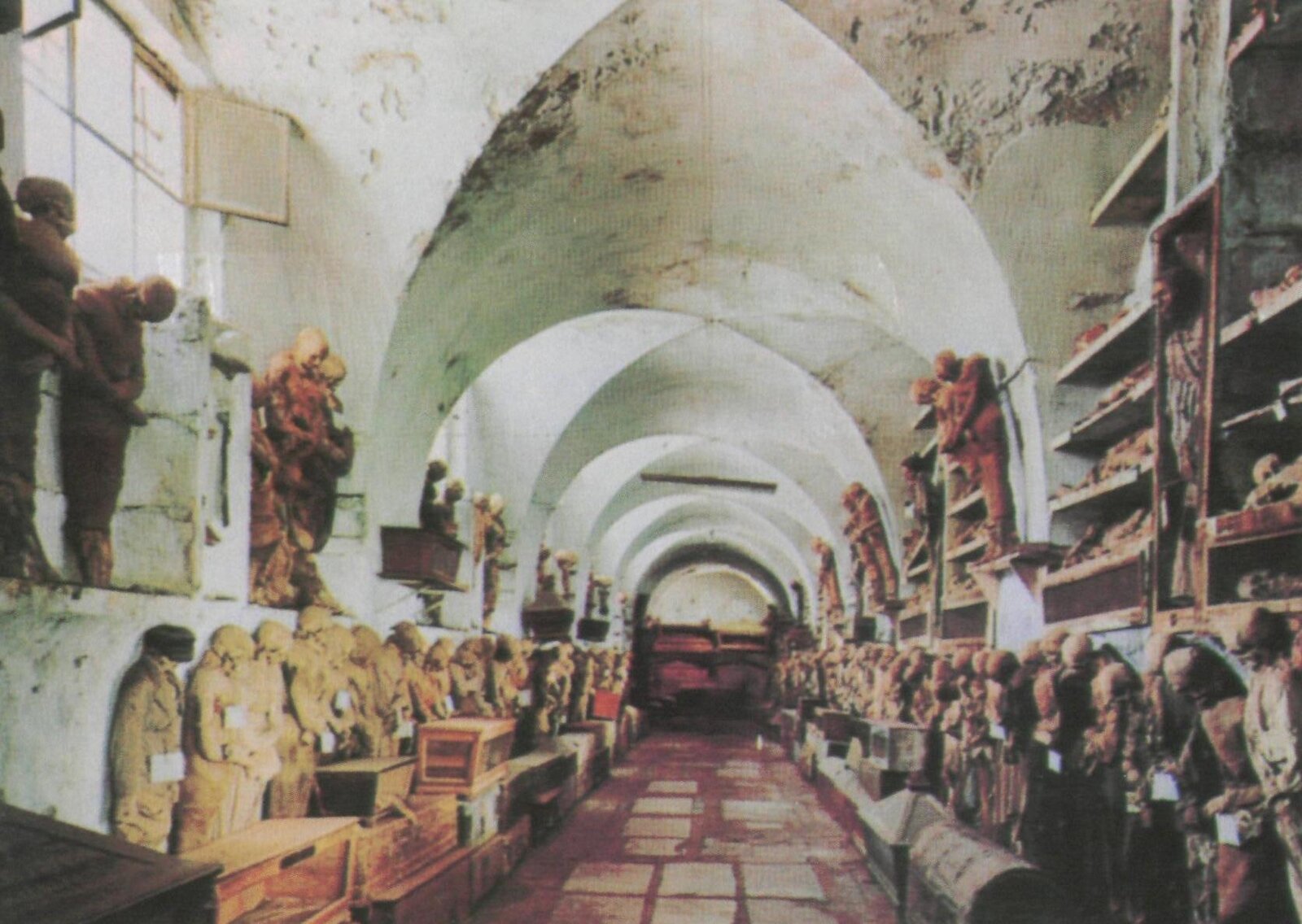
Beneath a Capuchin monastery, corridors holding around 8,000 mummified bodies from the sixteenth to the early twentieth century, many still dressed and arranged upright in categories — monks, professionals, women, children. It was a status burial for centuries. The best-preserved is Rosalia Lombardo, a two-year-old who died in 1920, embalmed so effectively she appears asleep.

Genuinely confronting and not appropriate for everyone, children included. Photography is prohibited.

Catacombe dei Cappuccini, Palermo

08

Mondello

Beach

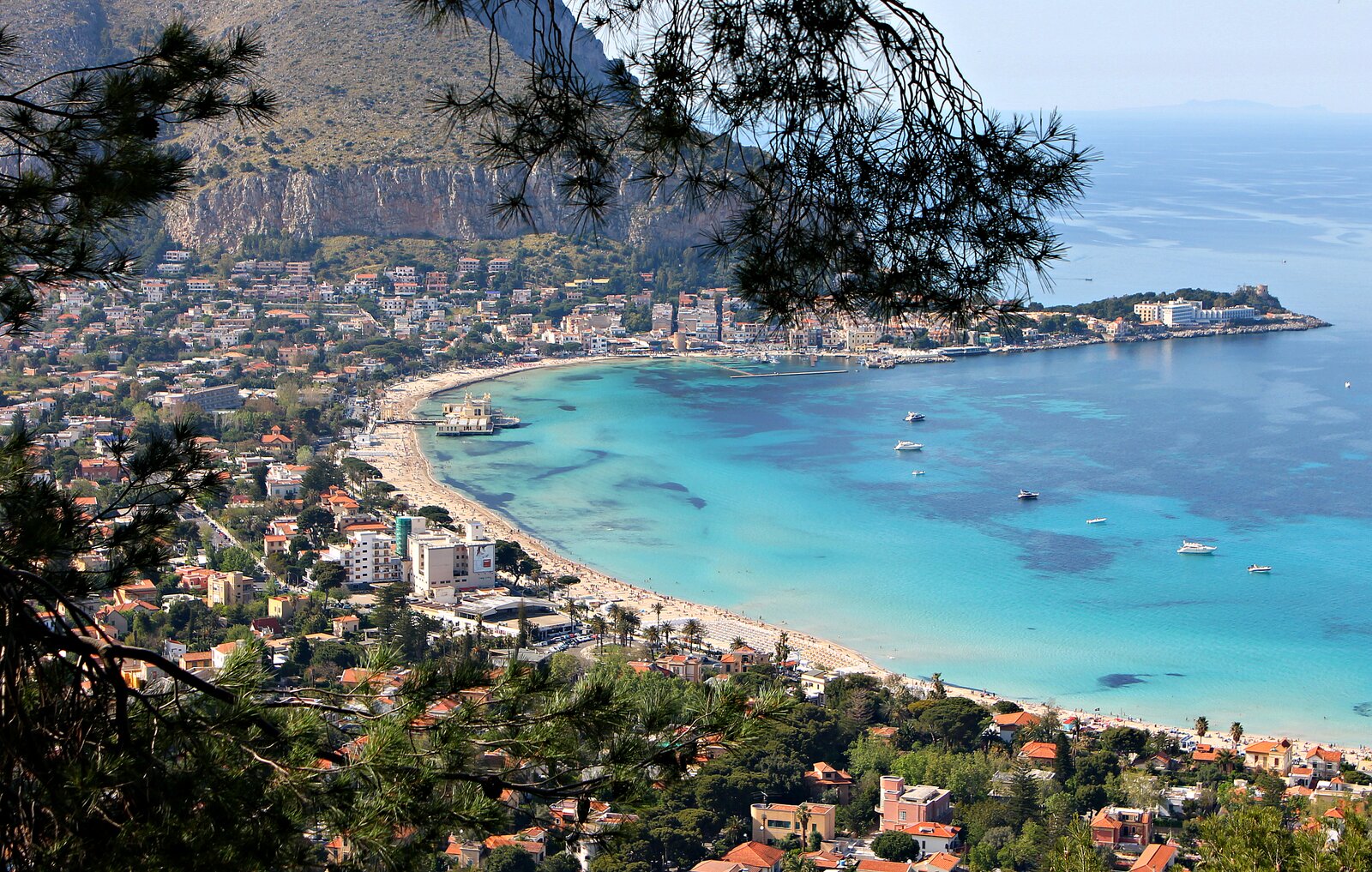
A crescent of pale sand between two headlands about eleven kilometres north of the centre, with clear shallow water and an Art Nouveau bathing pavilion on stilts out in the bay. It was drained from marshland and developed in the early twentieth century as a seaside resort for the city, and Palermo still uses it as one.

City buses run from the centre and take around forty minutes. Packed at summer weekends; quiet on a weekday morning.

Mondello, Palermo

Planning

Before you go

When to visit

April to June and September to October. July and August are very hot and the beaches are full. Winter is mild by Italian standards and rarely cold, though wetter.

Getting around

The historic centre walks in about thirty minutes end to end. Buses cover Monreale and Mondello. A ring of the city is served by a suburban rail link to the airport, which takes roughly an hour.

Eat and drink

Sicilian cooking carries Arab influence more openly than anywhere else in Italy: pasta con le sarde with sardines, wild fennel, pine nuts and raisins; caponata; couscous in the west of the island. For sweets: cannoli filled to order, cassata, and granita with a brioche for breakfast.