Palermo / Ballarò, Capo & Vucciria markets
Markets · Food
Ballarò, Capo & Vucciria markets
Three markets, three moods — one of the strongest street-food traditions anywhere in Italy.
- Price
- Free to browse; street food priced individually
- Hours
- Markets roughly 7am–8pm; Vucciria comes alive at night
- Avg. visit
- 1.5–2 hours to see all three
- Book ahead
- No
Palermo's three great markets each carry a distinct historical character rooted in different parts of the city. Ballarò, running through the Albergheria district, is the largest and busiest, tracing its roots back to Arab-era Palermo and retaining something of that origin in the layout of its narrow lanes. Vendors across the markets still call out their wares using the abbanniata, a sung, rhythmic sales cry believed to carry Arabic linguistic roots — a genuinely ancient piece of living oral tradition.
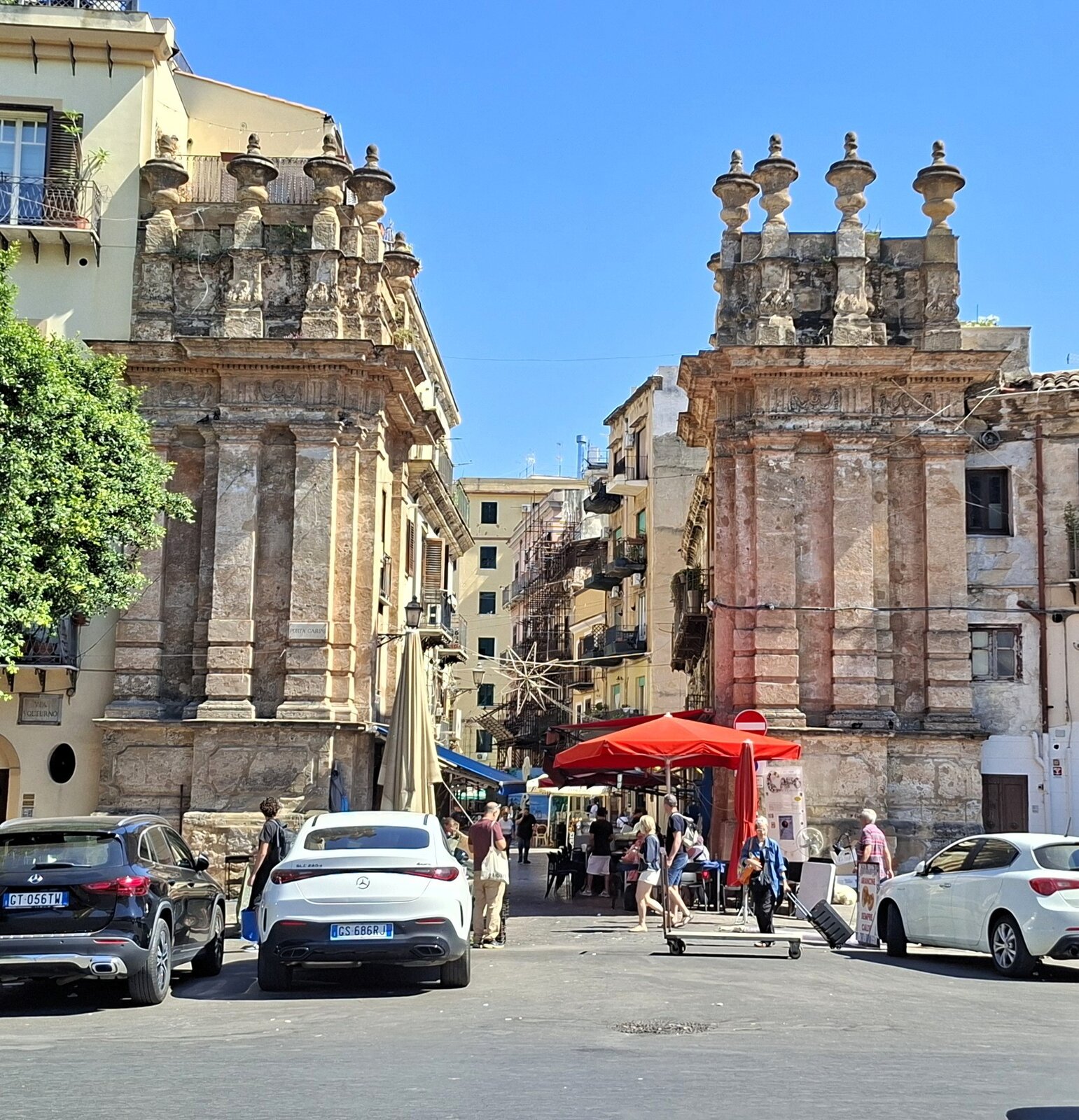
Capo occupies a tighter lane behind the cathedral and has historically served a slightly different, more residential clientele than Ballarò's sprawl. Vucciria, once the most famous of the three and a byword for Sicilian market life in the mid-20th century, has faded significantly as a daytime market but has found a second life after dark as one of the city's principal drinking and street-food quarters — a genuine transformation rather than simple decline.
Inside
What to see
- Ballarò's full sprawl through the Albergheria district, with produce, fish and cooked food side by side
- Capo's tighter lane of stalls immediately behind the cathedral
- Vucciria's nighttime transformation into a drinking and street-food quarter
- Vendors calling the abbanniata, the traditional sung sales cry with roots in Arabic-era Sicily
Practical
Good to know
- Try panelle (chickpea fritters), arancine (Palermo's term — Catania says arancini), sfincione, and, for the adventurous, pani cà meusa, a spleen sandwich.
- Vucciria is quiet by day but comes fully alive at night as a drinking quarter — visit at the right time for what you actually want to see.
- Ballarò is the largest and busiest of the three, giving the fullest sense of a genuinely working Palermo market.
Timing
When it's busiest
- Morning (Ballarò/Capo)
- Busy — markets at full pace
- Midday
- Moderate
- Afternoon (Vucciria)
- Quiet
- Evening (Vucciria)
- Busy — nightlife
Nearby
Combine your visit
5-minute walk
Palermo Cathedral
The Capo market runs in a tight lane just behind the cathedral.
Visit →
10-minute walk
Quattro Canti, Piazza Pretoria & the Martorana
Continue into the historic centre's cluster of squares and churches.
Visit →
10-minute walk
Teatro Massimo
Head to Italy's largest opera house, a short walk from Vucciria.
Visit →
FAQ
Common questions
Which market should I prioritise?
Ballarò for the fullest working-market experience, Capo if you want something tighter and closer to the cathedral, and Vucciria specifically in the evening for its nightlife.
What is the abbanniata?
A traditional sung sales cry used by market vendors, believed to carry linguistic roots from Sicily's Arab period — still practised today.
Is Vucciria still a market?
It functions as a much smaller daytime market than it once was, but has become a significant nighttime drinking and street-food destination instead.
What should I eat?
Panelle, arancine, sfincione, and pani cà meusa are the classic Palermo street-food specialties most associated with these markets.