Palermo / Quattro Canti, Piazza Pretoria & the Martorana
Squares · Churches
Quattro Canti, Piazza Pretoria & the Martorana
Four sights within two hundred metres of each other, spanning Baroque theatre, scandalous nudity, and Byzantine gold.
- Price
- Quattro Canti and Piazza Pretoria free · Martorana from €3
- Hours
- Churches roughly 9:30am–1pm and 3:30–5:30pm
- Avg. visit
- About an hour for all four
- Book ahead
- No
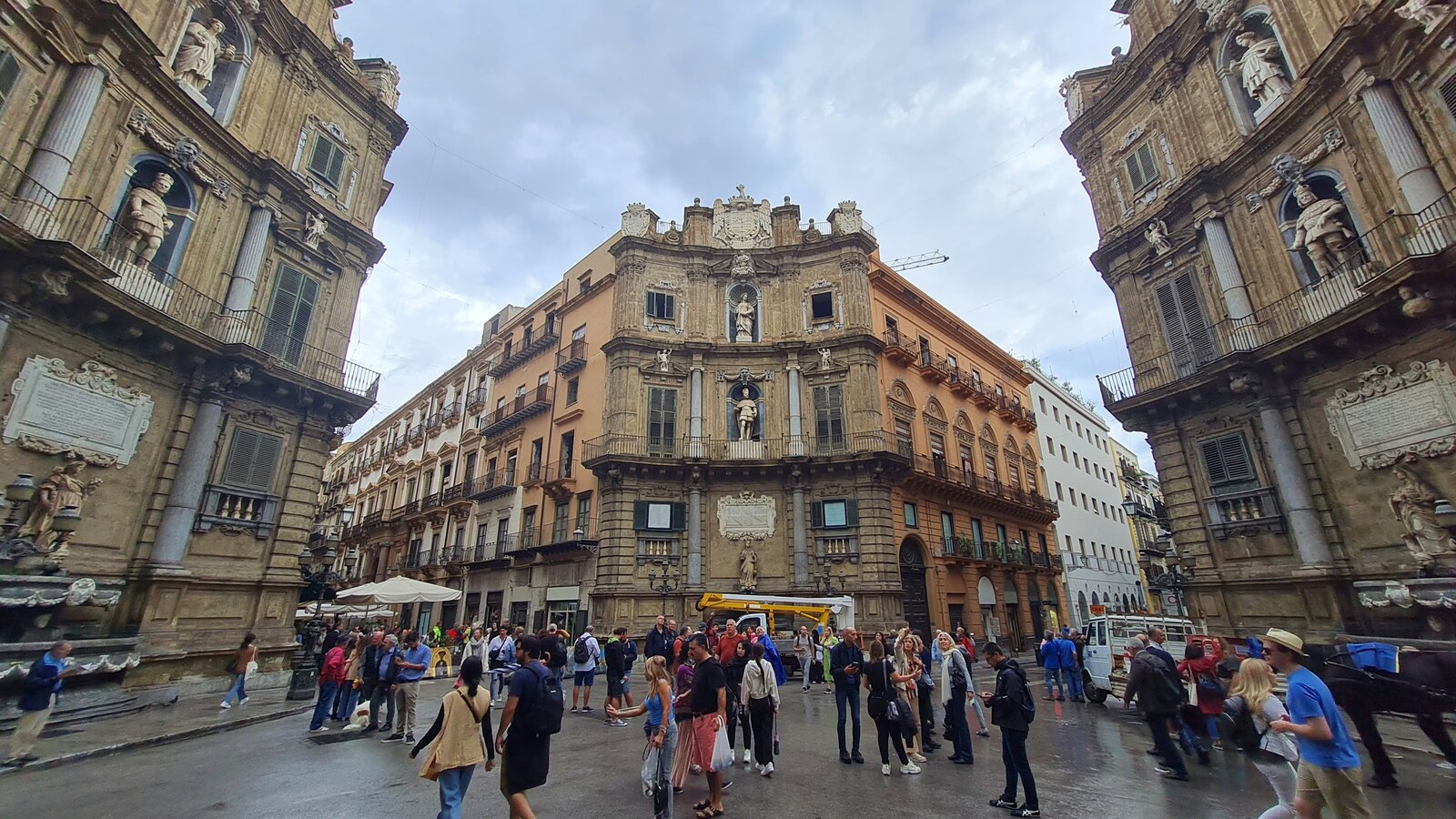
The Quattro Canti marks the Baroque-era crossroads where Palermo's two main historic streets intersect, each of its four concave corners built up with tiers of statues representing the seasons, Spanish rulers, and the city's patron saints — a deliberately theatrical piece of 17th-century urban design rather than an incidental junction. Immediately beside it, Piazza Pretoria crowds a relatively small space with an elaborate fountain covered in nude mannerist figures, imported from Florence in the 16th century and reportedly scandalous enough to the convent overlooking the square that it earned the nickname Piazza della Vergogna — the Square of Shame.
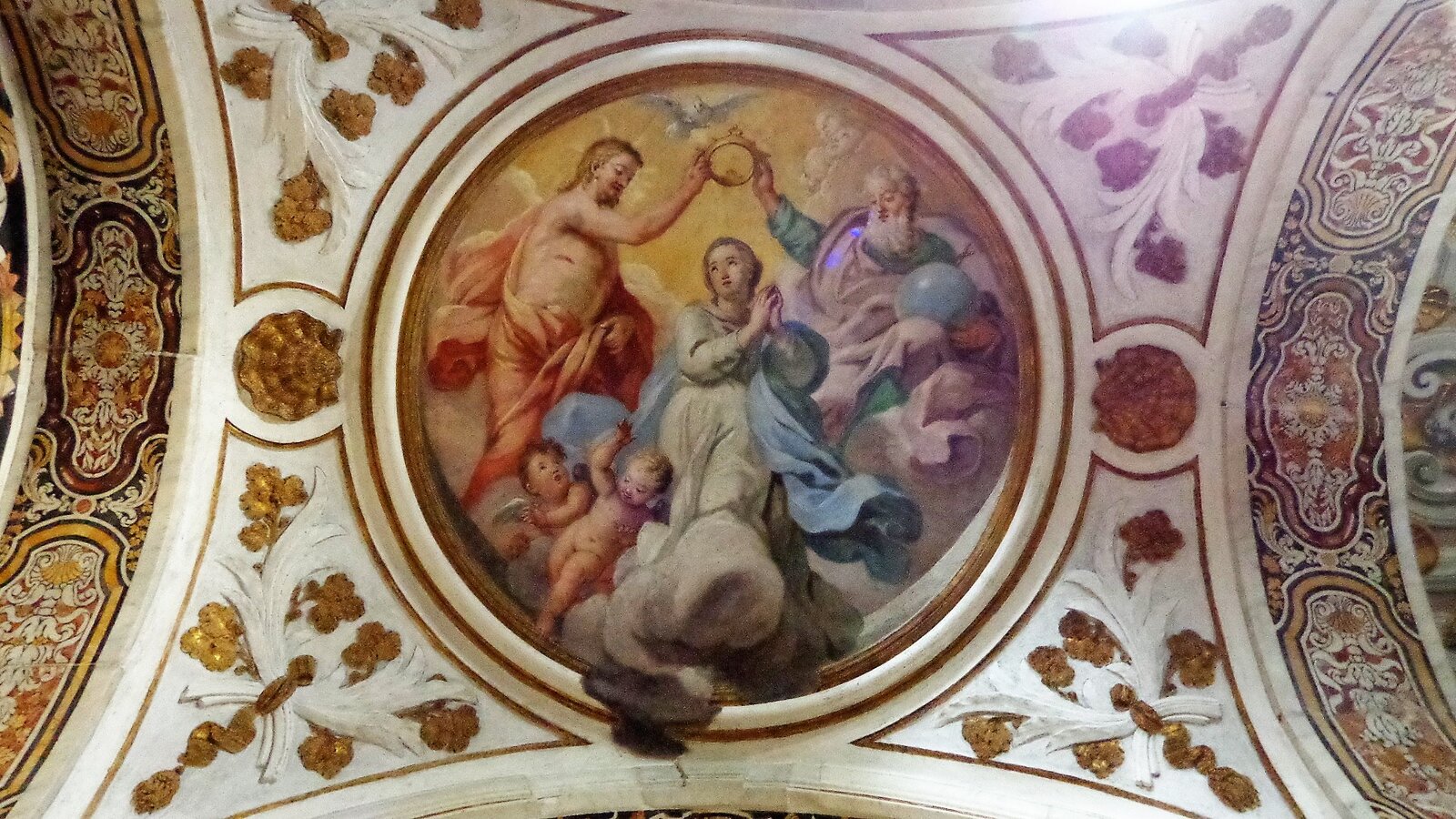
A few steps further, the Martorana holds 12th-century Greek Byzantine mosaics comparable in style and quality to the Cappella Palatina, later supplemented by 18th-century Baroque additions when the church's apse was extended — a genuine layering of two very different decorative traditions in one working church. Next door, San Cataldo presents a stark contrast: three bare red domes and a strikingly undecorated interior, a study in restraint immediately beside the Martorana's ornamentation.
Inside
What to see
- The Quattro Canti's four matching Baroque facades, each carrying its own tier of statues
- The Pretoria fountain's nude mannerist figures, which gave the square its nickname
- The Martorana's 12th-century Byzantine mosaics alongside its later Baroque additions
- San Cataldo's three bare red domes, immediately next to the Martorana's ornamentation
Practical
Good to know
- These four sights sit within about two hundred metres of each other — an hour comfortably covers all of them together.
- Church opening hours can be irregular, often closing at midday, so check before making the Martorana the centrepiece of a tight schedule.
- The contrast between the Martorana and San Cataldo — ornate mosaics beside stark, undecorated domes — is part of what makes visiting both together worthwhile.
Timing
When it's busiest
- Morning
- Quiet
- Midday
- Busy
- Afternoon
- Busy
- Evening
- Moderate
Nearby
Combine your visit
10-minute walk
Palermo Cathedral
Continue to the cathedral, another layered record of Sicilian history.
Visit →
10-minute walk
Ballarò, Capo & Vucciria markets
Head into Palermo's working street markets nearby.
Visit →
10-minute walk
Teatro Massimo
Visit Italy's largest opera house, a short walk north.
Visit →
FAQ
Common questions
Why is Piazza Pretoria called the Square of Shame?
Local legend attributes the nickname to the nude mannerist figures on the fountain, said to have scandalised the nuns at a nearby convent.
What's the difference between the Martorana and San Cataldo?
The Martorana holds ornate 12th-century Byzantine mosaics plus later Baroque additions, while San Cataldo next door is deliberately bare, with three plain red domes and minimal interior decoration.
How much time do I need for all four sights?
About an hour covers the Quattro Canti, Piazza Pretoria, the Martorana and San Cataldo together, given how close they all are.
Are the churches free to enter?
The Quattro Canti and Piazza Pretoria are public squares with no charge; the Martorana and San Cataldo typically charge a small entry fee.