Italia.

Ten cities · A clickable chart

Emilia-Romagna · 44.4949° N  11.3426° E

Bologna

Bologna's three nicknames tell you most of what you need: the fat, the learned, the red. The food is the best argument for the city, the university is the oldest continuously operating one in the world, and the terracotta rooftops and porticoes give the centre its colour.

Region
Emilia-Romagna
Airport
Bologna Guglielmo Marconi BLQ
Getting around
Walkable centre under covered porticoes
Give it
1–2 days

La Grassa, La Dotta, La Rossa

The porticoes are the defining feature: roughly forty kilometres of covered arcade in the historic centre, added to the UNESCO list in 2021. They were originally a medieval workaround for a housing shortage, letting owners extend upper floors over the public street. In practice they mean you can cross the city in rain without an umbrella.

Bologna is a student city, which keeps prices down and the evenings busy. It is also the rail hub of northern Italy — Florence is under forty minutes away, Milan and Venice roughly an hour and a half, which makes it a strong and underrated base.

Most visitors give it a day. Two is better, and the second day is when you eat properly and walk the portico up to San Luca.

What to see

Bologna attractions

01

Piazza Maggiore & Basilica di San Petronio

Architecture

The main square, closed to traffic and functioning as the city's living room. San Petronio was planned to be larger than St Peter's in Rome; the money ran out, and the facade is still half brick and half marble, which is oddly moving. Inside runs a 67-metre meridian line laid by Cassini in 1655, still accurate enough to mark local noon by a beam of sunlight from a hole in the roof.

Free to enter the basilica. Look for the acoustic dead spot in the neighbouring Palazzo del Podestà's vaulted passage — whispers carry diagonally across it.
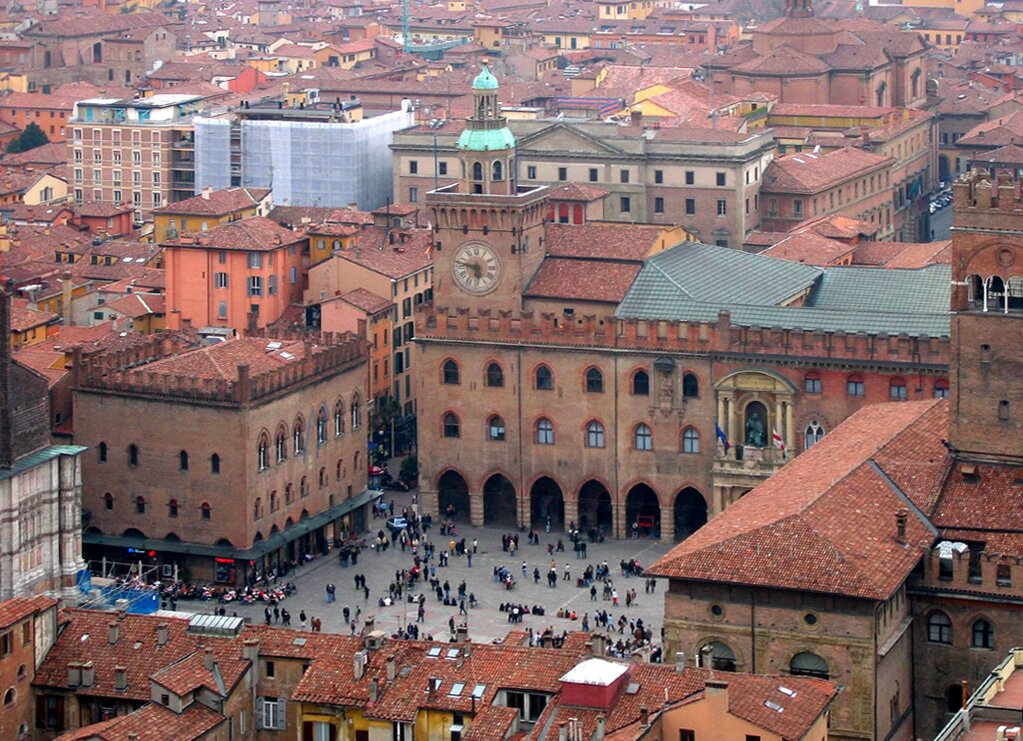
Piazza Maggiore & Basilica di San Petronio, Bologna

02

The Two Towers

Landmark

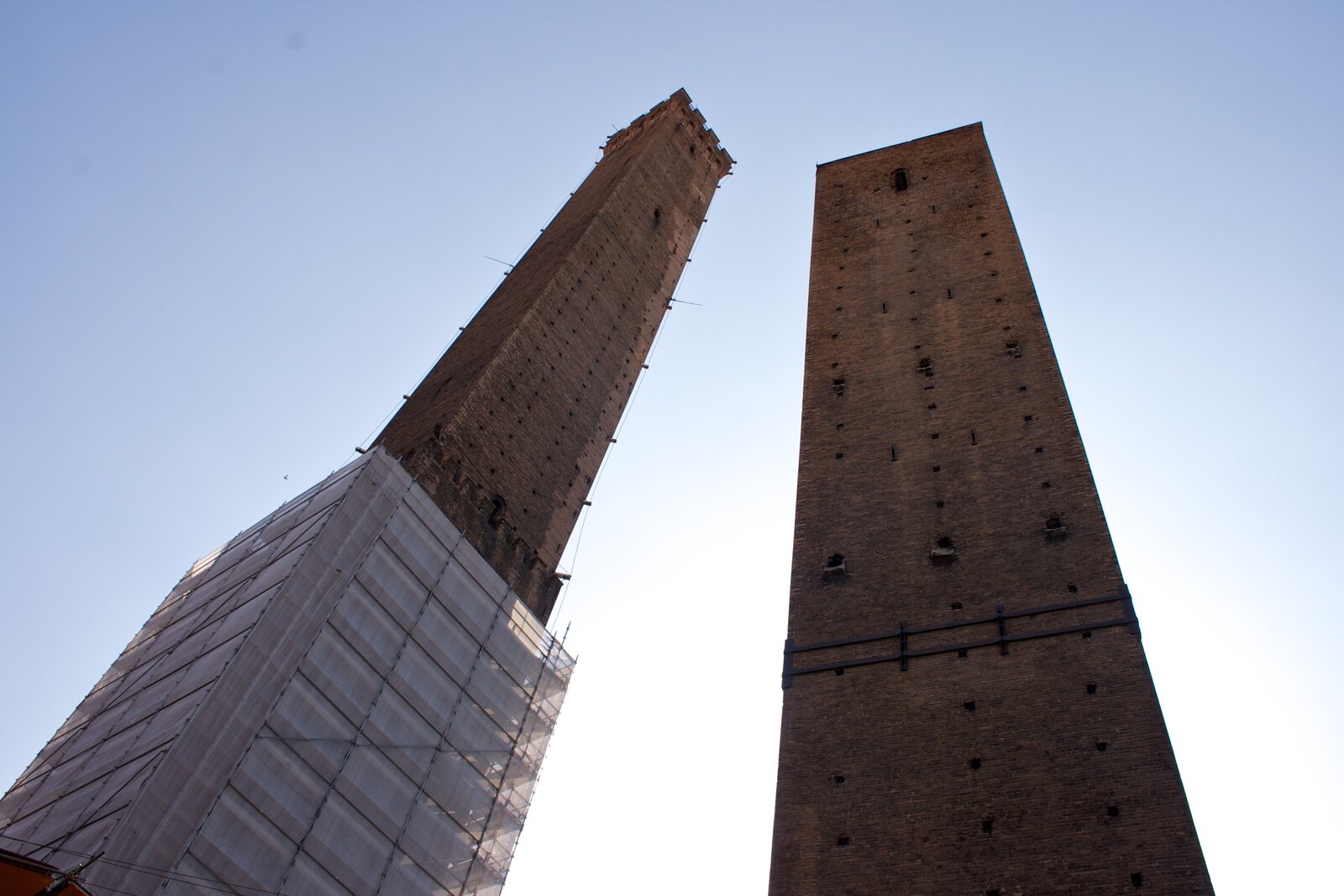
Bologna once had dozens of tower-houses built by competing noble families; around twenty survive. Asinelli is the tall one at roughly 97 metres; Garisenda, beside it, leans dramatically and was truncated in the fourteenth century when it began to tilt. Dante mentions Garisenda in the Inferno.

The Two Towers, Bologna

03

The Portico di San Luca

Walks · UNESCO

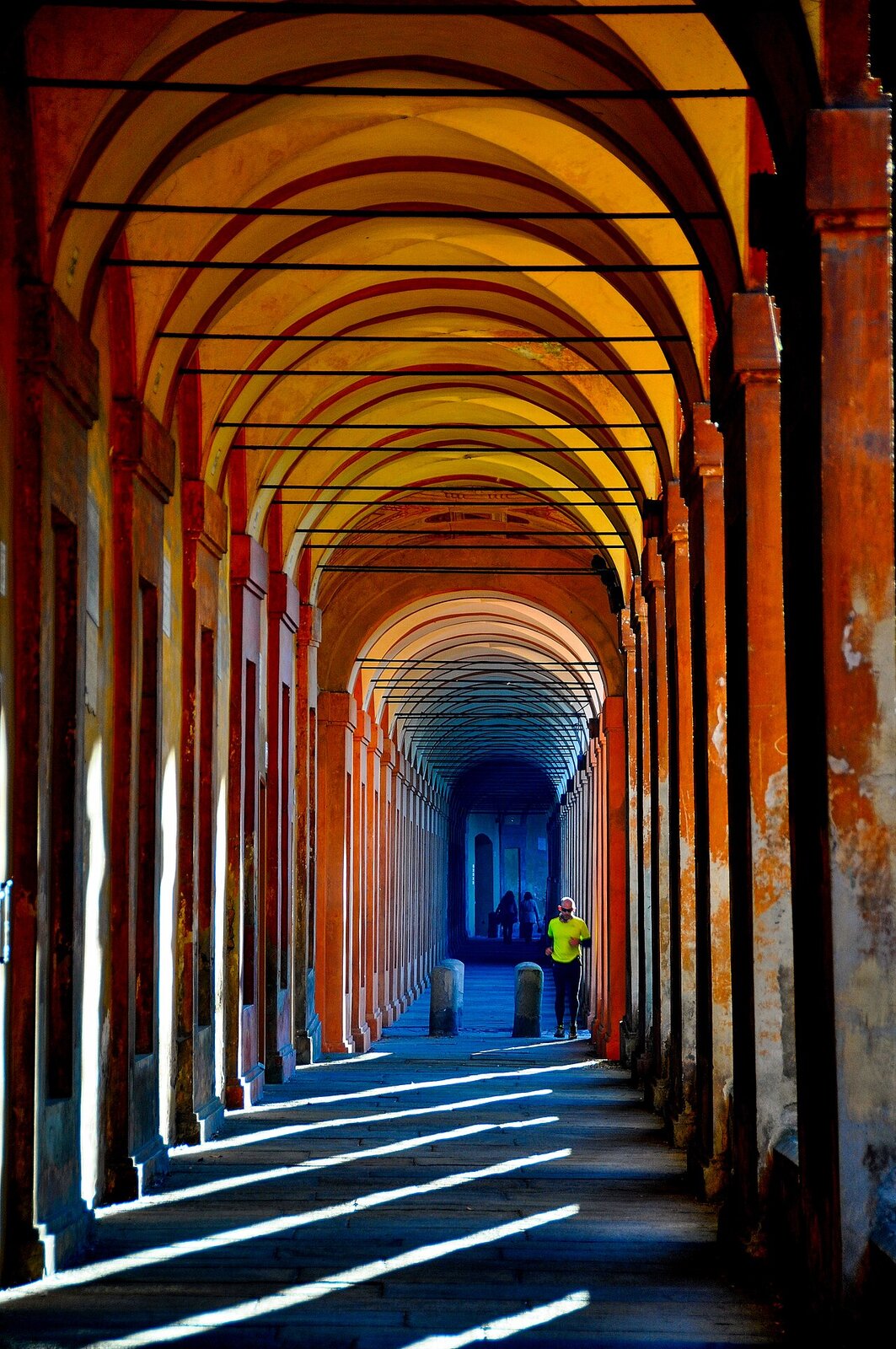
The longest covered walkway in the world: 3.8 kilometres and 666 arches climbing from the city gate to the Sanctuary of San Luca on the Colle della Guardia. It was built between 1674 and 1793 by public subscription, arch by arch, so that a Byzantine icon could be carried into the city each year without getting wet. The climb takes about an hour and the view from the top covers the plain.

Steady uphill in the second half. A city bus runs to the sanctuary if you would rather only walk one direction.

The Portico di San Luca, Bologna

04

The Quadrilatero

Markets · Food

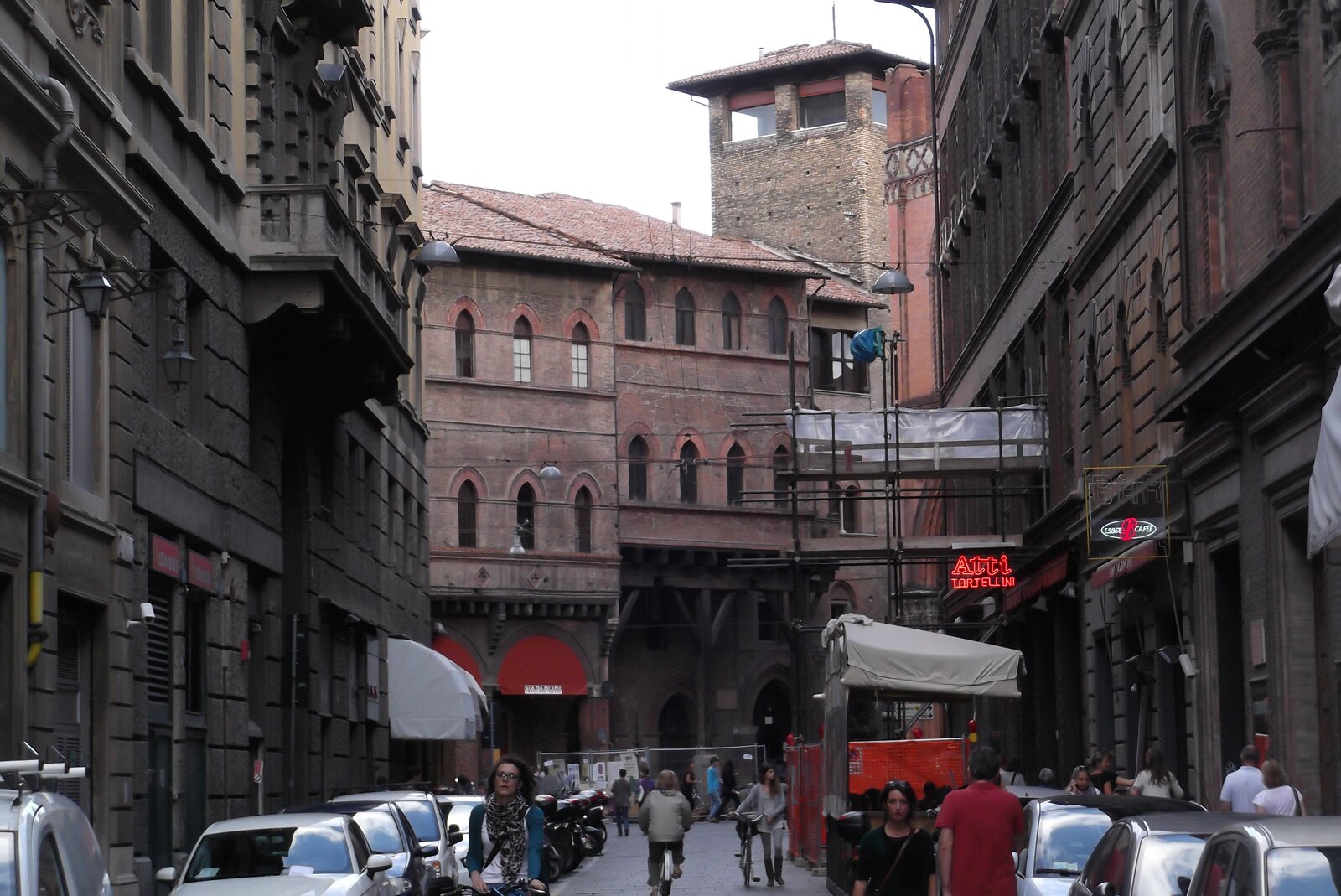
A grid of narrow medieval trade streets just off Piazza Maggiore where the guilds worked, still occupied by food shops. Whole windows of mortadella, aged Parmigiano wheels, fresh tortellini being folded by hand, fishmongers and greengrocers. Street names still record the trades — Via Pescherie Vecchie, Via Drapperie.

Busiest in the morning. Several counters serve wine and a plate standing up from late afternoon.

The Quadrilatero, Bologna

05

Santo Stefano

Churches

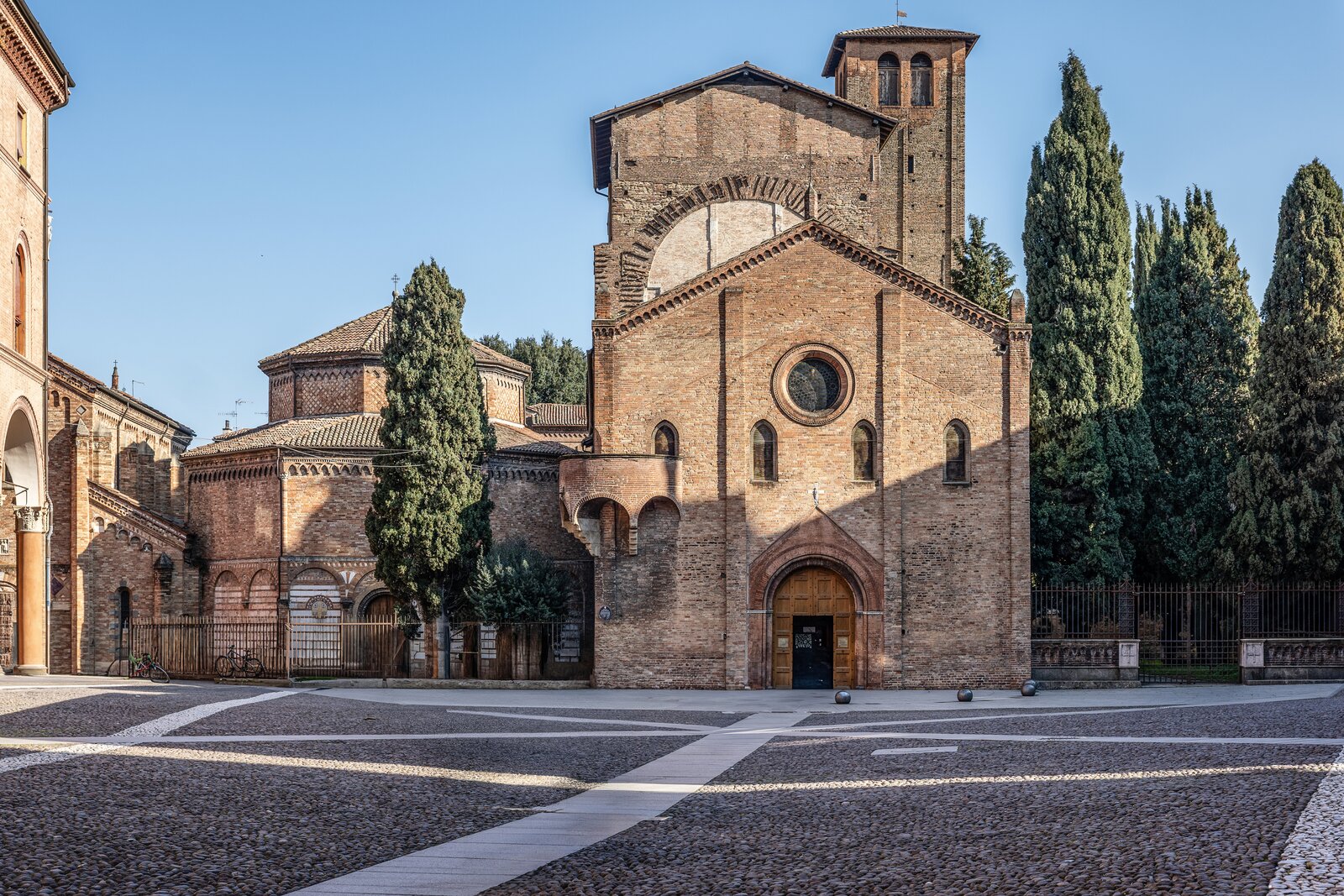
Known as the Seven Churches: a complex of interlinked chapels, courtyards and cloisters built and rebuilt from late antiquity onward, incorporating Roman columns and an early structure meant to evoke the Holy Sepulchre in Jerusalem. It is quiet, layered and much stranger than a single church would be. The piazza in front is the prettiest in the city.

Free entry. Takes about forty minutes and rewards going slowly.

Santo Stefano, Bologna

06

Archiginnasio & the Anatomical Theatre

History

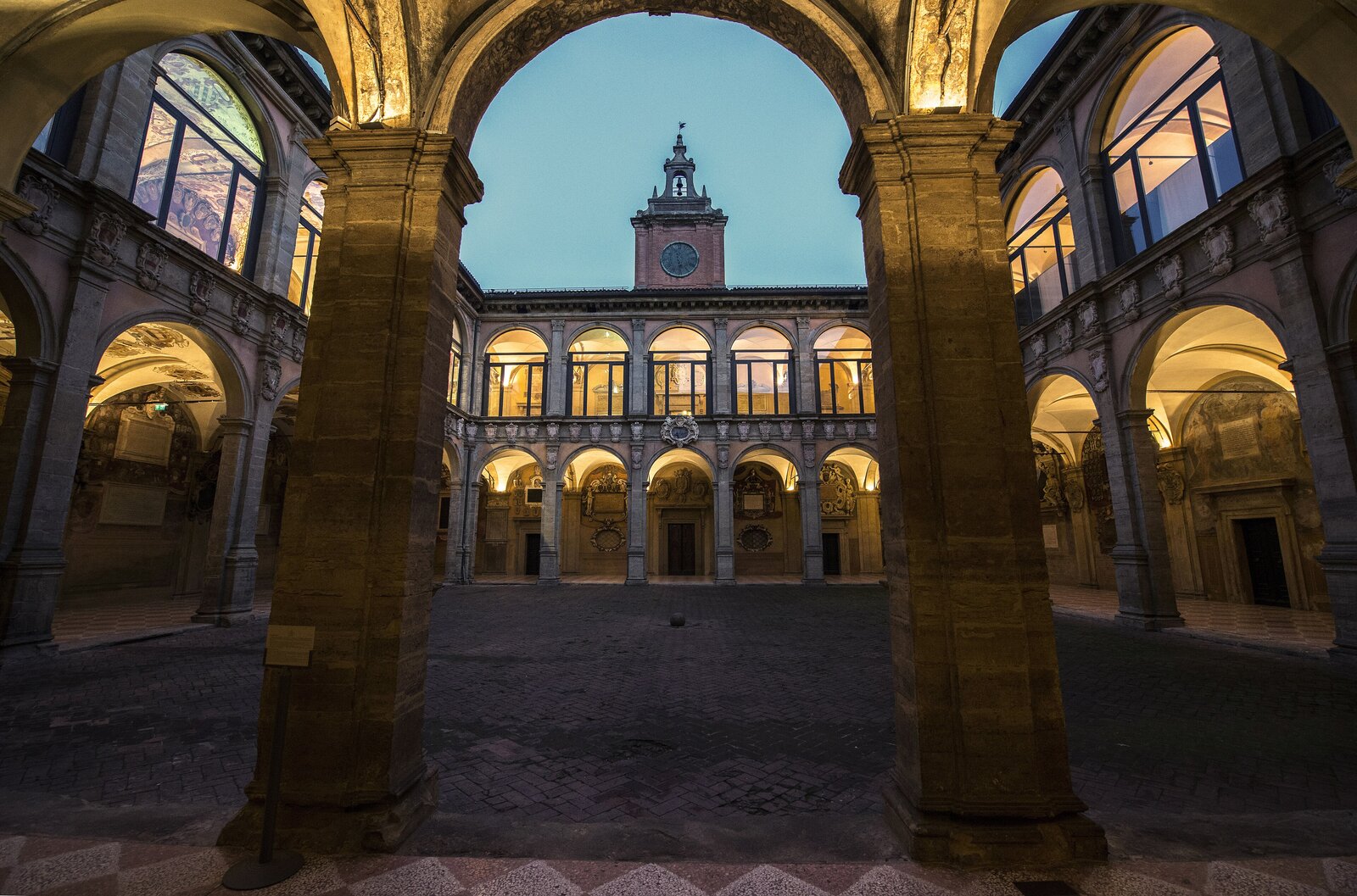
The first permanent home of the university, its walls and ceilings covered with the painted coats of arms of thousands of students. Upstairs, the anatomical theatre is a small amphitheatre panelled entirely in spruce, with tiered benches around a marble dissection table and two flayed figures carved into the canopy. It was rebuilt after bombing in 1944 from the salvaged original pieces.

Cheap and rarely crowded. The library reading room is open to visitors when not in use.

Archiginnasio & the Anatomical Theatre, Bologna

07

MAMbo & the Bologna of today

Modern art

The modern art museum occupies a converted municipal bakery in the Manifattura delle Arti district, with a permanent collection tracing Italian art since 1945 and a strong programme of temporary shows. The attached Morandi collection is the reason to go: Giorgio Morandi spent a career painting the same bottles and jars, and the accumulation is quietly hypnotic.

The surrounding district has the city's better contemporary bars and a cinema in a converted warehouse.

MAMbo & the Bologna of today, Bologna

08

Eating in Bologna

Food

Emilia-Romagna produces Parmigiano Reggiano, prosciutto di Parma, mortadella, balsamic vinegar from Modena and the region's egg pasta. In the city that means tagliatelle al ragù — what the rest of the world miscalls bolognese, and never served on spaghetti here — tortellini in capon broth, and lasagne verde. Book dinner; the good places fill.

Consider a half-day trip to a Parmigiano dairy or balsamic acetaia near Modena, about thirty minutes by train.

Eating in Bologna, Bologna

Planning

Before you go

When to visit

Spring and autumn. The Po valley is humid and hazy in summer and foggy in winter. Term time, roughly October to May, means the city is at full energy.

Getting around

The centre is compact and covered. Bologna Centrale is one of Italy's busiest interchanges, with high-speed services in every direction. A shuttle monorail links the airport to the station in about seven minutes.

Eat and drink

Do not ask for spaghetti bolognese. Do order tortellini in brodo, tagliatelle al ragù, tigelle and crescentine with cured meats and squacquerone cheese, and a glass of Pignoletto or Lambrusco — the real thing is dry and it works.