Italia.

Ten cities · A clickable chart

Tuscany · 43.7696° N  11.2558° E

Florence Firenze

Florence is small. You can walk from one side of the historic centre to the other in twenty-five minutes, which makes it strange to realise that within those walls, over roughly a century, a group of painters, sculptors and architects rebuilt the way Europe saw the world.

Region
Tuscany
Airports
Florence FLR · Pisa PSA
Getting around
Walkable; trams and buses to the edges
Give it
2–3 days

Where the Renaissance was invented

The city is dominated by one object: Brunelleschi's dome, finished in 1436, still the largest masonry dome ever built and visible from nearly every street. It was engineered without a full centering frame, using a herringbone brick pattern and two shells, and nobody has entirely agreed on how he did it.

The concentration of art here is unusual even by Italian standards. The Uffizi and the Accademia hold works that anchor entire chapters of art history, and both require booking. Beyond them, the churches are free or cheap and often as rewarding — Santa Croce, San Lorenzo, Santa Maria Novella.

Two days covers the essentials at a brisk pace. Three lets you cross the river into the Oltrarno, which is where the artisan workshops still are and where the restaurants are noticeably better value.

What to see

Florence attractions

Planning a visit? See the practical guide →

01

Duomo di Santa Maria del Fiore

Architecture

The cathedral complex is four separate things: the church itself, Brunelleschi's dome, Giotto's bell tower and the octagonal Baptistery. The dome climb takes you between the inner and outer shells and out onto the lantern for the best view in the city. The Baptistery's east doors — Ghiberti's gilded panels that Michelangelo reportedly called the Gates of Paradise — are replicas outside; the originals are in the Museo dell'Opera del Duomo.

The dome climb requires a timed reservation and involves 463 steps with no lift and narrow passages. The campanile is a separate 414 steps and gives you the dome in your photo.
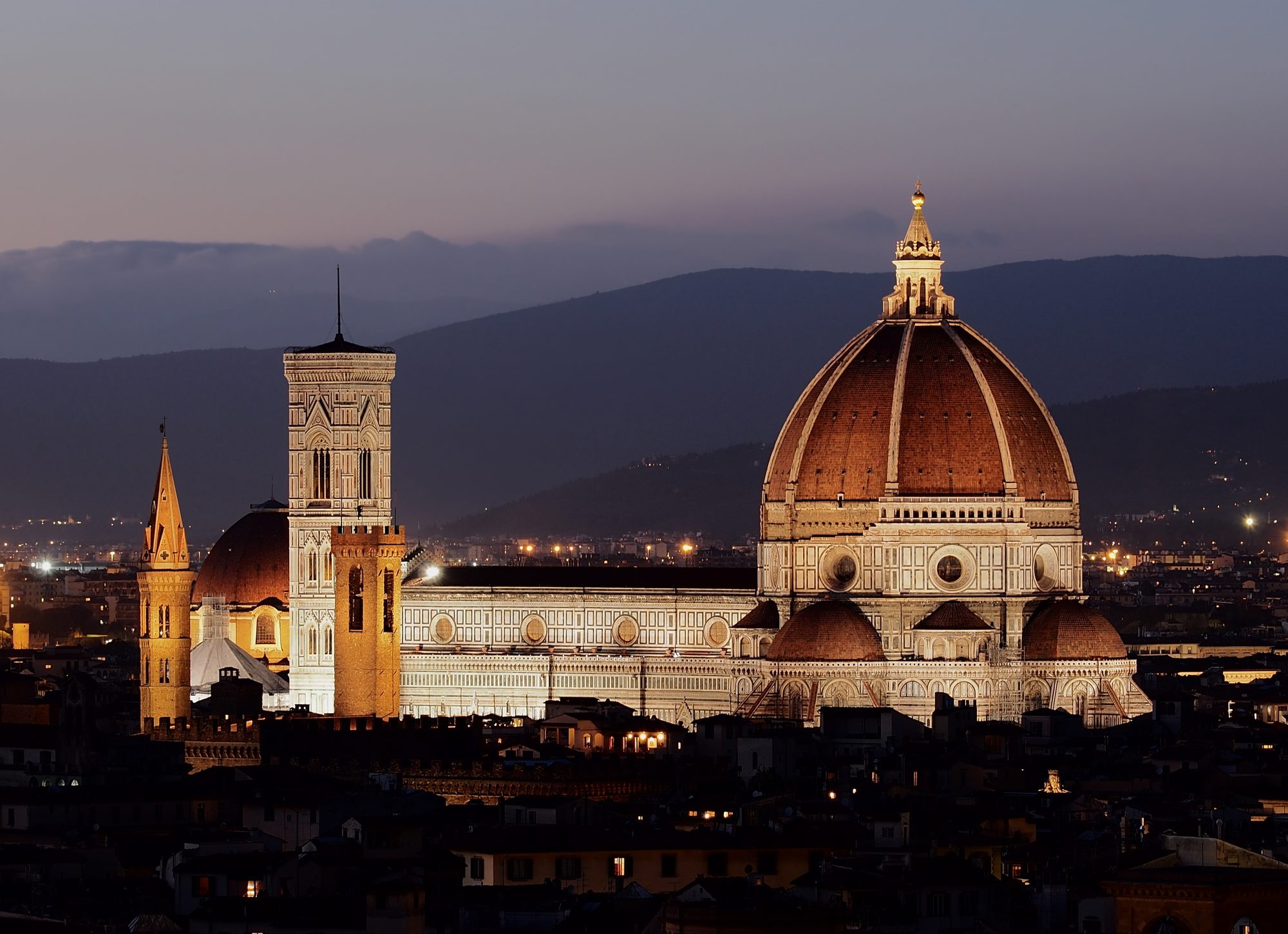
Duomo di Santa Maria del Fiore, Florence

02

Galleria degli Uffizi

Art

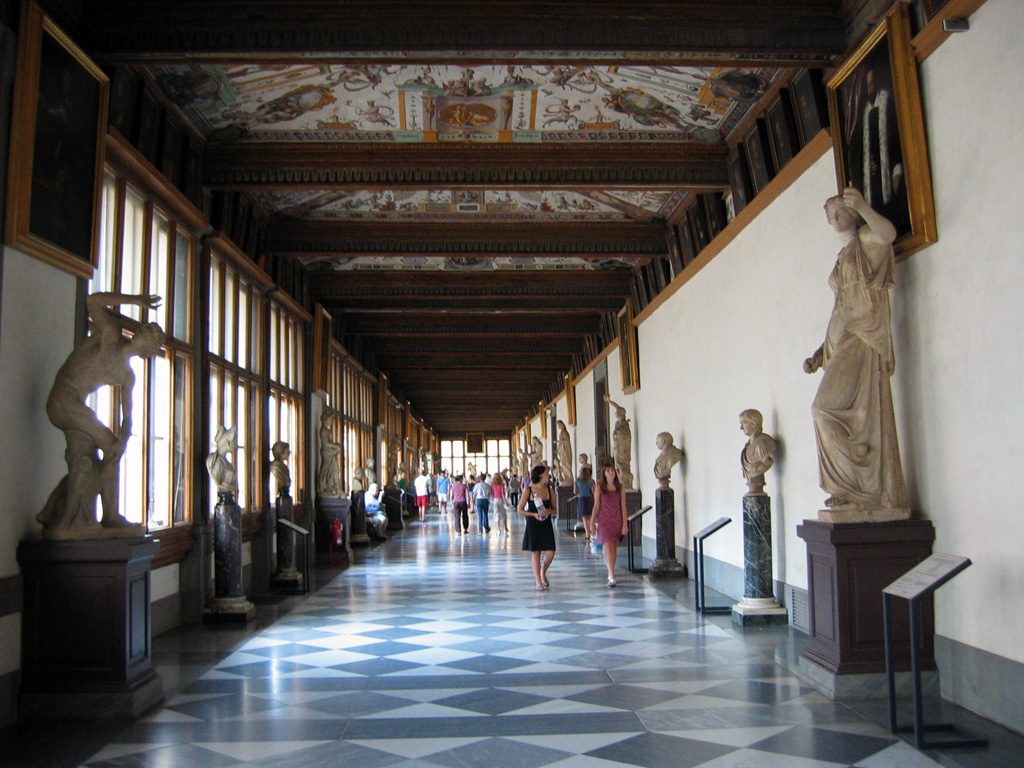
Built as government offices for Cosimo I — uffizi literally means offices — and turned into one of the first modern museums. The Botticelli rooms hold the Birth of Venus and Primavera. Elsewhere: Leonardo's Annunciation, Michelangelo's Doni Tondo, Titian's Venus of Urbino, and Caravaggio's Medusa and Bacchus. The corridor windows over the Arno are worth pausing at.

Book a timed slot. The last two hours before closing are markedly quieter than the morning.

Galleria degli Uffizi, Florence

03

Galleria dell'Accademia

Art

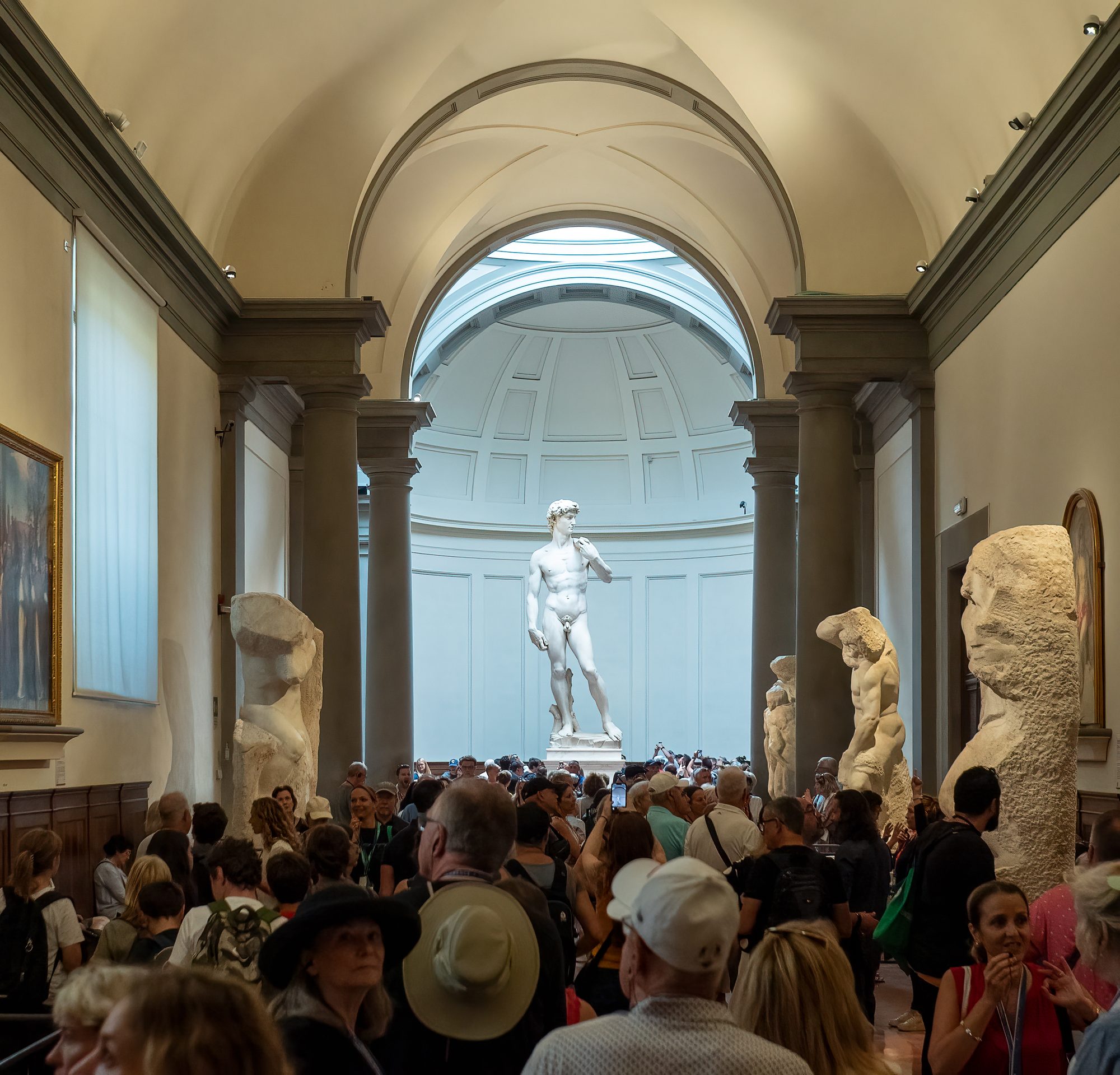
Most people come for one statue. Michelangelo finished David in 1504 from a block of Carrara marble another sculptor had abandoned, and it is considerably larger and stranger in person than photographs suggest — the hands and head are deliberately oversized. The corridor leading up to it holds the unfinished Prisoners, figures apparently struggling out of the raw stone.

A small museum with a long queue. Book ahead; the visit itself takes about an hour.

Galleria dell'Accademia, Florence

04

Ponte Vecchio

Landmark

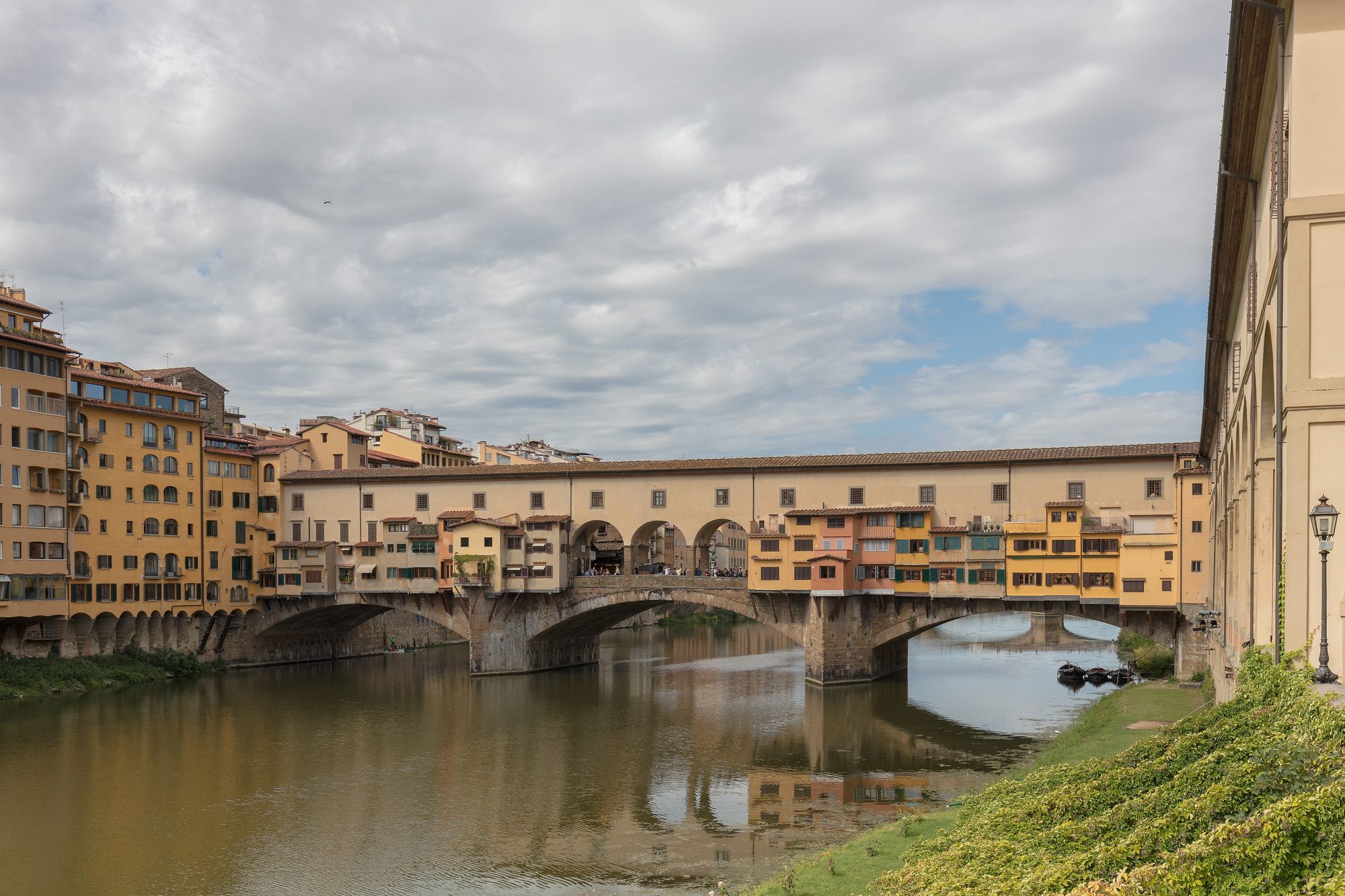
The only bridge in Florence the retreating German army left standing in 1944. Shops have lined it since the medieval period — butchers and tanners originally, until the Medici replaced them with goldsmiths in 1593 to improve the smell on the route to their palace. The enclosed Vasari Corridor runs above the shops, linking the Uffizi to Palazzo Pitti.

Photograph it from Ponte Santa Trinita, one bridge west, rather than from the bridge itself.

Ponte Vecchio, Florence

05

Palazzo Pitti & Boboli Gardens

Palace · Gardens

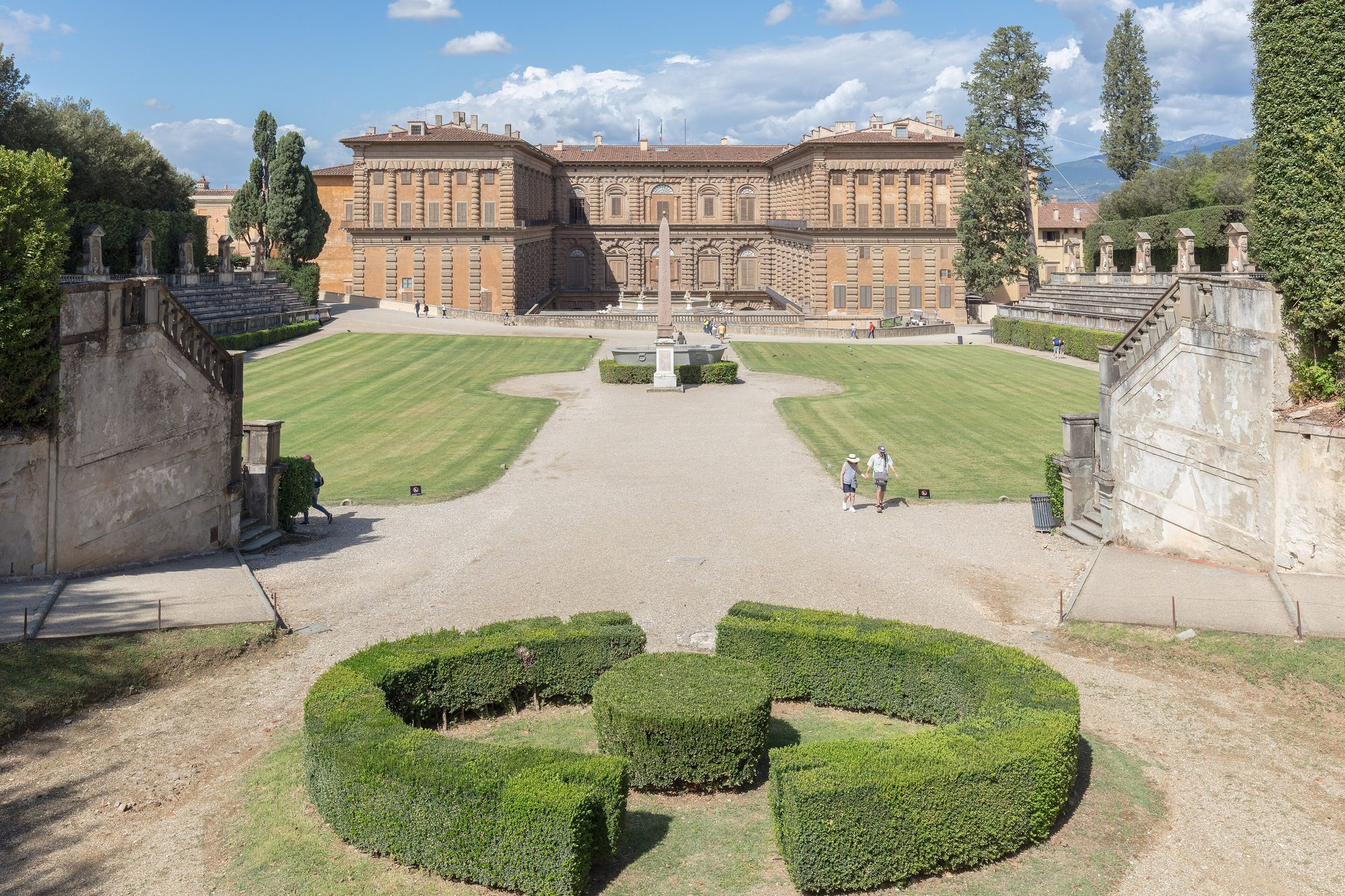
The Medici bought this vast palace across the river in 1550 and kept expanding it. The Palatine Gallery hangs paintings floor to ceiling in the old aristocratic manner, with a remarkable group of Raphaels. Behind, the Boboli Gardens climb the hillside in terraces of hedges, grottoes and fountains — an early model for formal European garden design.

Palace and gardens are ticketed separately or as a combined pass. The gardens need comfortable shoes and about ninety minutes.

Palazzo Pitti & Boboli Gardens, Florence

06

Basilica di Santa Croce

Churches

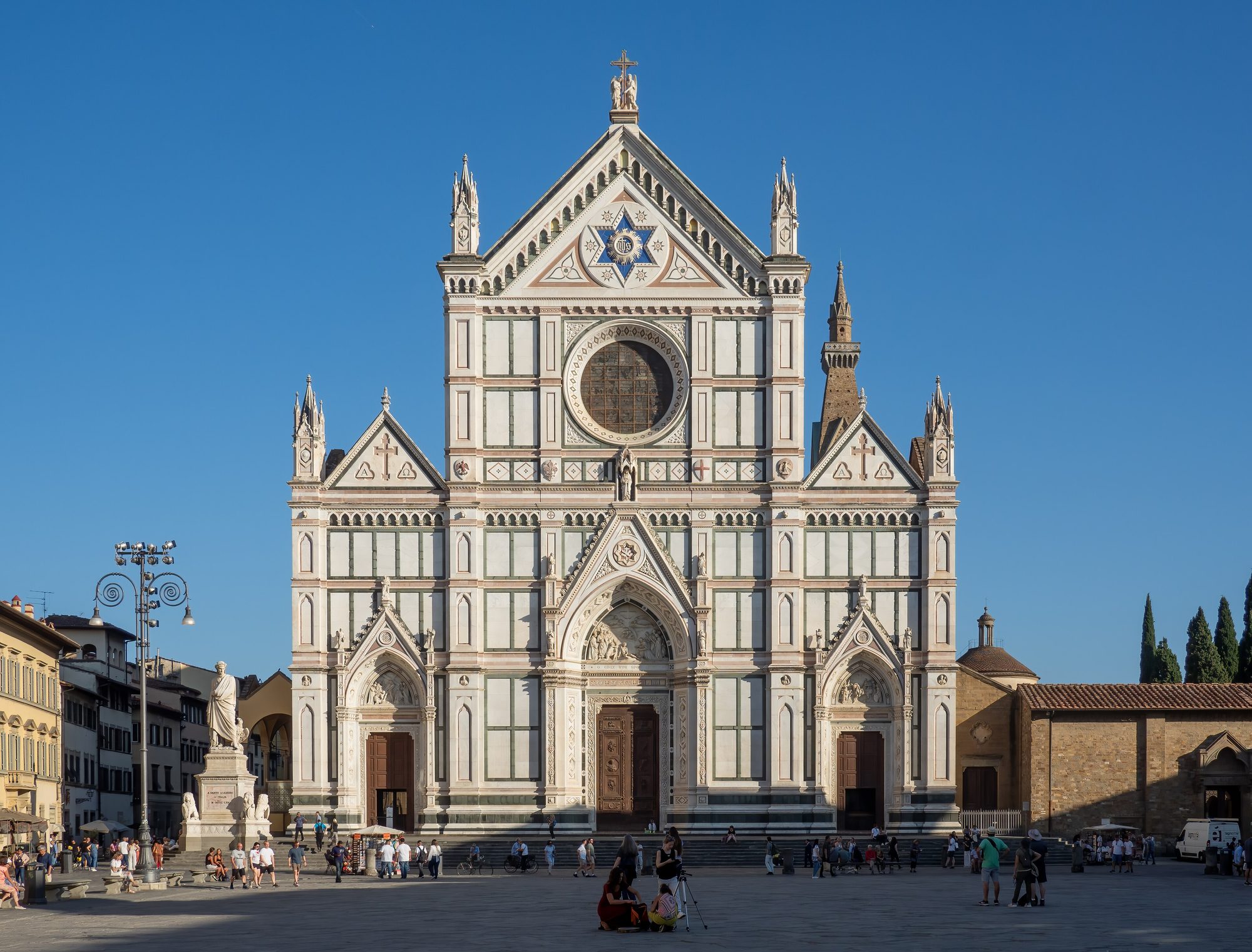
The Franciscan church where Florence buried its own: Michelangelo, Galileo, Machiavelli and Rossini all have monuments here, and Dante has a cenotaph though he is actually buried in Ravenna. The Bardi and Peruzzi chapels hold Giotto frescoes that mark the moment painting started to develop real depth and human weight.

The leather school at the back of the complex has operated since just after the Second World War and is open to visitors.

Basilica di Santa Croce, Florence

07

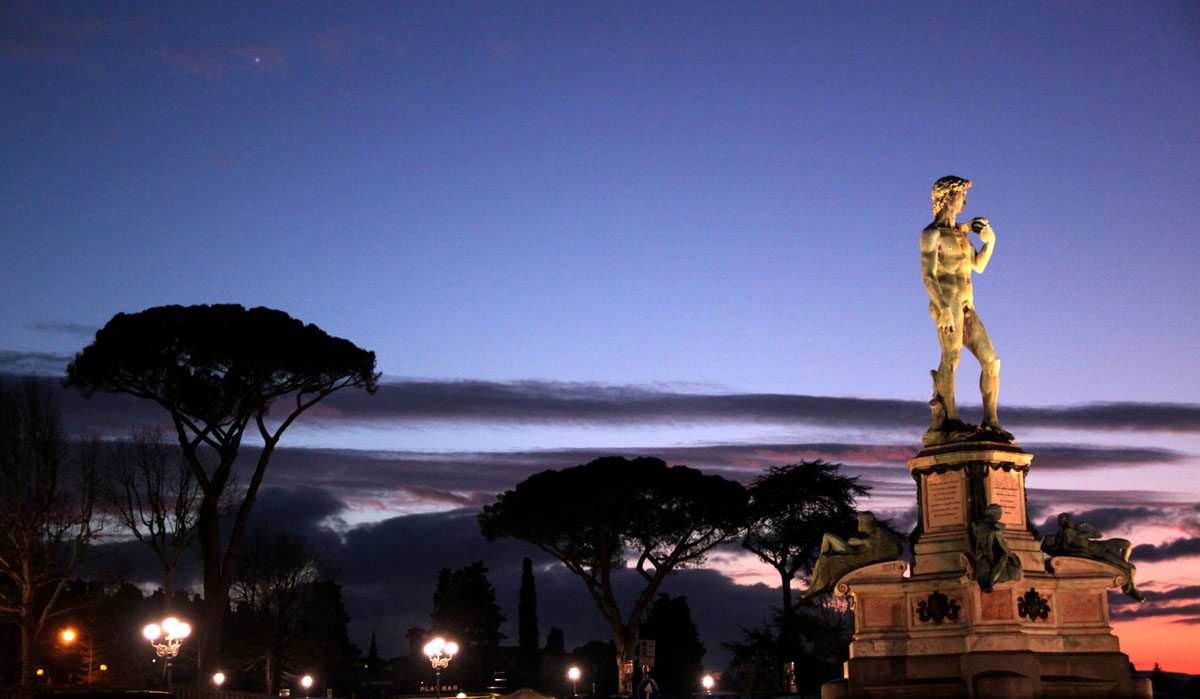
Piazzale Michelangelo

Viewpoint

A terrace on the hillside south of the river with the classic postcard view: the dome, the campanile, the Arno and its bridges lined up against the Tuscan hills. It is busiest at sunset, for good reason. Keep climbing another ten minutes to San Miniato al Monte, an eleventh-century Romanesque church with a green-and-white marble facade and, most evenings, Gregorian chant.

Walk up through the Rose Garden from Porta San Niccolò rather than taking the bus — it is about twenty minutes and much better.

Piazzale Michelangelo, Florence

08

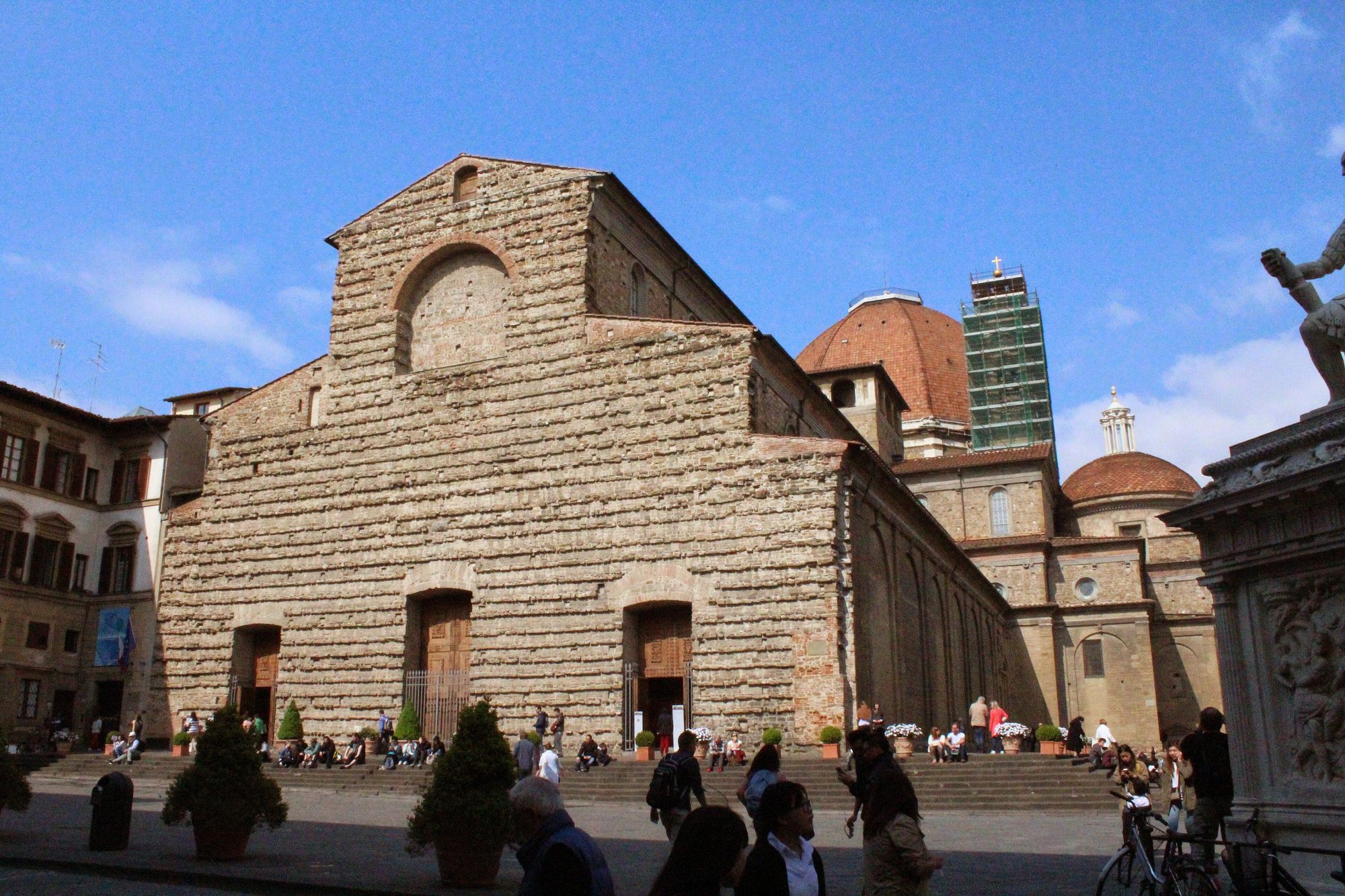
San Lorenzo & the Medici Chapels

Art · Architecture

The Medici parish church, with Brunelleschi's Old Sacristy and Michelangelo's New Sacristy facing each other across the same building. The New Sacristy holds Michelangelo's allegorical tomb figures of Night, Day, Dawn and Dusk. Next door, the Laurentian Library staircase is one of the strangest and most influential pieces of architecture in the city.

The chapels and the library keep different opening hours from the church.

San Lorenzo & the Medici Chapels, Florence

Planning

Before you go

When to visit

April to June and September to October. Florence sits in a river basin and traps summer heat badly; July and August are uncomfortable. Winter is quiet, crisp and the museums are yours.

Getting around

Walk. The centre is a restricted traffic zone and taxis cannot enter much of it. Pisa airport connects by a dedicated shuttle to Florence's main station; the train from Santa Maria Novella reaches Bologna in around forty minutes and Rome in about ninety.

Eat and drink

Tuscan cooking is plain and good: bistecca alla fiorentina (a thick T-bone, served rare, priced by weight), ribollita, pappa al pomodoro, and lampredotto — tripe in a bread roll — from street carts. Cross to the Oltrarno or the Sant'Ambrogio market area for better prices.