Italia.

Ten cities · A clickable chart

Liguria · 44.4056° N  8.9463° E

Genoa Genova

Genoa was one of the great maritime republics, rich enough in the sixteenth century to bankroll the Spanish crown. It spent that money on palaces, then packed them into an old town of alleys so narrow and tall that daylight barely reaches the ground.

Region
Liguria
Airport
Genoa Cristoforo Colombo GOA
Getting around
Walking, plus funiculars and public lifts
Give it
2 days

A maritime republic wound into steep alleys

The caruggi — the alley network of the old town — is one of the largest medieval centres in Europe by area, and it is genuinely disorienting. Streets a metre and a half wide open without warning into a square with a cathedral in it.

The city turns its back on visitors at first. It is a working port, industrial in places and vertical everywhere, with public lifts and funiculars instead of streets in the upper districts. Give it a day and it starts to make sense.

Genoa is also the gateway to the Riviera. Camogli, Portofino and the Cinque Terre are all reachable by regional train along the coast in under two hours.

What to see

Genoa attractions

01

Via Garibaldi & the Palazzi dei Rolli

Architecture · UNESCO

In the sixteenth century Genoa had no royal palace, so the Republic kept an official register — the rolli — of private houses grand enough to lodge visiting heads of state, assigned by lottery. Forty-two of them made the UNESCO list. Three on Via Garibaldi are open as the Musei di Strada Nuova, with Van Dyck, Rubens and Caravaggio inside and frescoed halls that are half the point.

One ticket covers Palazzo Rosso, Palazzo Bianco and Palazzo Tursi. The roof terrace of Palazzo Rosso gives a rooftop view over the old town.
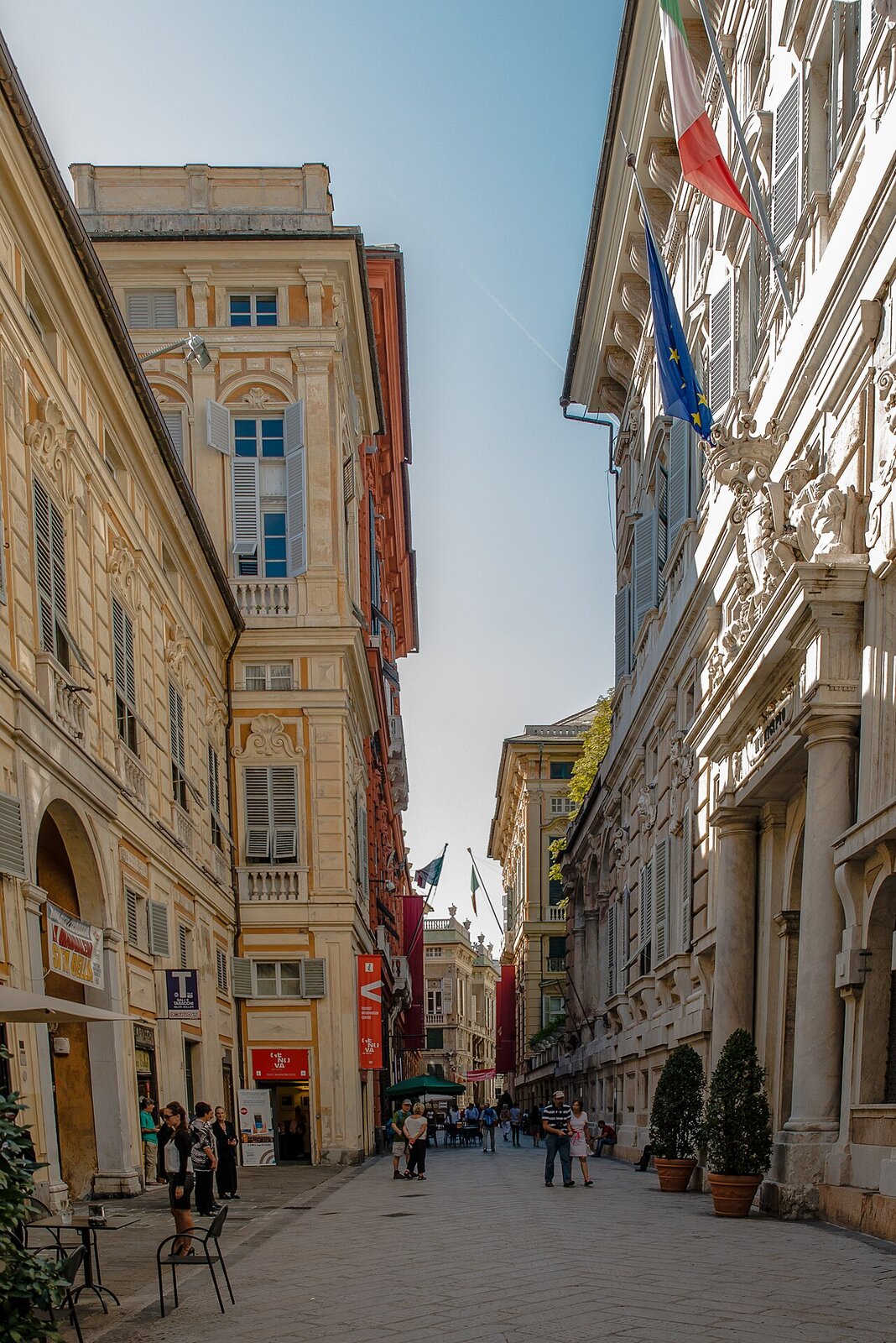
Via Garibaldi & the Palazzi dei Rolli, Genoa

02

The caruggi

Neighbourhood

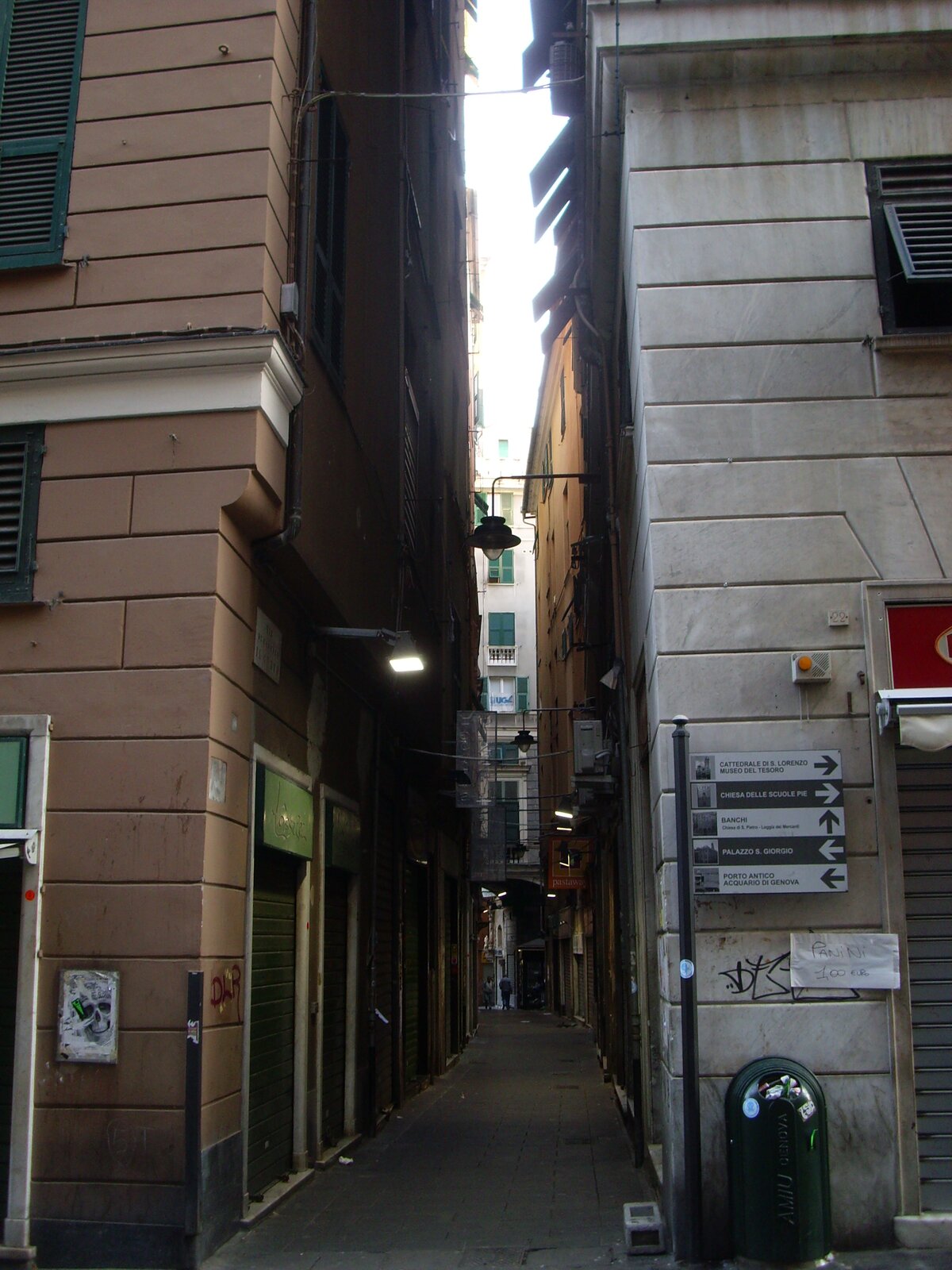
The medieval alley network behind the port, where the walls run six storeys up and the alleys stay in shadow all day. Shops in some lanes have traded in the same goods for centuries — there are still confectioners, tripe sellers and drysalters occupying premises from the eighteenth century. Small squares appear with no warning.

Perfectly walkable during the day. Some lanes near the waterfront are best avoided late at night; stick to the busier routes after dark.

The caruggi, Genoa

03

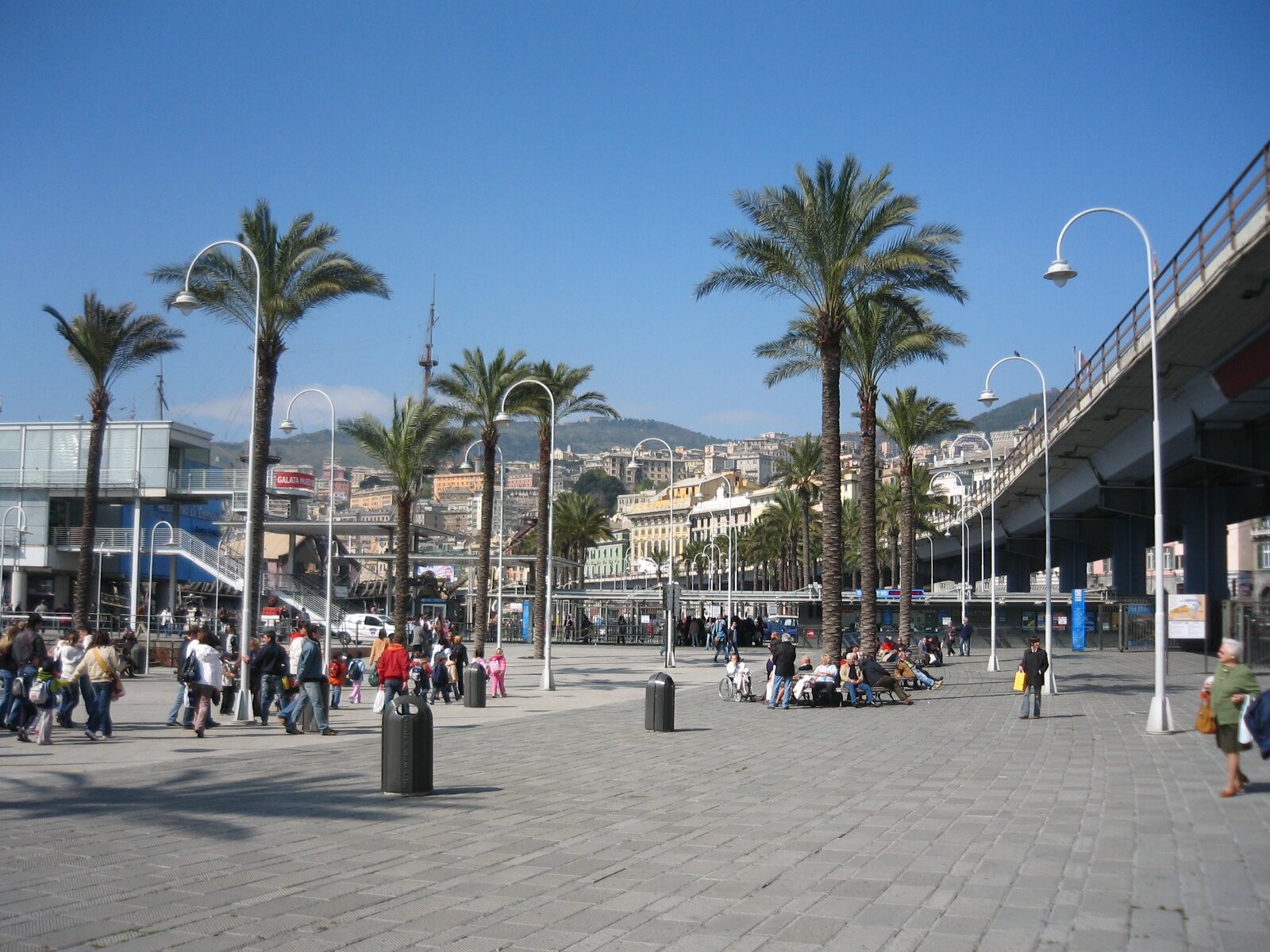
Acquario di Genova & Porto Antico

Waterfront · Families

Renzo Piano, who is from Genoa, redeveloped the derelict old harbour for the 1992 Columbus anniversary and kept working on it since. The aquarium is the largest in Italy and built around a series of large habitat tanks. Alongside it: the Bigo panoramic lift on a crane arm, and the Biosfera, a glass sphere over the water holding a small tropical ecosystem.

The aquarium is busy at weekends and in school holidays; a timed ticket helps. Allow two to three hours.

Acquario di Genova & Porto Antico, Genoa

04

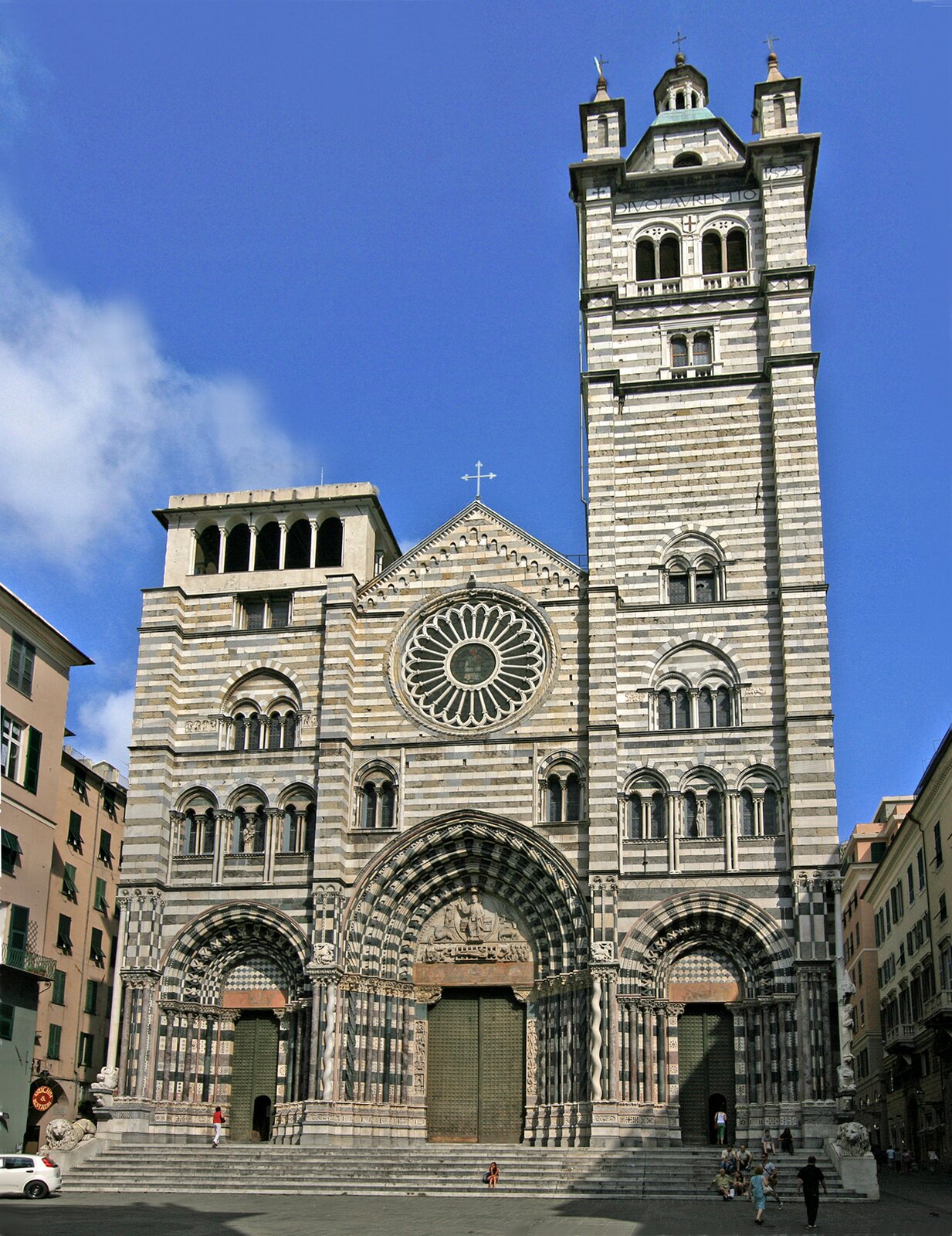
Cattedrale di San Lorenzo

Churches

Striped black and white marble in the Ligurian Gothic manner, with a heavily carved thirteenth-century portal. Inside the nave sits a British naval shell that came through the roof during a bombardment in 1941 and failed to detonate; it has been left in place with a plaque. The treasury below holds a green glass dish that medieval Genoa believed to be the Holy Grail.

The striped stone was a status marker — only families granted the privilege could use it on their own houses.

Cattedrale di San Lorenzo, Genoa

05

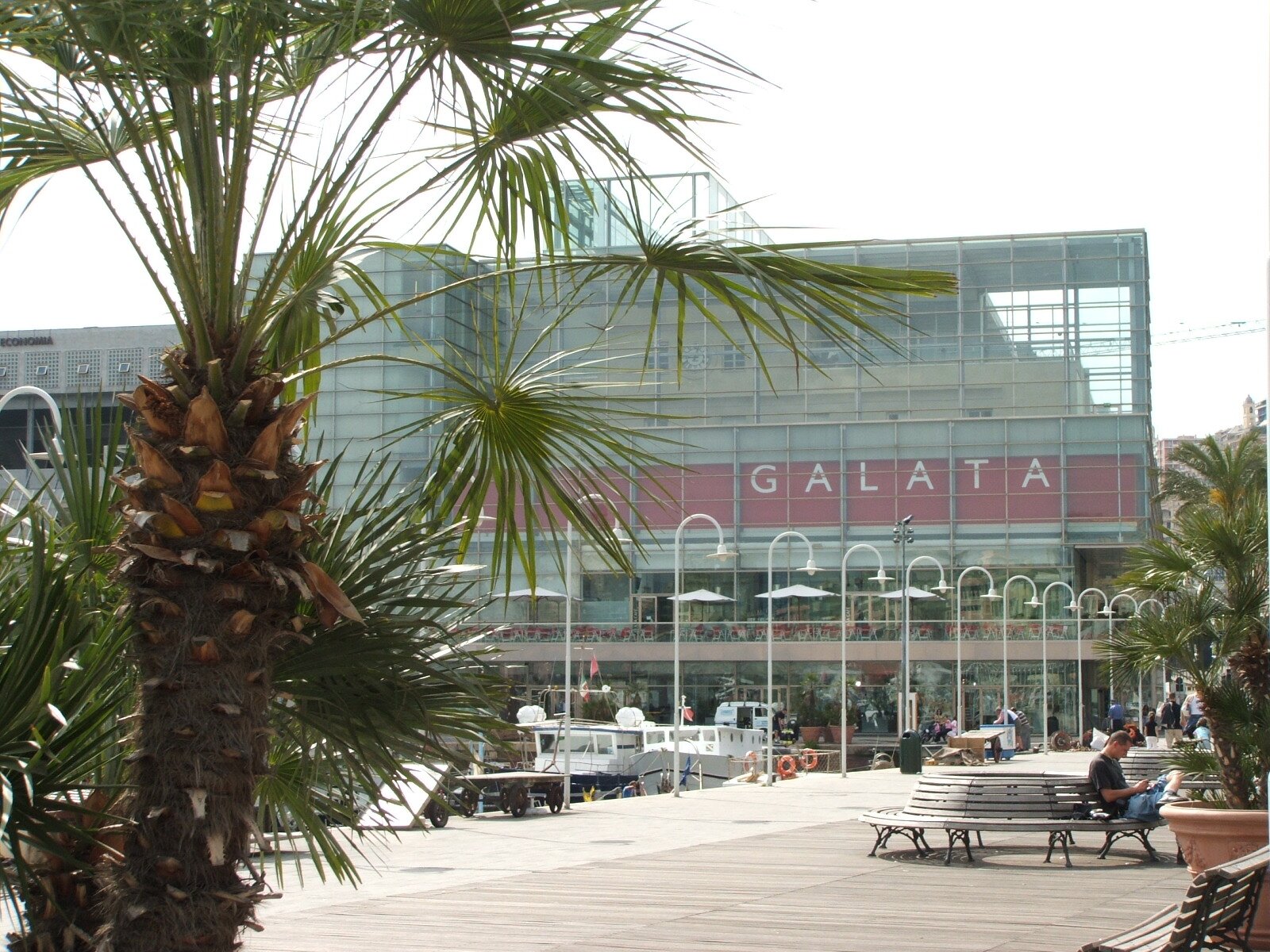
Galata Museo del Mare

Museums

The largest maritime museum in the Mediterranean, on the old harbour. A full-size reconstructed Genoese galley occupies one hall, and an extensive section covers Italian emigration, following the journey from the departure hall through steerage. Moored outside is the Nazario Sauro, a decommissioned submarine you can walk through.

The submarine is a separate ticket and involves ladders and very tight compartments.

Galata Museo del Mare, Genoa

06

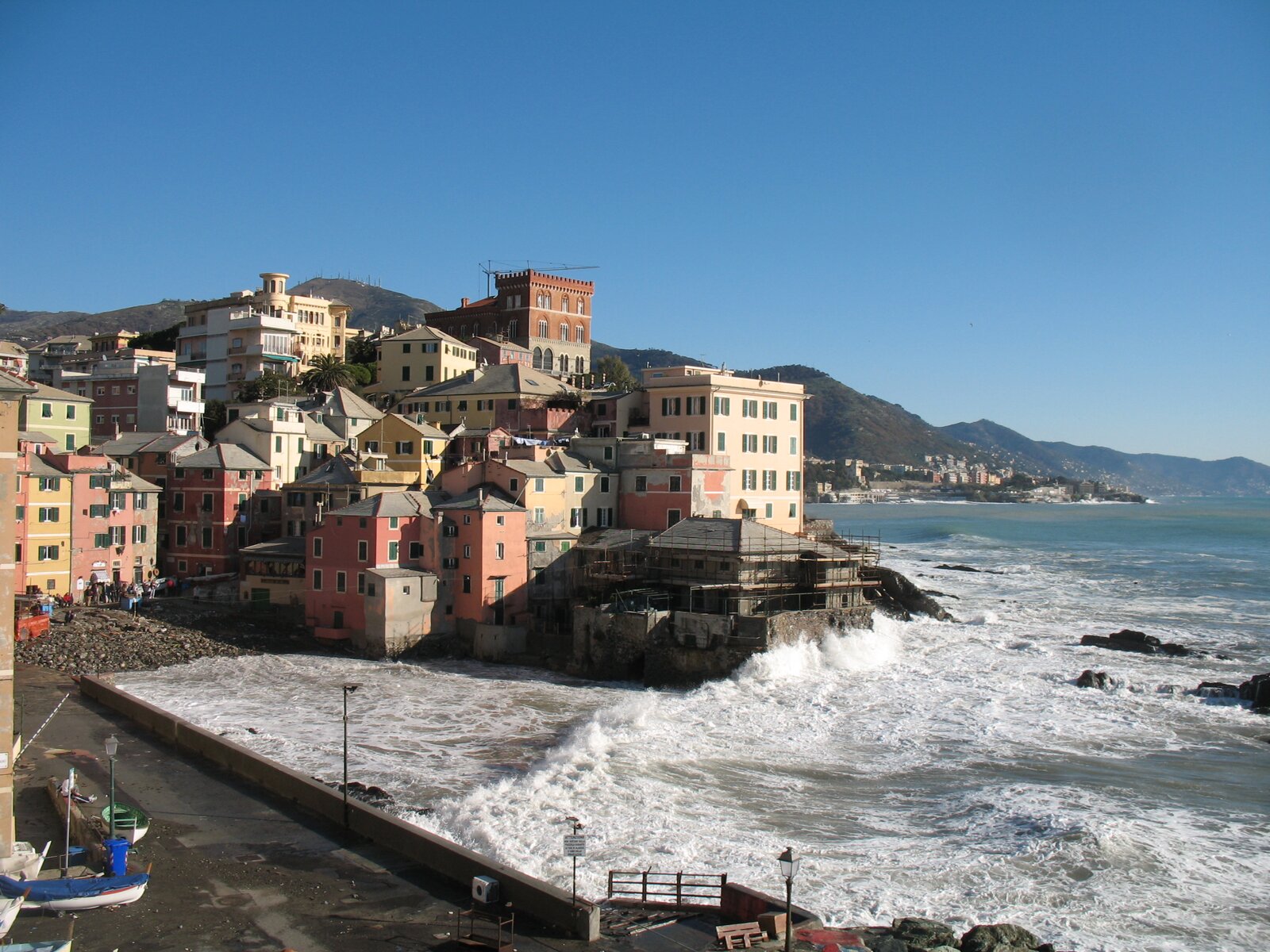
Boccadasse

Neighbourhood · Coast

A former fishing hamlet swallowed by the city but still intact: a pebble cove, boats pulled up on the shingle, and ochre and pink houses stacked around it. It sits at the end of Corso Italia, the seafront promenade east of the centre, and a walk out there in the late afternoon followed by a gelato on the rocks is the standard Genoese Sunday.

About forty minutes on foot from the old town along the sea, or a short bus ride.

Boccadasse, Genoa

07

Spianata Castelletto & the public lifts

Viewpoint

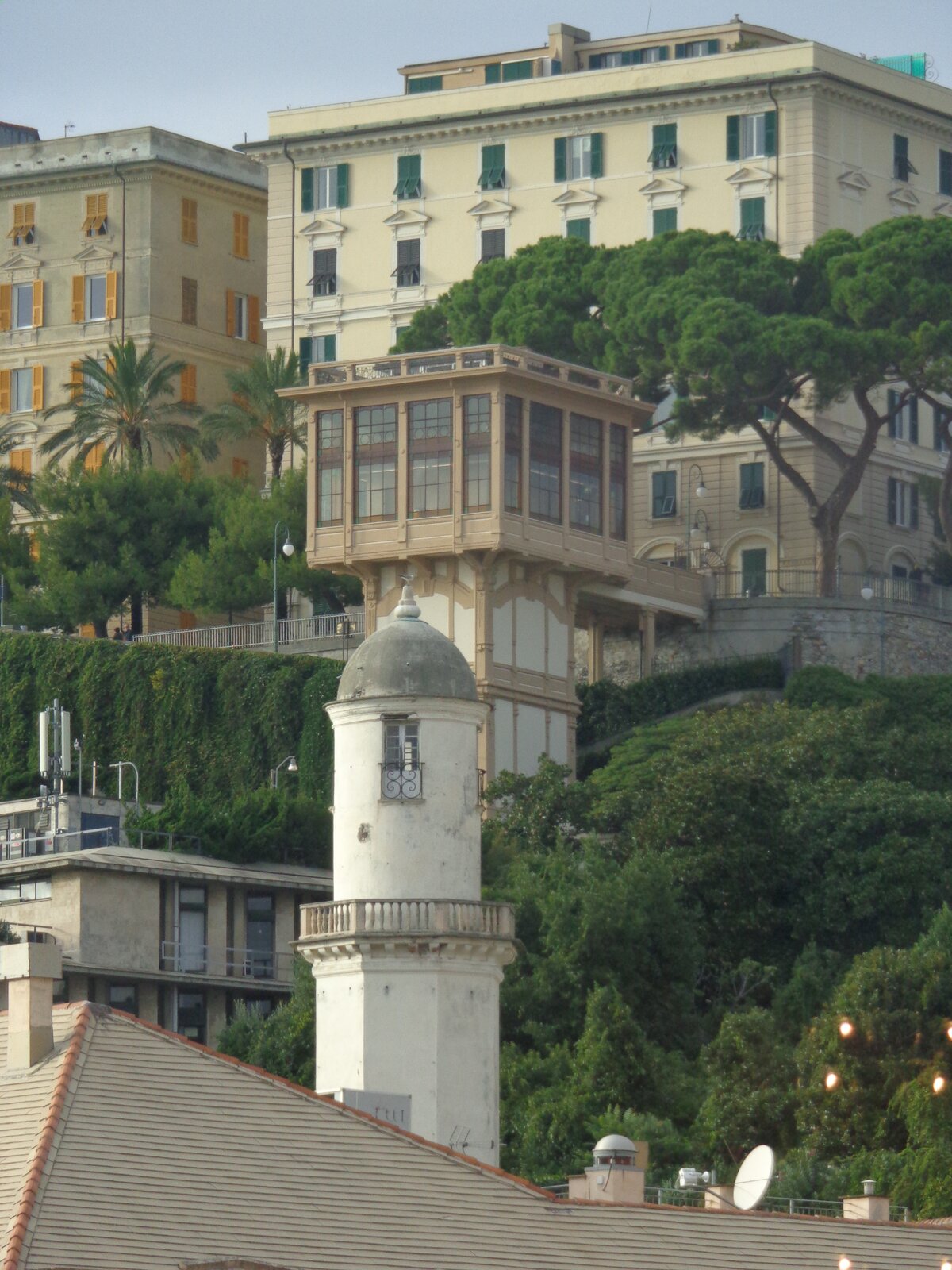
Genoa is built on a slope and treats vertical transport as public transport: a network of funiculars, cog railways and Art Nouveau lifts built into the hillside, all on the ordinary transit ticket. The Castelletto lift rises from Piazza Portello to a terrace looking straight down over the old town roofs to the harbour — a view the poet Giorgio Caproni wrote about.

Use the same ticket as the buses. The Zecca–Righi funicular climbs much higher, to the old fortifications on the ridge.

Spianata Castelletto & the public lifts, Genoa

08

The Riviera by train

Day trips

The coastal railway hugs the shore in both directions. East: Camogli, the abbey at San Fruttuoso reachable only by boat or footpath, Portofino, and then the Cinque Terre villages roughly two hours out. West: Noli, Finale Ligure and the beaches of the Riviera di Ponente. Regional trains are cheap and frequent.

Cinque Terre requires a park card for the coastal walking paths, and some trails close after rain.

The Riviera by train, Genoa

Planning

Before you go

When to visit

May, June and September are ideal — warm enough for the coast without the August crush. Liguria gets significant rain in autumn. Winter is mild and the city is at its most workaday.

Getting around

Walk the old town; use the funiculars and lifts for the upper city. Genoa has two main stations, Principe and Brignole, and the coastal line runs frequent regional trains in both directions.

Eat and drink

Ligurian food is green and frugal: pesto genovese pounded with Genoese basil, pine nuts and two cheeses, traditionally on trofie or trenette with potato and beans; focaccia eaten at any hour, including for breakfast; farinata, a chickpea flour pancake baked in a copper pan; and pansoti with walnut sauce.