Italia.

Ten cities · A clickable chart

Lazio · 41.9028° N  12.4964° E

Rome Roma

No other city keeps this much of its own history above ground. A single walk can take you past an imperial amphitheatre, a working Baroque church, a 2,000-year-old temple still holding up the largest unreinforced concrete dome ever built, and a café that has been pouring coffee since before Italy was a country.

Region
Lazio
Airports
Fiumicino FCO · Ciampino CIA
Getting around
Metro lines A, B and C; buses and trams
Give it
3–4 days minimum

The capital, layered three thousand years deep

Rome rewards a slow pace and punishes a rushed one. The historic centre is compact enough to cross on foot in about forty minutes, but the density is the point: you do not tick off sights so much as keep bumping into them. Give it three days minimum; four is better, and the fourth is the one where the city stops being a checklist.

The two great concentrations sit on opposite sides of the Tiber. East of the river is ancient and Baroque Rome — the Colosseum, the Forum, the Pantheon, the fountains. West is Vatican City and Trastevere. Most visitors underestimate how long the Vatican Museums take and how much walking the archaeological zone involves.

Almost everything major now uses timed-entry ticketing, and the popular sites sell out days ahead in high season. Booking in advance is not an optimisation here, it is the difference between getting in and not.

What to see

Rome attractions

Planning a visit? See the practical guide →

01

The Colosseum

Ancient Rome

The Flavian Amphitheatre opened in AD 80 and held somewhere between 50,000 and 80,000 spectators for gladiatorial games, animal hunts and public executions. What survives is essentially the skeleton: the marble facing was quarried away over centuries for other buildings. The most interesting part is the hypogeum, the two-level network of tunnels, cages and lift shafts under the arena floor where animals and fighters were held before being raised into the ring.

Tickets are combined with the Roman Forum and Palatine Hill and are valid across consecutive days. Arena-floor and hypogeum access are separate upgrades with limited slots.
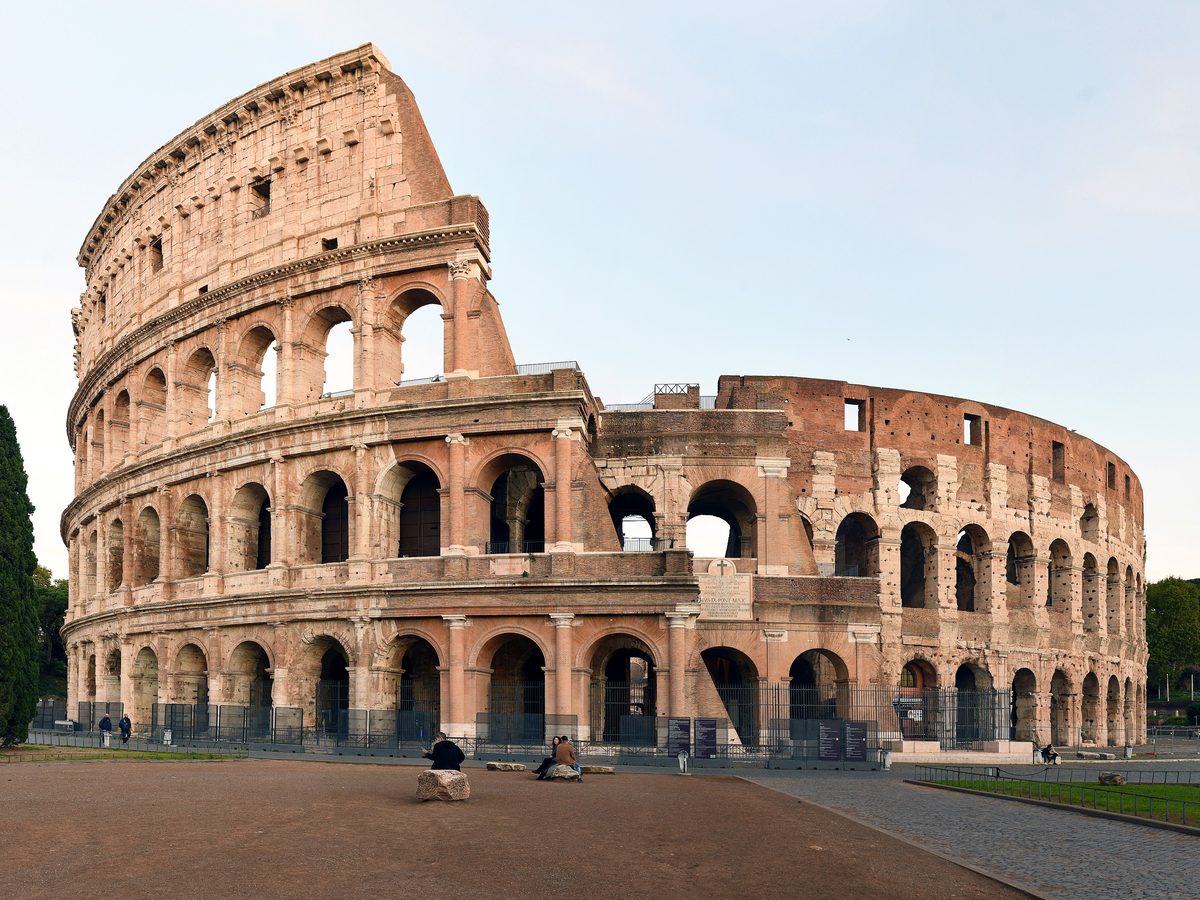
The Colosseum, Rome

02

Roman Forum & Palatine Hill

Ancient Rome

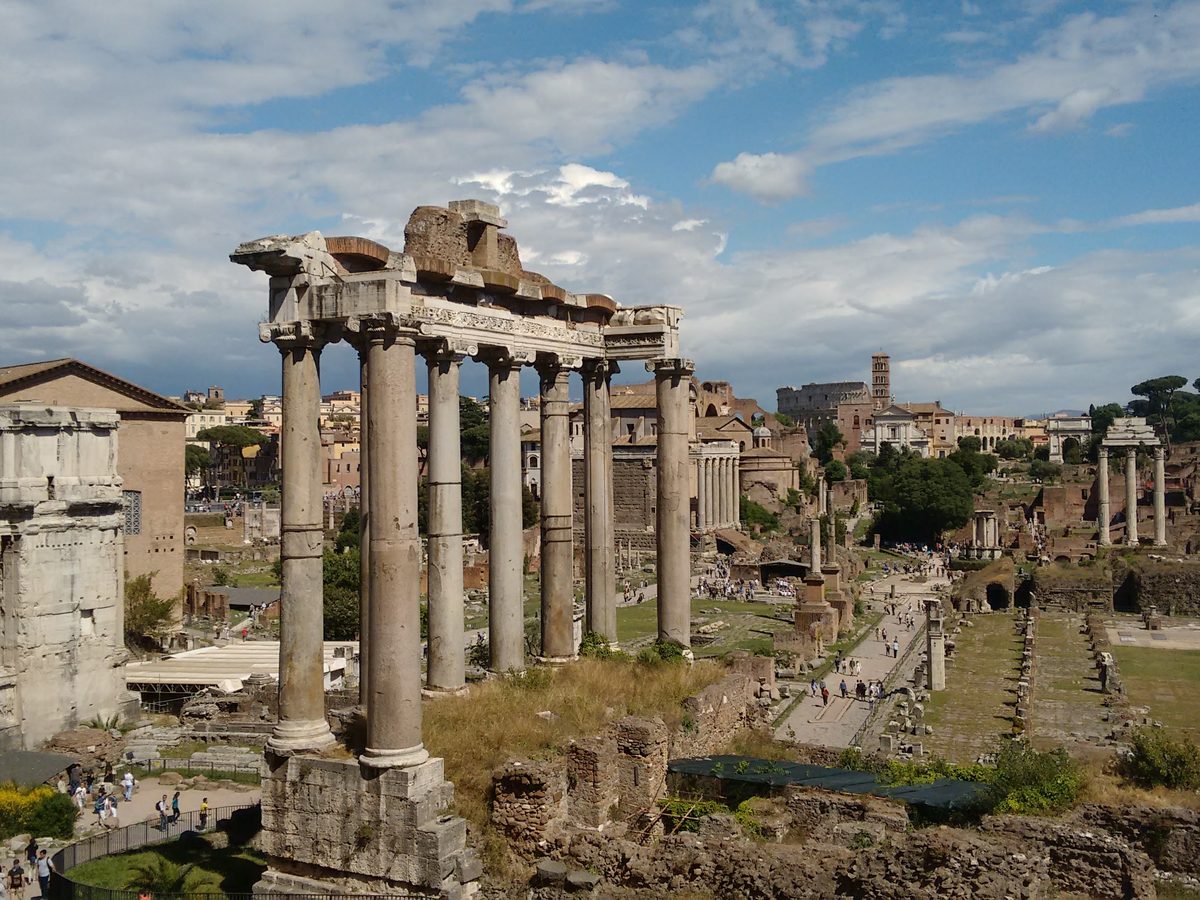
The Forum was the civic, legal and religious centre of the Republic and Empire — a long rectangular basin of temples, basilicas and triumphal arches, now largely foundations and standing columns. Above it, the Palatine is where the emperors actually lived, and where Romulus supposedly founded the city. The Palatine is quieter, greener and has the better views back down over the ruins.

Enter from the Palatine gate on Via di San Gregorio rather than the Forum entrance near the Colosseum — the queue is usually shorter and you descend into the Forum rather than climbing out of it.

Roman Forum & Palatine Hill, Rome

03

Vatican Museums & the Sistine Chapel

Art · Vatican City

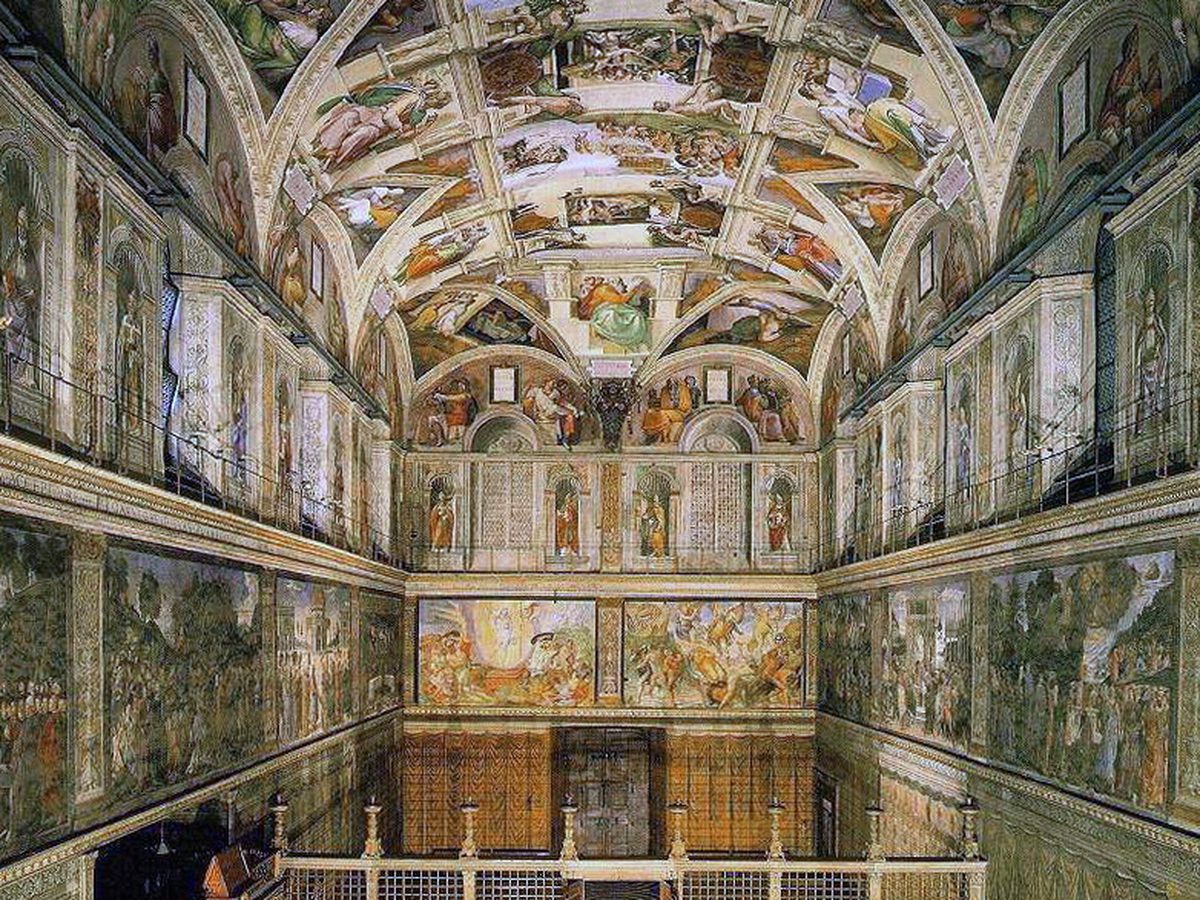
A four-mile route through papal collections that ends, deliberately, in the Sistine Chapel. Michelangelo painted the ceiling between 1508 and 1512 and returned decades later for the Last Judgment on the altar wall. On the way you pass the Gallery of Maps, the Raphael Rooms with the School of Athens, and Egyptian and classical collections most cities would build an entire museum around.

You cannot skip ahead — the route is one-way and takes at least two hours at pace. Photography is not permitted in the Sistine Chapel, and shoulders and knees must be covered.

Vatican Museums & the Sistine Chapel, Rome

04

St Peter's Basilica

Architecture · Vatican City

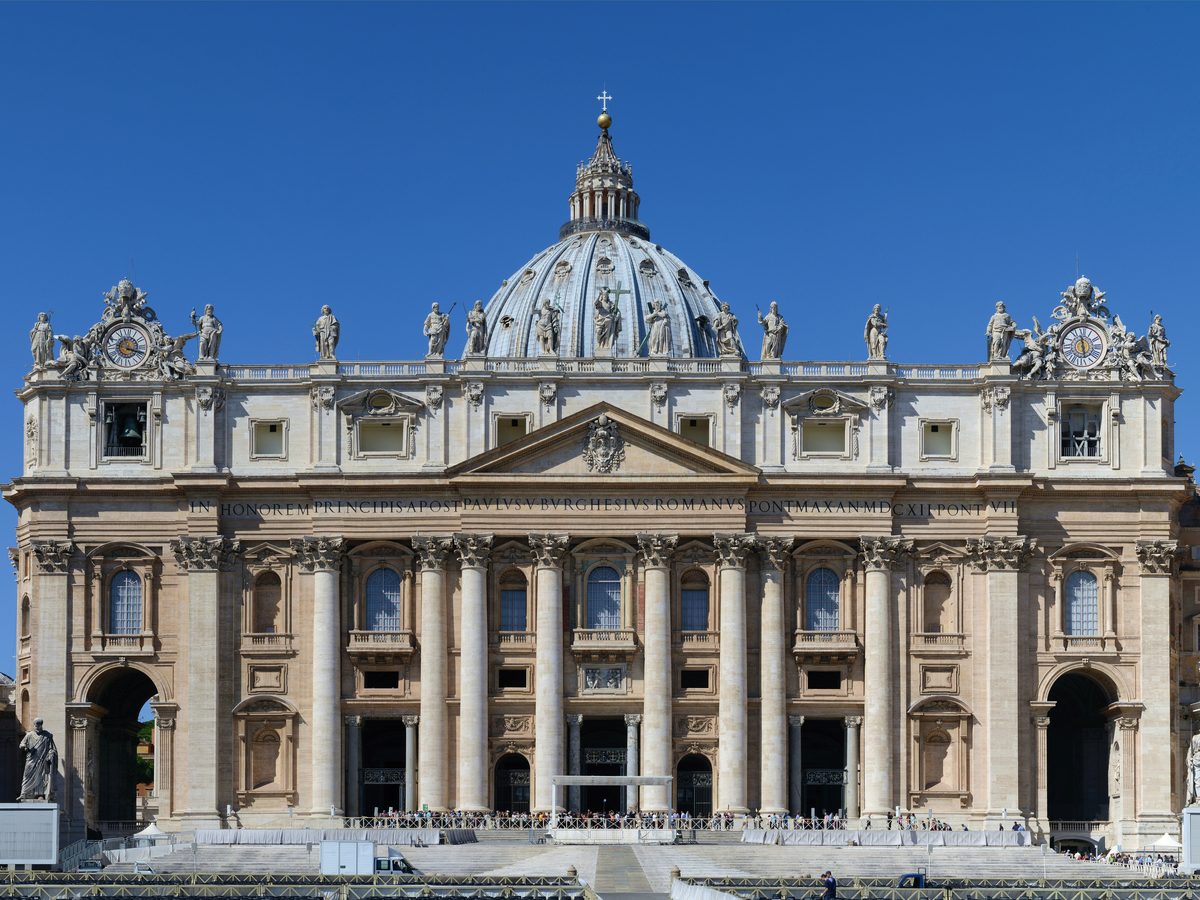
The largest church in the world by interior area, built over the traditional burial site of the apostle Peter. Bramante, Michelangelo, Maderno and Bernini all had a hand in it. Inside: Michelangelo's Pietà, carved when he was in his early twenties, and Bernini's bronze baldachin over the papal altar. The dome climb is 551 steps, or fewer with the lift for part of the way.

Entry to the basilica itself is free but the security queue across St Peter's Square can be long. The dome climb is ticketed separately.

St Peter's Basilica, Rome

05

The Pantheon

Ancient Rome

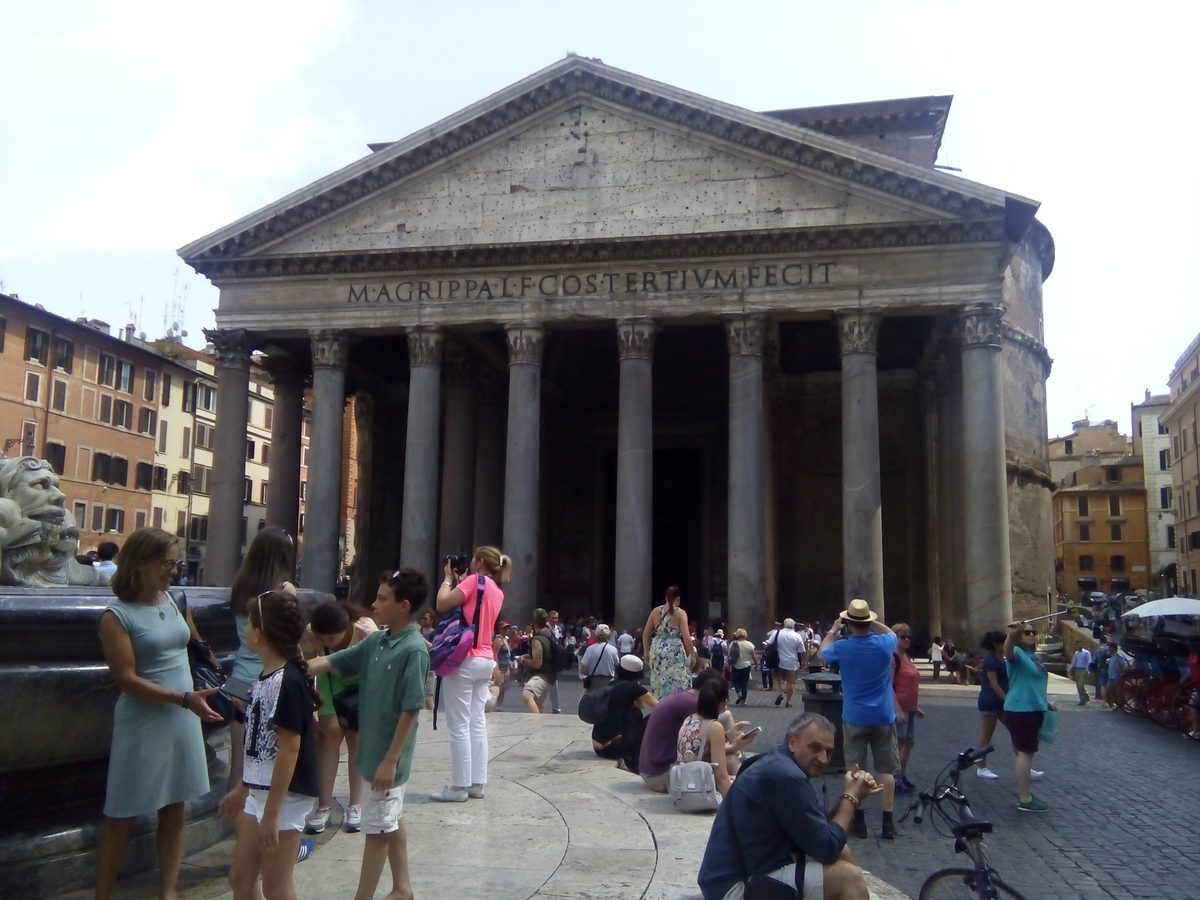
Rebuilt under Hadrian around AD 126 and continuously in use ever since, which is why it is the best-preserved building of ancient Rome. The coffered concrete dome is still the largest unreinforced concrete dome on earth, and its diameter exactly equals its height from the floor. The oculus at the top is open to the sky — rain falls straight in and drains through holes in the floor. Raphael is buried here.

Now a ticketed monument rather than free entry. It is also an active church, so it closes for services.

The Pantheon, Rome

06

Trevi Fountain

Baroque

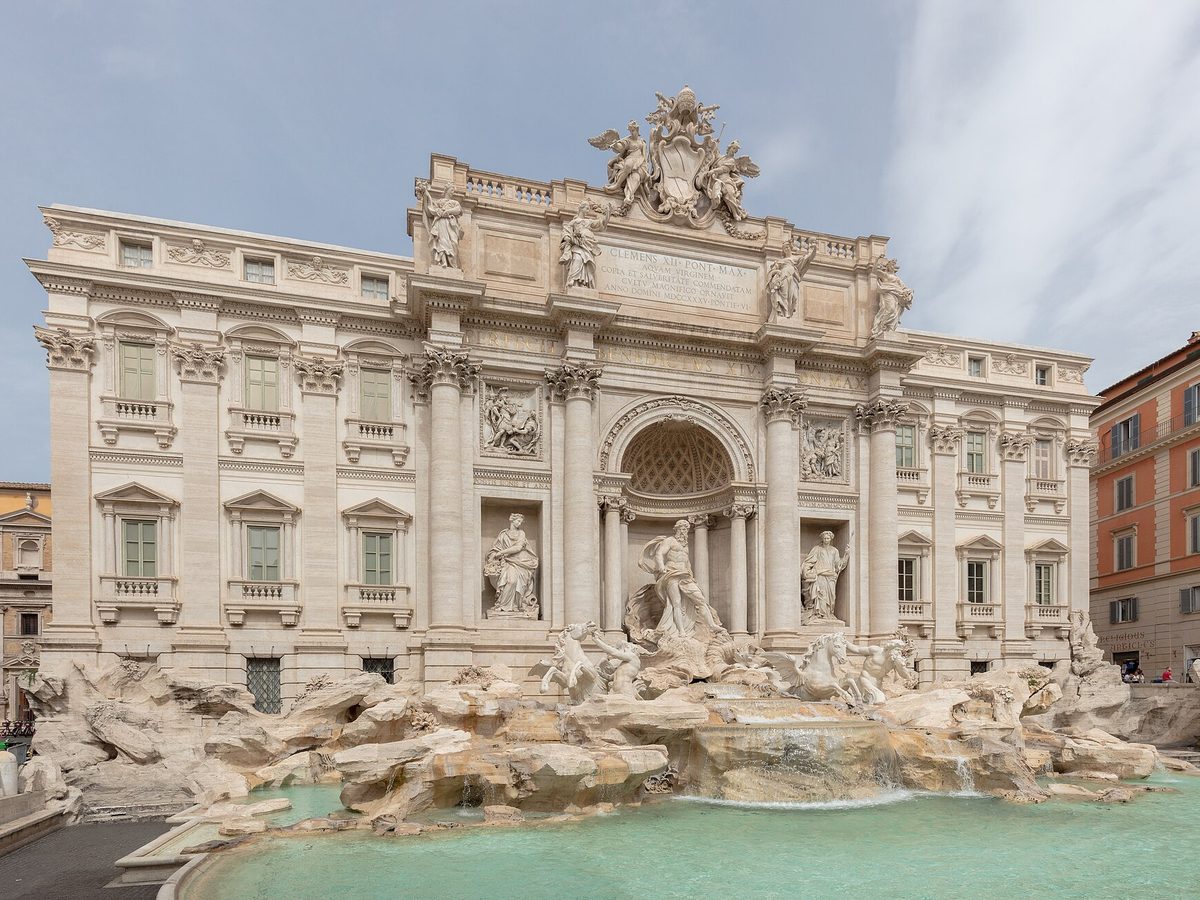
Nicola Salvi's fountain was completed in 1762 at the terminal point of the Acqua Vergine, an aqueduct that has supplied this water since 19 BC. Ocean rides a shell chariot pulled by sea horses and tritons, one calm and one wild. The convention is to throw a coin over your left shoulder with your right hand; the collected coins are donated to charity.

It is genuinely packed from mid-morning until late. Come before eight in the morning or after eleven at night if you want to see it properly.

Trevi Fountain, Rome

07

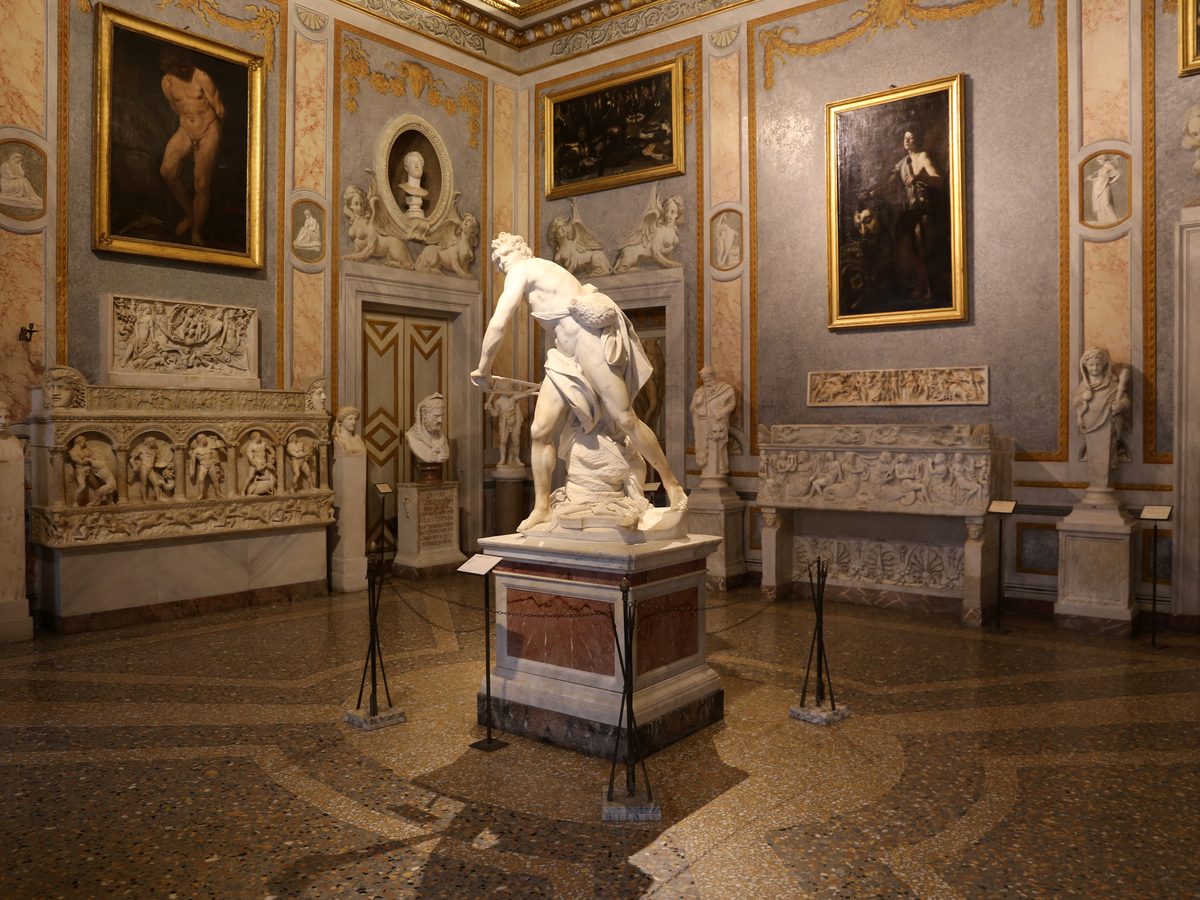
Galleria Borghese

Art

A small, perfectly proportioned collection in Cardinal Scipione Borghese's former villa. The Bernini sculptures are the reason to come: Apollo and Daphne caught mid-transformation with bark closing over her fingers, and a David twisting into the throw. Six Caravaggios, plus Titian and Raphael, in rooms you can actually stand back in.

Entry is by compulsory timed slot with a fixed visit length, and slots regularly sell out weeks ahead. Book before you book your flights.

Galleria Borghese, Rome

08

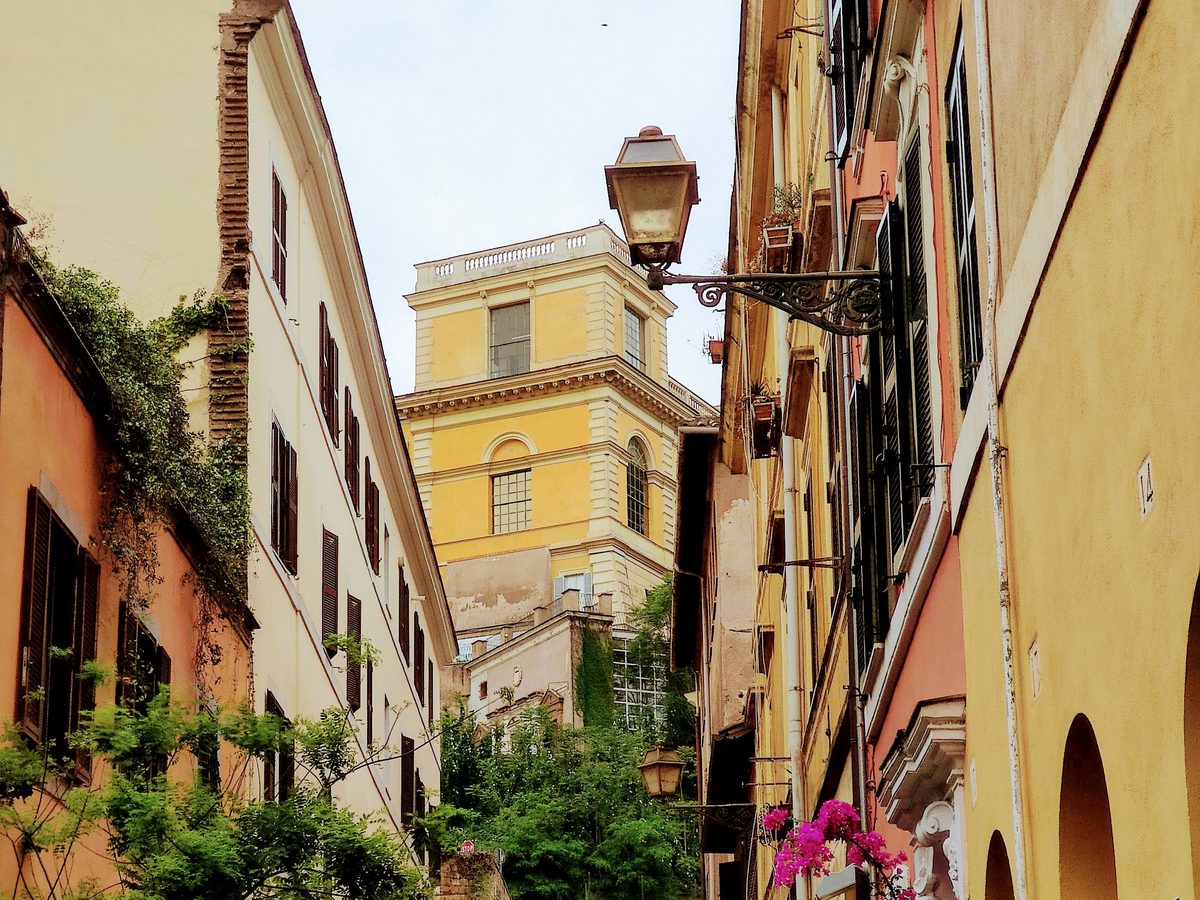
Trastevere

Neighbourhood

Across the river from the centre, a grid of narrow cobbled lanes that fills with people every evening. Santa Maria in Trastevere is one of the oldest churches in Rome and has gold-ground mosaics worth a detour on their own. The area is the easiest place in the city to eat well without planning, though the streets immediately around the main piazza are the most touristed.

Walk up the Gianicolo hill behind it at sunset for the best free panorama of the city.

Trastevere, Rome

Planning

Before you go

When to visit

Spring and autumn are ideal: April to early June, and late September through October. July and August are hot enough to make midday sightseeing unpleasant, and many small businesses close in mid-August. Winter is cool, damp and much quieter, with short queues.

Getting around

The historic centre is walkable and largely closed to through traffic. Metro lines A and B cross at Termini and cover the Vatican, Spanish Steps and Colosseum; the centre itself has no metro because of the archaeology underneath. Buses fill the gaps. Validate tickets before boarding.

Eat and drink

Roman cooking is built on four pasta dishes — carbonara, cacio e pepe, amatriciana and gricia — plus offal cuts from the old slaughterhouse district of Testaccio. Try supplì (fried rice balls), carciofi alla giudia from the Jewish Quarter, and pizza al taglio sold by weight.