Naples / Mount Vesuvius
Nature · Day trip
Mount Vesuvius
The only active volcano on the European mainland, and the reason Pompeii and Herculaneum survive at all.
- Price
- From €12 crater access
- Hours
- 9am–4/6pm depending on season
- Avg. visit
- 2–3 hours including transport
- Book ahead
- Yes, timed ticket required
Vesuvius is best known for the AD 79 eruption that buried Pompeii and Herculaneum, but it has erupted many times since, most recently in 1944, and remains classified as active. Roughly three million people now live in what is considered its danger zone, making it one of the most closely monitored volcanoes in the world.
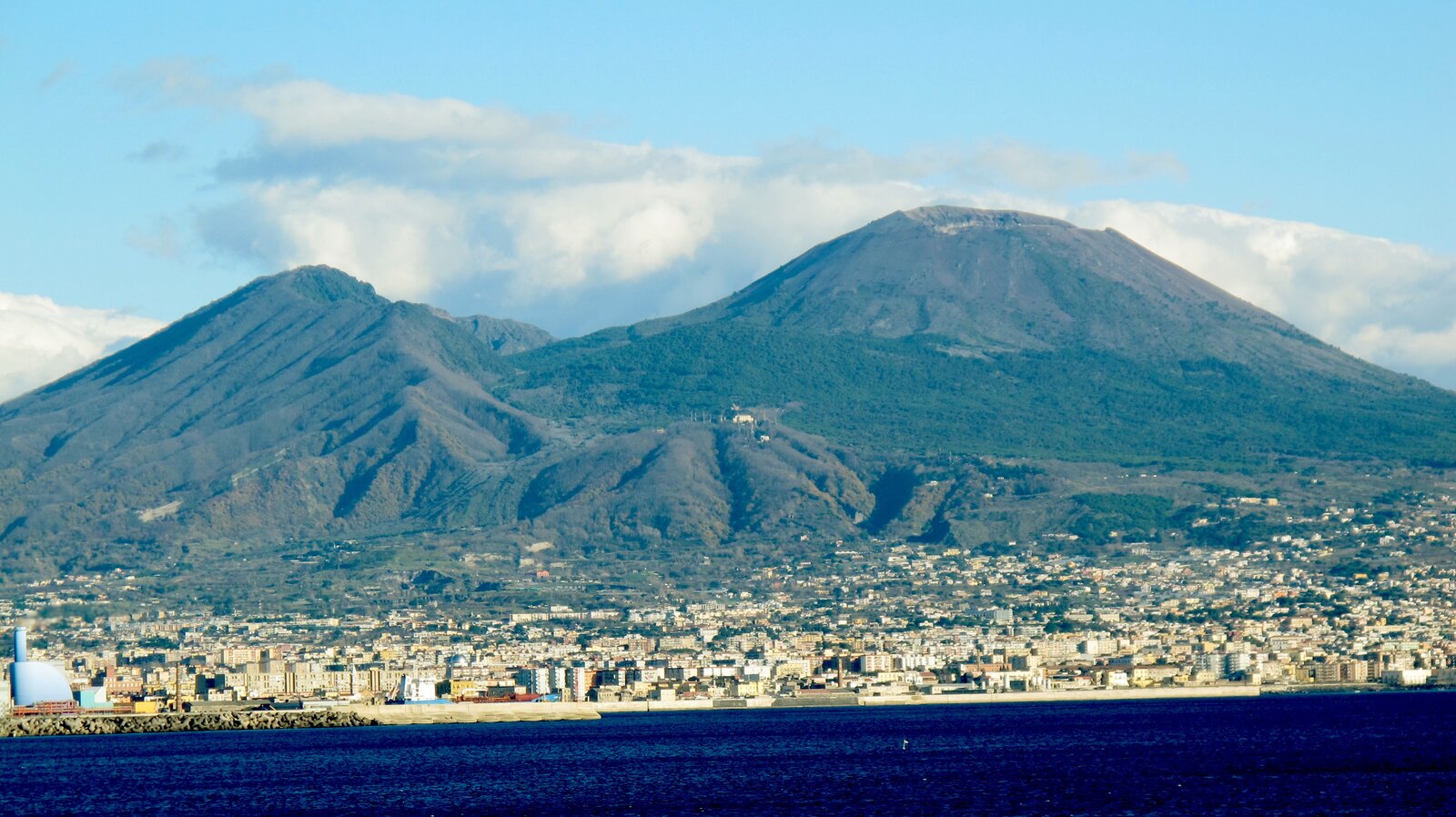
The mountain's distinctive double profile — a taller cone rising from the remains of an older, larger volcanic structure called Monte Somma — is the result of a massive prehistoric collapse that predates the eruption most visitors come to learn about. A permanent volcanological observatory on its slopes, established in 1841, is one of the oldest of its kind anywhere.
Inside
What to see
- The crater rim, with views down into the cone itself
- The wider Bay of Naples, Sorrento and Capri, all visible from the summit path on a clear day
- The Monte Somma ridge, the remnant of the older volcanic structure that partly encircles the current cone
- Steam vents (fumaroles) still visible near the crater on cooler days
Practical
Good to know
- Access requires a timed ticket, and the mountain closes to visitors in poor weather or high wind.
- The summit is windy and noticeably colder than Naples at sea level, even in summer — bring a layer.
- A shuttle bus from the Ercolano Scavi area or nearby car parks covers most of the ascent; the remaining walk is a gravel path taking twenty to thirty minutes.
Timing
When it's busiest
- Early morning
- Quiet
- Midday
- Busy
- Mid-afternoon
- Busy
- Last slots
- Quiet
Nearby
Combine your visit
Same rail line
Herculaneum
See the town preserved by the same eruption you've just looked down into the source of.
Visit →
Same rail line
Pompeii
The larger Vesuvian site, a further stop down the Circumvesuviana line.
Visit →
Back in Naples
Museo Archeologico Nazionale
See what survived the eruption you've just stood above.
Visit →
FAQ
Common questions
Do I need to book ahead?
Yes — access to the crater path requires a timed ticket, and it's worth booking before travelling to Naples in high season.
Is it a difficult climb?
No technical climbing is involved; the walk from the car park is a gravel path taking twenty to thirty minutes at a gentle gradient.
What happens if the weather is bad?
The summit closes to visitors in high wind or poor visibility, sometimes without much notice.
Is Vesuvius dangerous to visit today?
The visitor route is considered safe under normal operating conditions; the volcano is continuously monitored and access is suspended if there's any cause for concern.