Naples / Herculaneum
Archaeology · Day trip
Herculaneum
A smaller, wealthier Roman seaside town, preserved in far finer detail than its more famous neighbour.
- Price
- From €13
- Hours
- 8:30am–7:30pm summer, shorter in winter
- Avg. visit
- 2–3 hours
- Book ahead
- Not usually needed
Herculaneum was a smaller, more affluent town than Pompeii, and was struck differently by the AD 79 eruption: rather than being buried gradually under falling ash, it was overwhelmed by fast-moving pyroclastic surges of superheated gas and debris that carbonised organic material almost instantly instead of burning it away.
The result, uncovered by excavation that began in the 18th century and continues in parts today, is a level of preservation Pompeii rarely matches — upper storeys still standing, wooden doors, beams and furniture carbonised but intact, and even food remains found in some houses. Excavations here move more slowly than Pompeii's because much of the site sits directly beneath the modern town of Ercolano.
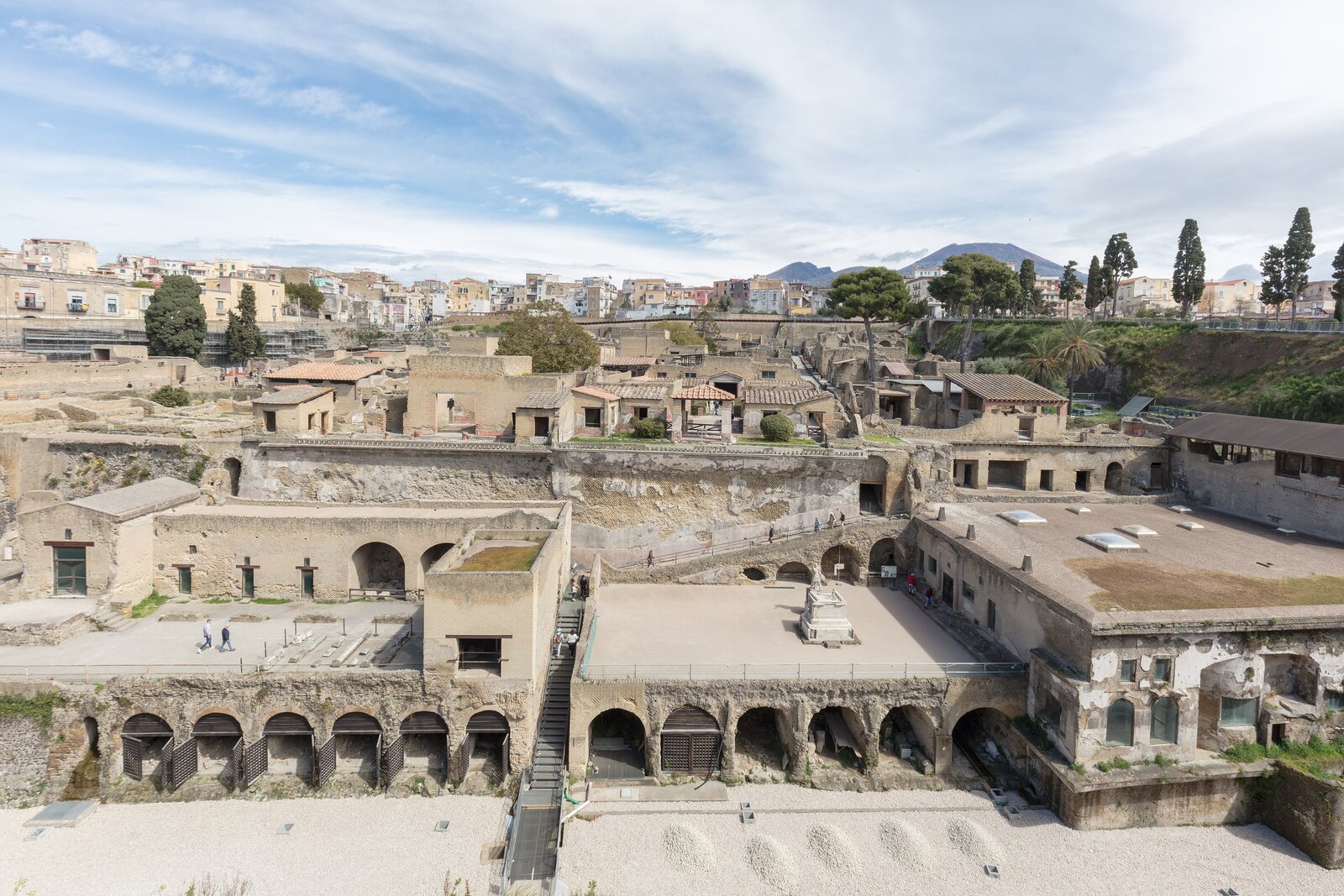
Inside
What to see
- The House of the Deer, with its garden statuary largely intact
- The Villa of the Papyri's site, source of the only intact library recovered from the ancient world
- The boat sheds along the ancient shoreline, where the remains of townspeople sheltering from the eruption were found
- Carbonised wooden beams, doors and furniture, preserved nowhere else on this scale from antiquity
Practical
Good to know
- Far less crowded than Pompeii, even at peak times, making it easier to see without a queue at every doorway.
- The site takes about two hours rather than a full day, so it fits more easily into a shorter itinerary.
- Ercolano Scavi station, on the same Circumvesuviana line as Pompeii, sits a short walk from the entrance.
Timing
When it's busiest
- Morning
- Quiet
- Midday
- Moderate
- Afternoon
- Moderate
- Last two hours
- Quiet
Nearby
Combine your visit
Same rail line
Pompeii
The larger, more famous site, a short ride further down the same Circumvesuviana line.
Visit →
Same rail line, plus shuttle
Mount Vesuvius
See the volcano responsible for both sites from its own crater rim.
Visit →
Back in Naples
Museo Archeologico Nazionale
See the finest objects recovered from the Vesuvian sites, including material from Herculaneum's Villa of the Papyri.
Visit →
FAQ
Common questions
Is Herculaneum better than Pompeii?
Different rather than better — smaller and more detailed, with better-preserved organic material, but without Pompeii's scale or its amphitheatre and forum.
How long should I plan for?
Two to three hours is generally enough to see the site thoroughly, considerably less than a full Pompeii visit.
Is it less crowded than Pompeii?
Yes, noticeably, even in peak season, since it draws fewer day-trippers and covers a smaller area.
Can I see both Pompeii and Herculaneum in one day?
It's possible using the same rail line, but most visitors find one site per day allows a more unhurried visit.