Naples / Pompeii
Archaeology · Day trip
Pompeii
A full Roman town buried in a single afternoon, walked today much as its own residents once walked it.
- Price
- From €18
- Hours
- 8:30am–7:30pm summer, shorter in winter
- Avg. visit
- 4–6 hours
- Book ahead
- Recommended, especially in summer
Pompeii was a working town of around 11,000 people when Vesuvius erupted in AD 79, burying it under several metres of ash and pumice over roughly 18 hours — enough warning for many residents to flee, but not all. Systematic excavation began in the 18th century under the Bourbon kings and has continued, with major new areas still being uncovered, into the present day.
The town was rediscovered largely intact under its volcanic blanket: streets with cart ruts worn into the paving stones, bakeries with their millstones still standing, bathhouses, brothels, two theatres and a full amphitheatre. The plaster casts of victims — made by pouring plaster into the voids their decomposed bodies left in the hardened ash — remain the site's most confronting exhibit.
Inside
What to see
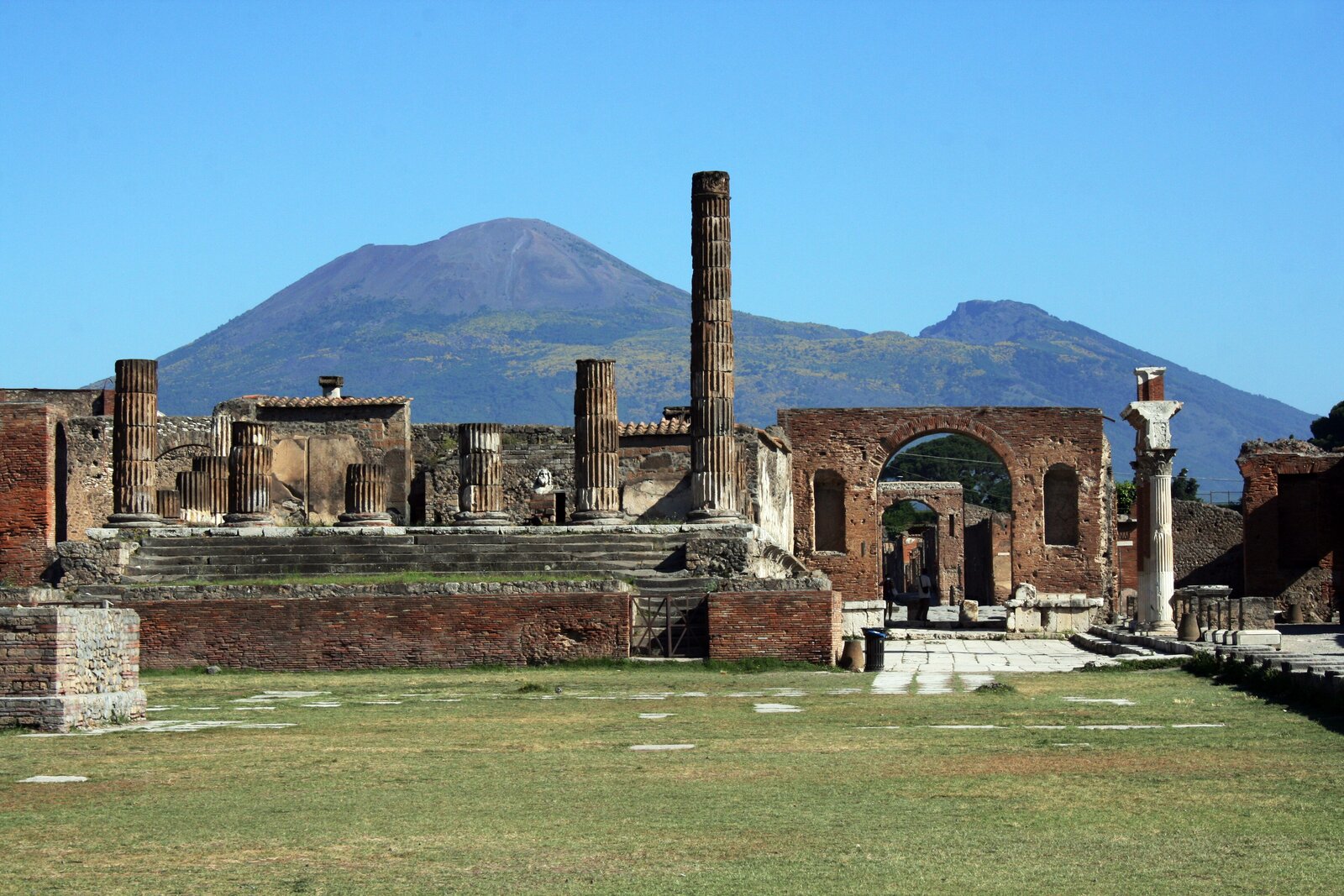
- The Forum, the town's civic and religious centre, with Vesuvius visible directly behind it
- The Villa of the Mysteries, with a nearly complete cycle of Dionysiac frescoes
- The amphitheatre, one of the oldest surviving Roman examples, older than the Colosseum
- The plaster casts of victims, displayed at several points around the site
Practical
Good to know
- The site is enormous and largely unshaded — bring water, a hat and sturdy shoes regardless of season.
- Allow at least four hours, ideally longer; trying to see everything in under three hours means rushing past most of it.
- The Circumvesuviana line from Napoli Garibaldi stops directly at Pompei Scavi–Villa dei Misteri, right by the main entrance.
Timing
When it's busiest
- 8:30–10am
- Quiet
- 11am–2pm
- Packed
- 2–4pm
- Busy
- Last two hours
- Quiet
Nearby
Combine your visit
See first, if you can
Museo Archeologico Nazionale
The finest objects excavated from Pompeii live in Naples, not at the site.
Visit →
Same rail line
Herculaneum
A smaller, better-preserved sister site, reachable on the same train line.
Visit →
Same rail line, plus shuttle
Mount Vesuvius
Look down into the crater that buried the town you've just walked through.
Visit →
FAQ
Common questions
How much time should I allow?
At least four hours for a proper visit; a full day if you want to see the site thoroughly and rest along the way.
Do I need to book ahead?
Recommended, especially for peak summer months, when entry numbers can be capped.
Is it accessible with limited mobility?
Parts of the site are, via designated accessible routes, but the ancient streets are uneven paving stones throughout much of it.
Can I combine it with Herculaneum in one day?
It's possible but rushed — both sites reward unhurried time, so most visitors do them on separate days if the schedule allows.