Genoa / Cattedrale di San Lorenzo
Churches
Cattedrale di San Lorenzo
Striped Ligurian Gothic marble, an unexploded naval shell left in place, and a dish medieval Genoa believed was the Holy Grail.
- Price
- Nave free · treasury ticketed
- Hours
- Roughly 8am–6:30pm
- Avg. visit
- 45 minutes to an hour
- Book ahead
- Not needed
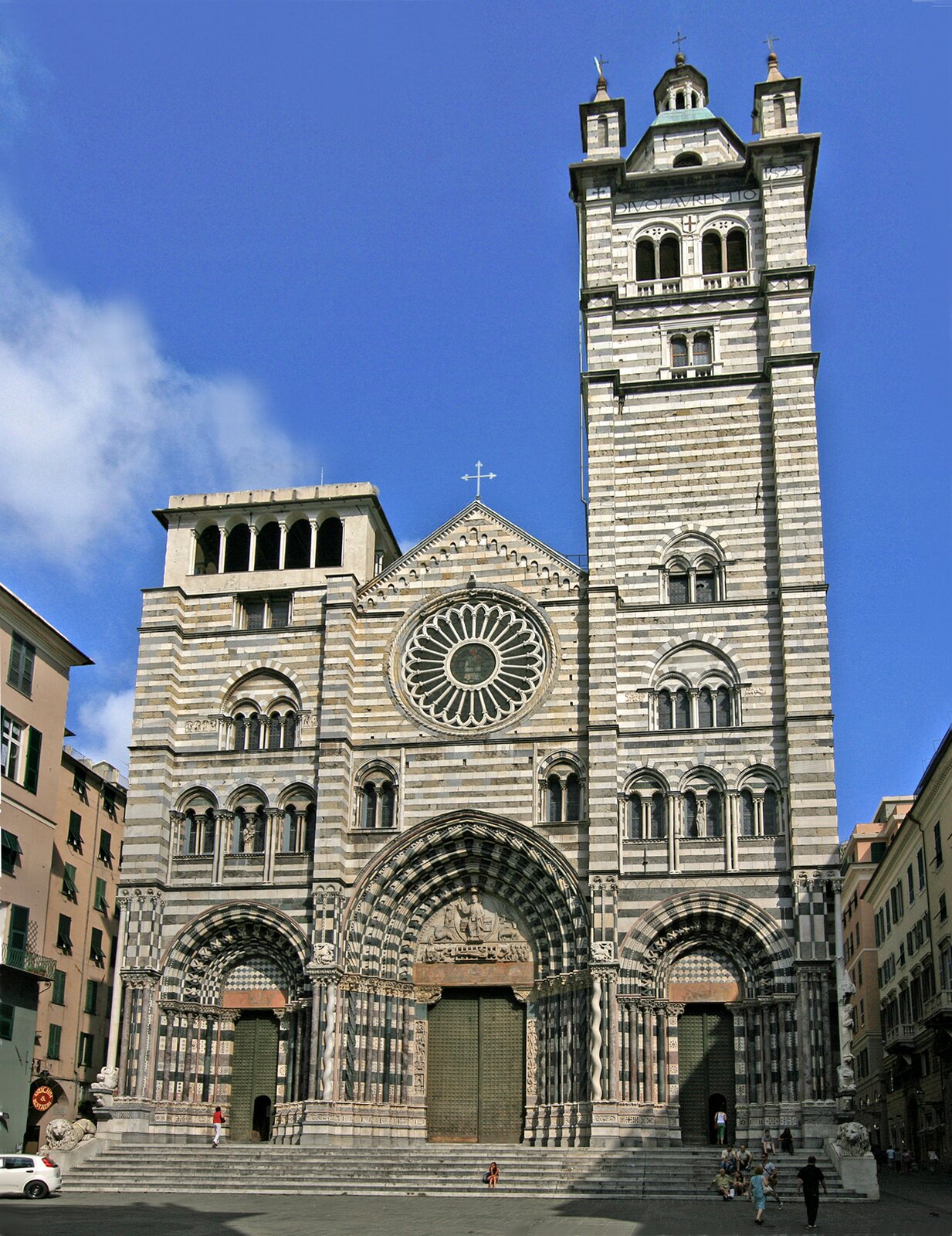
Genoa's cathedral is built in striped black and white marble in the distinctive Ligurian Gothic manner, fronted by a heavily carved 13th-century portal that remains one of the finer surviving examples of Gothic stone carving in the region. The striped marble treatment was historically a genuine status marker in Genoa — only families granted specific privilege by the Republic were permitted to use the same striped pattern on their own private houses, making the cathedral's facade a visible symbol of civic authority as much as a religious statement.
Inside the nave sits one of the cathedral's more startling artefacts: a British naval shell that crashed through the roof during a bombardment in 1941 and, remarkably, failed to detonate. Rather than being quietly removed, it has been left in place with an explanatory plaque, a direct physical reminder of the city's wartime experience inside an otherwise entirely medieval space. The cathedral's treasury below holds the Sacro Catino, a green glass dish that medieval Genoa believed, without much basis, to be the Holy Grail — a legend that persisted for centuries despite the dish's later identification as Roman or early medieval glasswork.
Inside
What to see
- The striped black and white marble facade and its heavily carved 13th-century portal
- The unexploded 1941 naval shell, left in place inside the nave with an explanatory plaque
- The Sacro Catino in the treasury, the green glass dish once believed to be the Holy Grail
- The cathedral's Ligurian Gothic interior, more restrained than the elaborately decorated exterior
Practical
Good to know
- The striped marble facade was historically restricted to families granted specific civic privilege — a detail that adds real meaning to what might otherwise read as simple decoration.
- The nave is free to enter; the treasury, holding the Sacro Catino, is ticketed separately.
- The unexploded shell is easy to miss if you don't know to look for it — ask staff or check signage for its exact location in the nave.
Timing
When it's busiest
- Morning
- Quiet
- Midday
- Moderate
- Afternoon
- Moderate
- Evening
- Quiet
Nearby
Combine your visit
Within the same network
The caruggi
The cathedral sits within Genoa's medieval alley network.
Visit →
10-minute walk
Via Garibaldi & the Palazzi dei Rolli
Continue to the grand street of private palaces to the north.
Visit →
10-minute walk
Acquario di Genova & Porto Antico
Head to the redeveloped old harbour and its large aquarium.
Visit →
FAQ
Common questions
Why is the marble striped?
The pattern was a genuine status marker in medieval Genoa — only families granted specific privilege by the Republic could use it on their own houses, making the cathedral's facade a visible symbol of civic authority.
Is the shell story true?
Yes — a British naval shell crashed through the roof during a 1941 bombardment and failed to detonate; it remains in the nave today with an explanatory plaque.
Is the Sacro Catino really the Holy Grail?
No — medieval Genoa believed so, but the dish has since been identified as Roman or early medieval glasswork, though the legend persisted for centuries and remains part of the treasury's story.
Is entry free?
The main nave is free; the treasury holding the Sacro Catino requires a separate ticket.