Verona / Casa di Giulietta
Landmark
Casa di Giulietta
A genuine medieval house, a 1930s balcony, and a legend the city built with open eyes.
- Price
- Courtyard free · house interior from €6
- Hours
- Roughly 9am–7pm
- Avg. visit
- 20–30 minutes
- Book ahead
- Not usually needed
The house is a genuine 14th-century building that once belonged to the del Cappello family — a surname close enough to Shakespeare's Capulet for the city to draw the connection and lean into it. There is no historical evidence that Romeo and Juliet were real people or that this specific house has any documented link to Shakespeare's play, which itself drew on earlier Italian sources rather than local Verona history.
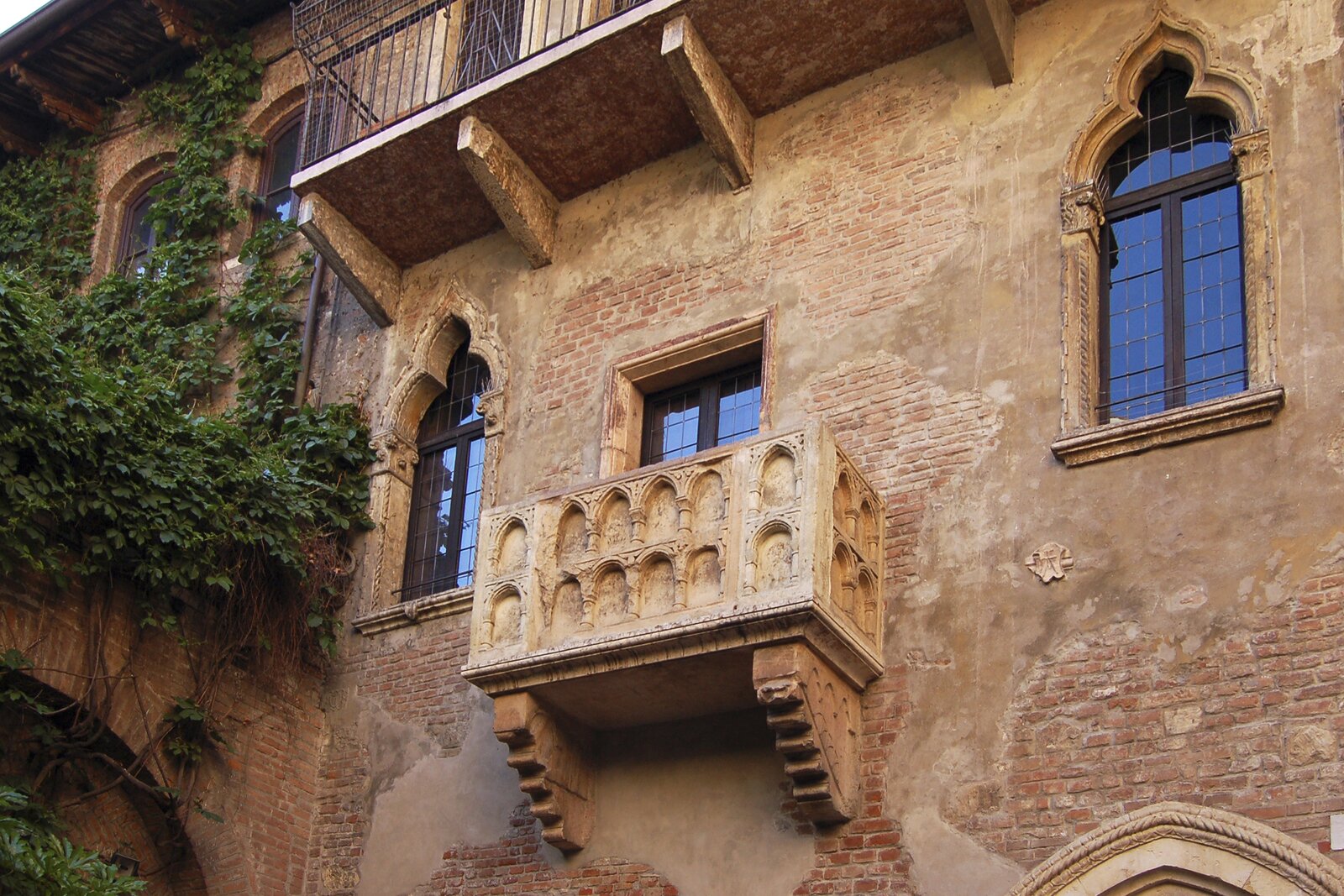
The famous balcony was added to the building in the 1930s, assembled from a repurposed stone sarcophagus, specifically to give visitors the image the legend demanded. Rather than a deception, this has become part of the site's own story — a 20th-century civic invention layered onto a genuinely old building, embraced by the city as tourism rather than concealed as fabrication.
Inside
What to see
- The 1930s balcony itself, assembled from a repurposed sarcophagus
- The bronze statue of Juliet in the courtyard, its right breast worn bright by generations of visitors rubbing it for luck
- The courtyard walls, densely covered in visitor graffiti and love notes
- The house interior, for those who buy the separate ticket, with modest period rooms and a small collection of Renaissance-era furniture
Practical
Good to know
- The courtyard is free to enter; only the house interior requires a ticket.
- Go knowing exactly what this is — a genuinely old building with a deliberately constructed modern legend — and it becomes enjoyable rather than a letdown.
- The courtyard is small and often crowded, especially around midday in high season.
Timing
When it's busiest
- Morning
- Quiet
- Midday
- Packed
- Afternoon
- Busy
- Evening
- Moderate
Nearby
Combine your visit
5-minute walk
Piazza delle Erbe & Piazza dei Signori
Return to Verona's connected market and civic squares.
Visit →
10-minute walk
Arena di Verona
Continue to the Roman amphitheatre and Piazza Bra.
Visit →
10-minute walk
Torre dei Lamberti
Climb the city's tallest tower for a wider view of the centre.
Visit →
FAQ
Common questions
Is this really Juliet's house?
No — there's no historical evidence Romeo and Juliet existed, or that this specific building has any documented Shakespeare connection. The link is a modern civic construction built around a surname coincidence.
When was the balcony added?
In the 1930s, assembled from a repurposed stone sarcophagus specifically to match the legend.
Is it worth visiting?
Most visitors enjoy it once they understand what it is — a genuinely old building carrying a deliberately built modern myth, rather than authentic literary history.
Is the courtyard free?
Yes, the courtyard is free; only the house interior requires a separate ticket.