Venice / Attractions guide / Santa Maria della Salute
Churches
Santa Maria della Salute
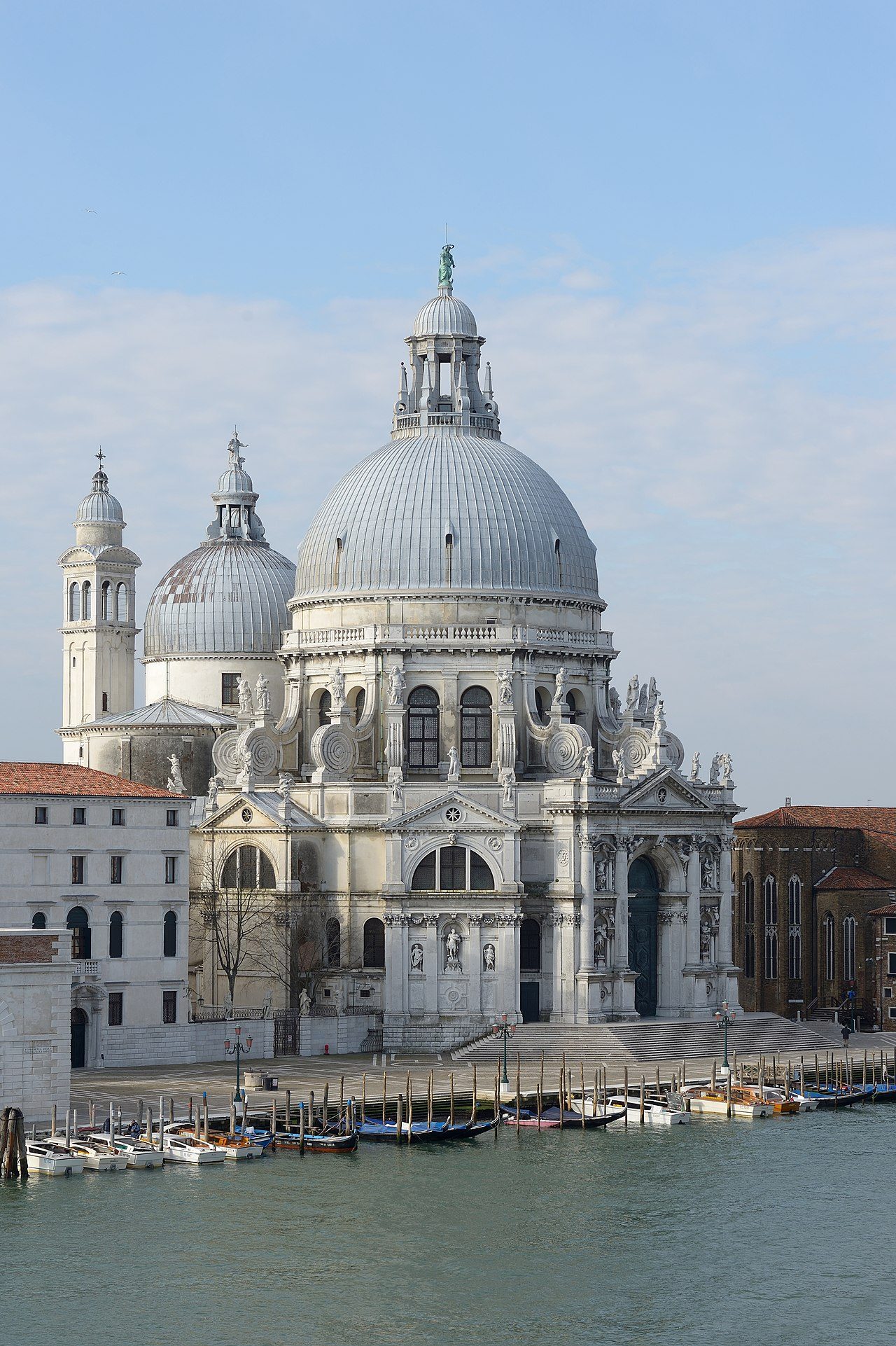
A great white octagonal church built as a thank-you offering after the plague, marking the point where the Grand Canal opens into the lagoon.
- Price
- Free for the church · sacristy ticketed separately
- Hours
- Daily, roughly 9:30am–noon and 3–5:30pm
- Avg. visit
- 30–45 minutes
- Book ahead
- Not applicable
The Republic commissioned Santa Maria della Salute — "salute" meaning health or salvation — in 1631, as a formal votive offering after a plague epidemic that killed roughly a third of Venice's population over two years. The Senate vowed to build a church in the Virgin's honour if the city was delivered from the outbreak, and Baldassare Longhena's winning design, submitted when he was just 26, took more than fifty years to complete.
The building's white Istrian stone drum and dome rest on a foundation of more than a hundred thousand timber piles driven into the lagoon bed, an engineering feat in its own right on ground this unstable. Inside, the sacristy holds several Titians and Tintoretto's Marriage at Cana, a dramatic, crowded canvas that rewards the small entry fee to see it. Every 21 November, the Festa della Salute still marks the plague's end with a votive bridge built across the Grand Canal for the occasion.
Inside
What to see
- Longhena's octagonal dome and drum, seen best from across the Grand Canal
- Tintoretto's Marriage at Cana in the sacristy
- Several Titians, also in the sacristy
- The steps outside, facing the Bacino di San Marco
Practical
Good to know
- The main church is free to enter; only the sacristy, with the Titians and Tintoretto, is ticketed.
- The steps outside are one of the best places in the city to sit at sunset, with a wide, uninterrupted view back across the water.
- It's an active church, so hours can shift around services, especially around the 21 November Festa della Salute.
Timing
When it's busiest
- Morning
- Quiet
- Midday
- Moderate
- Afternoon
- Moderate
- Sunset
- Busy on the steps
Nearby
Combine your visit
5-minute walk
Peggy Guggenheim Collection
A short walk back up the same stretch of the Grand Canal.
Visit →
10-minute walk
Gallerie dell'Accademia
Continue along Dorsoduro for Venetian painting from the 14th century onward.
Visit →
Short vaporetto ride across the water
Basilica di San Marco
Cross the mouth of the Grand Canal to the square directly opposite.
Visit →
FAQ
Common questions
Is the church really free to enter?
Yes — the main body of the church has no admission charge. Only the sacristy, where the Titians and the Tintoretto hang, requires a small ticket.
What does "Salute" mean in the name?
Health or salvation — the church was built as a formal thank-you to the Virgin Mary for delivering Venice from a plague that had killed roughly a third of the population.
Is it really built on timber piles?
Yes, more than a hundred thousand of them, driven into the lagoon bed to support the church's weight on ground that would otherwise be far too unstable for a masonry building this size.
When is the best time to see it?
Sunset on the steps outside is the classic experience, though it draws a crowd. For a quieter look, visit in the morning and view the dome from across the water near San Marco in the afternoon instead.