Bologna / Santo Stefano
Churches
Santo Stefano
Known as the Seven Churches — a layered, centuries-deep complex stranger and quieter than any single building.
- Price
- Free entry
- Hours
- Roughly 9am–6pm
- Avg. visit
- 40 minutes
- Book ahead
- No
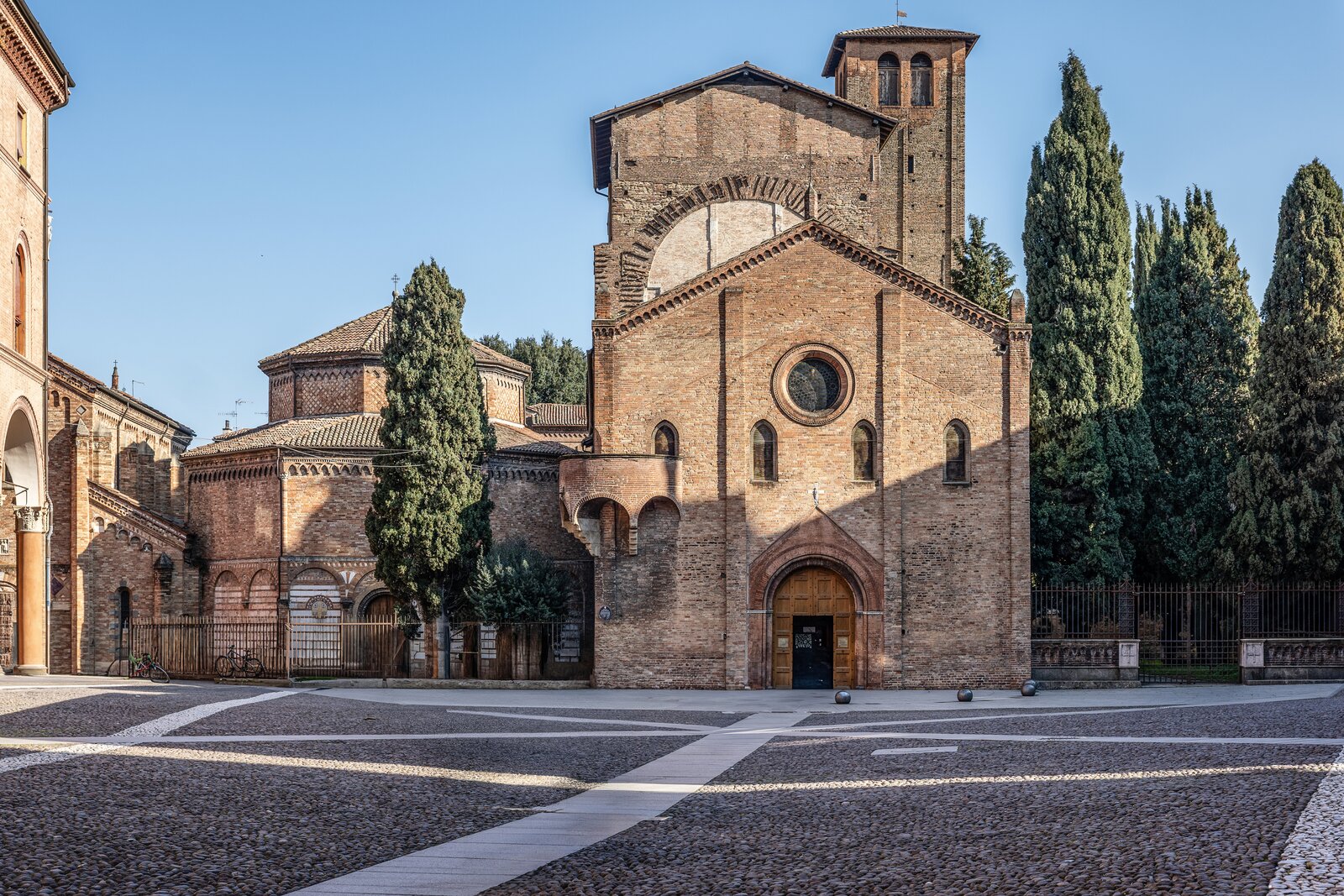
Santo Stefano is not one church but a complex of interlinked chapels, courtyards and cloisters, built, damaged, rebuilt and reconfigured continuously from late antiquity into the medieval period — hence its popular name, the Seven Churches, though the exact number of distinct spaces has shifted over the centuries as parts were combined or altered. Some of the earliest structures incorporate reused Roman columns, and one section was deliberately designed to evoke the Holy Sepulchre in Jerusalem for pilgrims who could not travel that far.
The result is a quiet, layered sequence of spaces quite unlike the single grand interior of most churches — courtyards giving onto chapels, chapels giving onto older, stranger rooms, with centuries of construction visible in the changing brick and stonework as you move through.
Inside
What to see
- The Basilica del Santo Sepolcro, built to recall the Holy Sepulchre in Jerusalem for pilgrims
- The Chiesa dei Santi Vitale e Agricola, one of the oldest structures in the complex, incorporating reused Roman columns
- The peaceful cloister connecting several of the chapels
- The piazza in front of the complex, widely considered the prettiest square in the city
Practical
Good to know
- Entry is free throughout the complex.
- It rewards going slowly — the layered, multi-room structure isn't something to rush through in the way a single-nave church might be.
- The complex is quieter than Bologna's more famous sights, making it a good change of pace after busier attractions.
Timing
When it's busiest
- Morning
- Quiet
- Midday
- Moderate
- Afternoon
- Moderate
- Evening
- Quiet
Nearby
Combine your visit
10-minute walk
The Two Towers
Head northwest to Bologna's medieval skyline landmark.
Visit →
10-minute walk
Archiginnasio & the Anatomical Theatre
Continue to the university's historic first home.
Visit →
Nearby
Eating in Bologna
Round off a quiet church visit with the city's other main draw.
Visit →
FAQ
Common questions
Why is it called the Seven Churches?
A popular nickname reflecting the complex's history as multiple interlinked chapels and structures built over centuries, though the exact count has shifted as spaces were combined or altered over time.
Is it free to visit?
Yes, entry to the entire complex is free.
How long should I plan for?
About forty minutes to move through the various chapels and courtyards without rushing.
Is it worth visiting if I've already seen the Duomo or San Petronio?
Yes — it's a genuinely different kind of space, quieter and more layered than a single-nave basilica, and rewards a slower, more curious visit.